
China to Los Angeles Transloading Guide for Importers
China to Los Angeles Transloading Guide for Importers
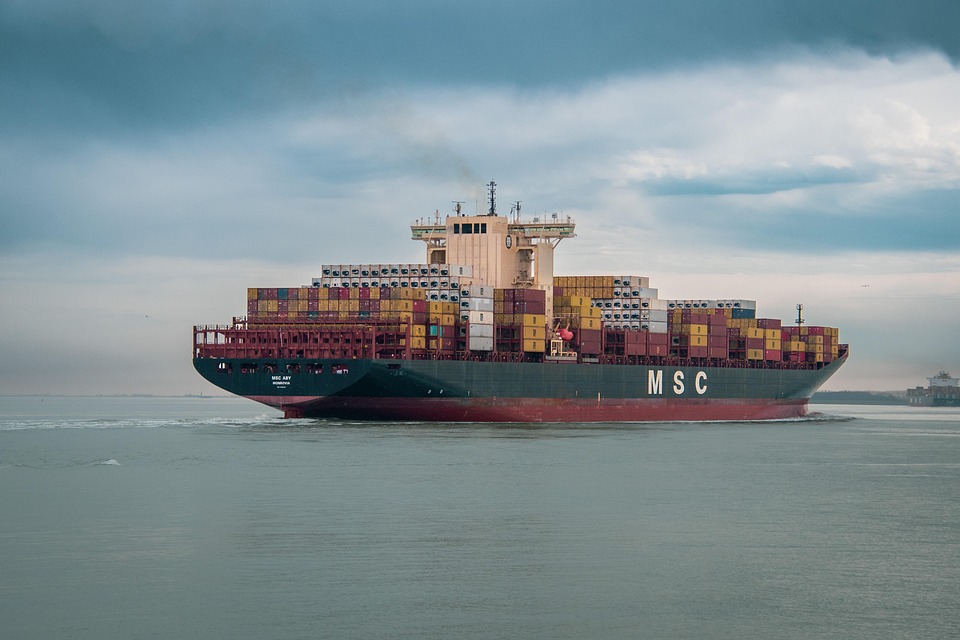
A 40-foot high cube holds roughly 2,690 cubic feet. A 53-foot domestic trailer holds close to 4,000. That gap is the entire commercial case for transloading, and everything else about it is risk management.
Transloading means stripping an ocean container at or near the port of discharge and reloading the goods into domestic equipment. It is not a cost-saving trick so much as a decision about where the container ends its life as a container.
What actually changes when you transload
1. Equipment. The ocean box stops at the warehouse and the goods continue in a 53-foot trailer or as LTL freight.
2. Unitisation. Floor-loaded cartons become palletised, or pallets get re-stacked to a U.S. footprint.
3. Ownership point. The cargo sits in a third-party facility for a period, which is a custody question as much as a logistics one.
4. Return timing. The empty returns where empties are wanted, which removes the inland empty-repositioning problem entirely.
5. Traceability. Individual cartons become harder to track once they are no longer inside a sealed container.
The most consequential change is the last one. A sealed container is a single traceable unit. Once it is stripped, each pallet has its own journey, and the systems that track ocean containers generally do not track pallets well.
When it pays
Situation | Transload helps | Transload hurts |
Destination inland and multi-stop | Yes; domestic freight is priced for this | No |
Single consignee, single destination, full container | Marginally | Direct rail or drayage is simpler |
Mixed SKUs with different destinations | Yes | No |
High-value goods with tight chain of custody | Only with a documented process | Yes; every additional handling is exposure |
Cargo that cannot be floor loaded | Yes, if it arrives floor loaded and must be racked | No |
The benefit is largest when a container's contents do not fill a domestic trailer, which happens whenever a shipment is mixed or partial. The benefit disappears when the cargo leaves the port and arrives at one address intact.
A useful test is to compute the cubic utilisation of the ocean container against the domestic equipment it would require. Where a container is less than about three-quarters full, transloading usually produces a saving large enough to cover the labour.
Timing matters as much as the arithmetic. A transload that happens inside the free-time window is a service; the same transload that happens after free time expires is a demurrage charge with labour attached. The saving only exists if the operation fits inside the window the carrier allowed.
The warehouse requirements that decide quality
Most transload failures are dock failures. Three physical constraints decide whether a facility can handle the work.
The first is dock capacity. A facility with two doors cannot strip and reload a container efficiently in a single shift, and the container sits on chassis while it waits, which is detention.
The second is pallet standard. The 48 by 40 inch GMA footprint is the working standard in U.S. warehousing. Goods palletised to a Chinese or European footprint will be re-palletised or refused, and the cost of re-palletising is rarely quoted in advance.
The third is floor loading practice. Cartons loaded to the container floor by hand take significantly longer to strip than palletised cargo, and the labour estimate usually comes in low.
Ask for the labour rate per container rather than per hour. Facilities that quote hourly rates are effectively transferring the risk of a slow strip to the importer, and floor-loaded containers are routinely slower than quoted.
Custody and documentation
The moment the container is opened, the cargo is in someone else's building. What protects the importer is not the contract but the record: a tally at receipt, photographs of the load condition before stripping, and a signed count at reload.
Two administrative points are commonly missed. The first is that a transload does not change the customs entry; the goods are entered where they are entered, and moving them afterwards is domestic transport. The second is that any bonded movement requires the facility to hold the appropriate status, which is a separate question from whether it can handle the freight.
The tally at receipt is the document that settles most claims, and it is worthless if it is taken after stripping begins. It has to be taken at the dock, against the container, before anything moves.
Photograph the load before it is touched. A photograph of an intact, well-stacked container is evidence; a photograph of a half-empty one is not.
A checklist before the first transload
6. Confirm the container can be stripped at the facility, including whether it is floor loaded.
7. Confirm the outbound equipment: 53-foot trailer, LTL, or pallets held for pickup.
8. Agree the pallet standard in writing, including whether exchange is expected.
9. Agree the tally method and who signs for the count at each end.
10. Confirm the empty return plan and who is responsible for it.


