
How to Choose Between Los Angeles and Long Beach for China Imports
How to Choose Between Los Angeles and Long Beach for China Imports
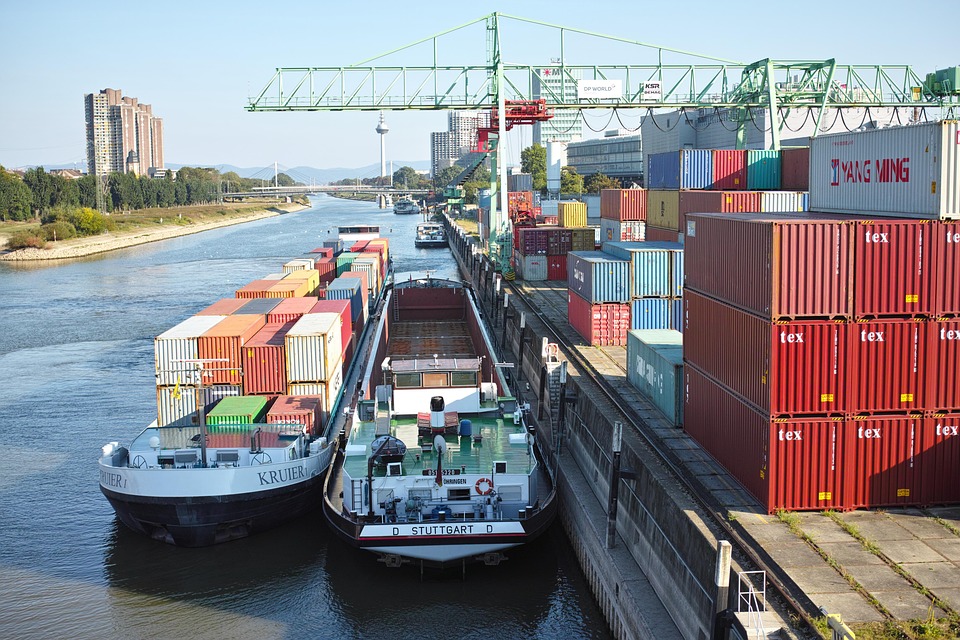
This is usually framed as a city choice. It is not. Los Angeles and Long Beach occupy the same harbour, share the same entrance channel, and are served by largely the same carriers. What differs is the terminal, the operator, the rail connection, and the equipment pool behind it.
Choosing between them as if they were competing markets produces a decision that looks analytical and changes nothing. Choosing between terminals produces a decision that changes dwell time, drayage cost and rail reliability.
One harbour, two landlords
The Port of Los Angeles and the Port of Long Beach are separate municipal entities that share the San Pedro Bay complex. A vessel calling at either passes the same breakwater and the same channel. Carriers allocate strings to terminals rather than to cities, and a string that calls Long Beach one week may call Los Angeles the next on a different service.
For an importer, this means the practical question is which terminal the container will actually be discharged at, and that answer comes from the booking confirmation, not from the port name on the routing.
The two ports do compete, and the competition is real at the level of lease terms, incentives and infrastructure investment. It is simply not the level at which an importer makes a routing decision for a container that is already booked on a string.
One consequence worth knowing: because the two ports share a harbour, a channel or pilotage disruption affects both. Diversifying between them provides no protection against the risks that are shared, which is most of the physical ones.
What genuinely differs
Three things, and they are all operational.
1. Terminal operator and labour pool. Handling practice, appointment systems and gate hours follow the operator, not the port authority, and they vary substantially between terminals within the same port.
2. On-dock rail. Some terminals load directly from the apron to rail; others require a drayage move to an off-dock ramp. For inland cargo, this single difference can remove one handoff and several days.
3. Chassis and empty return. Equipment pools are not uniform, and the distance to an empty return location affects the drayage cost of every container.
Gate hours are a fourth factor that sits alongside these three and is often overlooked. A terminal that opens at 08:00 and closes at 17:00 on weekdays constrains drayage capacity in a way that an appointment system cannot fully compensate for.
The Alameda Corridor and why it is a shared asset
Both ports feed the same 20-mile Alameda Corridor, the dedicated rail expressway completed in 2002 that connects the harbour to the downtown Los Angeles rail yards without crossing street traffic. Because the corridor is shared, the rail performance of a Los Angeles terminal and a Long Beach terminal converge once the container is on the train.
The divergence happens before that point. A container that must be trucked from the terminal to an off-dock ramp consumes a drayage move and a day; one loaded on-dock does neither. That is the difference worth choosing on.
Because the corridor is shared, a rail performance problem on one side of the harbour quickly becomes a problem on both. That is a useful thing to know when a routing decision is being made on the assumption that the alternative port offers a separate rail path.
How to read the choice inside a booking
Ask three questions before accepting a routing, and ask them of the booking confirmation rather than the quotation.
4. Which terminal, and does it have on-dock rail for my inland destination?
5. What is the empty return location for this equipment, and how far is it from my delivery point?
6. Which days does this terminal take appointments for the vessel's arrival window?
The answers decide more about total cost than the port name does. A terminal with on-dock rail and a nearby empty return will beat the alternative even if the ocean rate is marginally higher, because the savings appear on the drayage and demurrage lines instead.
The booking confirmation is the document that answers these questions, and it is worth reading it as an operational plan rather than as an acknowledgement. The terminal code, the vessel, the cut-off and the equipment release are all in there.
A decision order that avoids the coin flip
Step | Question | Why it decides the outcome |
1 | Does any available service offer on-dock rail to my inland point? | Removes a handoff and typically two to four days for IPI and MLB cargo |
2 | Where is the empty return for my equipment type? | Drayage cost and turn time follow the return leg, not the delivery leg |
3 | How many weekly calls does the terminal have on this string? | Call frequency determines the recovery time after a missed cut-off |
4 | What is the gate appointment lead time in peak season? | The binding constraint once volume rises |
5 | Only then: which port is named on the routing? | It is the label on the answer, not the answer |


