
China to Los Angeles Ocean Freight: When to Use Rail for Inland U.S. Delivery
China to Los Angeles Ocean Freight: When to Use Rail for Inland U.S. Delivery
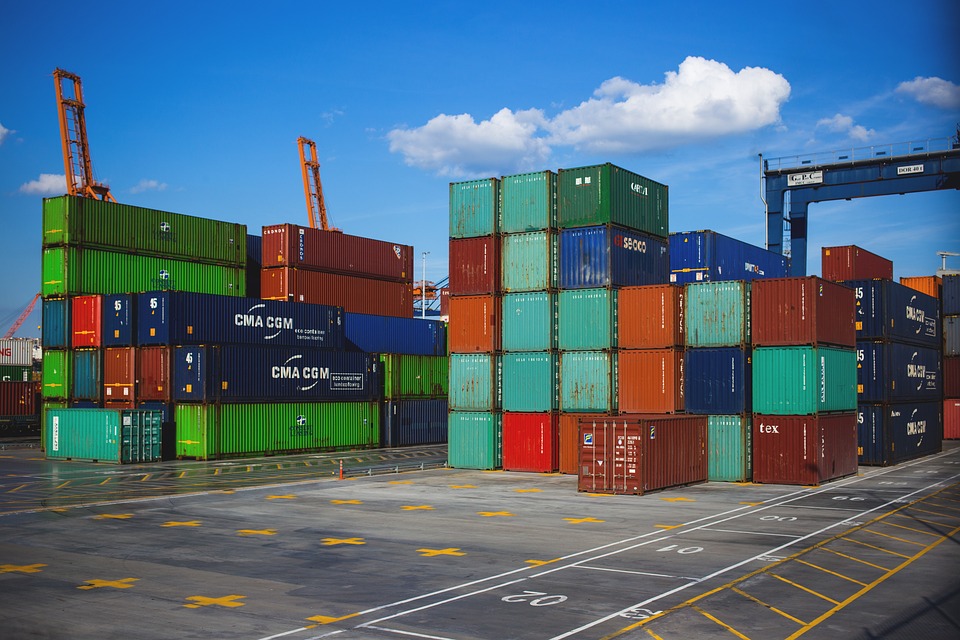
Rail is neither cheaper nor slower than trucking in the abstract. It is cheaper over distance and slower over short ones, and the crossover point is a function of destination, volume and how much of the journey happens on a chassis.
For cargo discharged in Los Angeles, there are three ways inland and only one of them involves a train. Choosing between them is a matter of distance and of what happens at the far end.
Three options, not two
Option | How it works | Typical fit |
Local drayage | Container moves by truck from terminal to a nearby warehouse, then empties return | Destinations within roughly 100 miles of the port |
Transload plus domestic truck or LTL | Container is stripped at a Southern California warehouse and the goods move as domestic freight | Multi-SKU or multi-destination shipments, and cargo that will not fill a container to the destination |
IPI or MLB rail | Container moves by rail to an inland ramp under the carrier's through bill (IPI) or a separate arrangement (MLB) | Single-consignee volume at distance, typically beyond 500 miles |
The middle option is the one importers underuse. It decouples the ocean container from the inland move, which means the box returns in Los Angeles where empties are wanted, instead of travelling inland and coming back empty on somebody else's schedule.
The underused option is often the correct one for a mid-sized importer. Transloading converts an ocean problem into a domestic one, and domestic freight has more providers, more flexibility and better visibility than an inland intermodal move does.
Where rail starts to win
The economics turn somewhere around 500 miles, and turn clearly by 1,000. Los Angeles to Chicago, Dallas, Memphis, Atlanta and Kansas City are rail markets. Los Angeles to a warehouse in the Inland Empire is not, and routing that cargo by rail adds a handoff without removing a cost.
Volume matters as much as distance. Rail pricing is built around container quantities and weekly consistency, and a single container to a distant point often prices worse than the truck alternative once the ramp handling and the final drayage are included.
Distance is the headline variable, but density is the one that decides. Two containers a week to the same ramp prices differently from two containers a month to two different ramps, and the difference is larger than most rate comparisons suggest.
A second test is available at the shipment level. Compare the all-in cost per container of the rail option, including ramp handling and the final drayage, against the truck option for the same door. Where the difference is under a few hundred dollars, truck is usually the better decision because it removes a handoff and a ramp allocation.
The crossover also moves with fuel and with rail capacity. A lane that was clearly rail two years ago may not be today, which is why the comparison is worth rerunning rather than remembering.
The constraints rail adds
Rail introduces a constraint that ocean routing does not have: the ramp ingate cut-off. A container that misses it does not go on the next train automatically. It waits for the next allocation, which may be a week away, and the free time at the destination ramp runs while it waits.
Two structural terms are worth knowing before the booking. Under IPI, the carrier is responsible for the box to an interior point and the rail leg sits inside the through rate. Under MLB, the container moves by rail from the West Coast port under a separate arrangement. The commercial consequences differ when something goes wrong, and the difference is in who owns the inland leg.
Chassis availability at the destination ramp sits on top of both. Interchange between equipment providers runs under the Uniform Intermodal Interchange Agreement, and pool availability at inland ramps tightens in exactly the weeks when every importer is trying to move.
There is a second constraint that is less visible: rail allocations are not infinite, and in a tight month the allocation can be smaller than the volume booked. The failure mode is not a missed train but a container that cannot get on any train for several days.
Ask what the allocation is before assuming the rate applies to all the volume. A rate quoted for ten containers a week is not a commitment to carry ten containers a week in the last week of October.
When truck beats rail at any distance
1. The delivery point is more than 50 miles from the destination ramp, so the final drayage erases the rail saving.
2. The cargo is time-critical enough that a missed train allocation is unacceptable.
3. The shipment is a single container and the rail rate reflects no volume commitment.
4. The goods are regulated in a way that complicates ramp handling or storage.
The fourth case is worth expanding. Cargo that needs temperature control, hazardous handling or security escort is often simpler to move by truck regardless of the distance, because the rail ramp introduces a handling step that requires its own arrangements.
How to decide
Question | If yes | If no |
Is the destination beyond 500 miles from Los Angeles? | Rail becomes a candidate | Local drayage or transload |
Can you commit consistent weekly volume? | Rail pricing becomes competitive | Expect truck-competitive pricing only at high distance |
Is the destination within 50 miles of an inland ramp? | Rail's total cost improves | Final drayage may erase the saving |
Does the cargo tolerate a missed rail allocation? | Rail is acceptable | Keep truck as the primary mode |
Is the shipment multi-SKU or multi-destination? | Transload first, then decide | Rail direct is viable |
Record the decision against the lane rather than against the shipment. A lane that has been assessed once and written down saves the same argument every quarter, and the assessment stays useful for as long as the underlying service does.


