
Drayage Accessorials: What You Are Actually Paying For
Drayage Accessorials: What You Are Actually Paying For
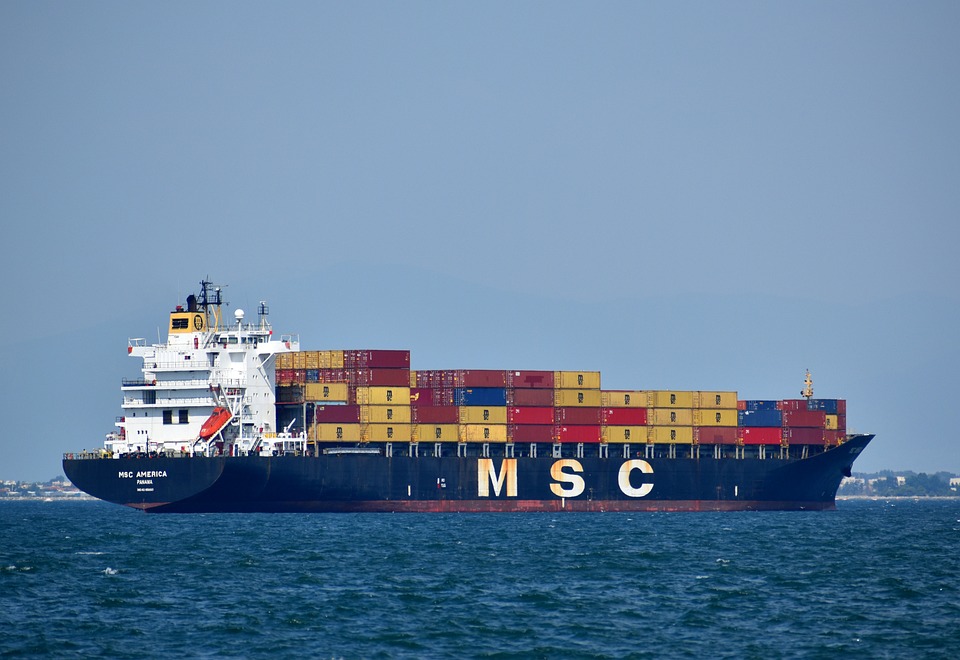
A drayage invoice for a short move can carry six line items that were not in the quote, and each of them has a cause that can usually be identified.
Accessorials are not arbitrary. They are priced responses to specific conditions, which means they can be predicted, avoided, or in some cases disputed.
Why drayage quotes are never final
A drayage quote prices the base move: one container, one origin, one destination, during normal hours. Everything outside those assumptions becomes an accessorial.
The reason the list is long is that the underlying operations are constrained. Terminal appointment systems, chassis pools and driver hours all create conditions that the base rate does not cover.
The charges that appear most often
Accessorial | Triggered by | Usually caused by |
Chassis fee | Container needs a chassis for the move | Equipment pool shortage |
Pre-pull | Container collected before the appointment | Terminal congestion or timing |
Waiting time | Driver held beyond the free window | Terminal queue or warehouse readiness |
Storage | Container held at a yard beyond free days | Late documentation or booking |
Overweight permit | Gross weight above highway limits | Loading decisions at origin |
Re-delivery | Receiver unable to accept on arrival | Appointment scheduling |
Two of these, waiting time and re-delivery, are almost entirely within the importer's control. Two more, storage and pre-pull, are usually consequences of documentation or appointment timing.
The chassis fee is the one that varies most by market and by month, because it reflects equipment availability rather than the move itself.
Where the money actually leaks
The largest avoidable line is storage, and it is rarely a drayage problem. A container sits because the entry could not be filed, or because the warehouse appointment was made before the container was released.
The second is waiting time, which accumulates when a driver arrives at a facility that is not ready to receive. A twenty-minute scheduling error can become a two-hour charge.
The third is re-delivery. A receiver that rejects a container because the paperwork is not in order creates a second move, and the second move is priced as a new job.
How to read the invoice
Match each line to a cause. If the cause is on your side, the charge is real and the fix is process. If the cause is a terminal or carrier decision, the charge may be recoverable.
Keep the timestamps. Gate-in, gate-out, appointment confirmation and terminal availability all have timestamps, and a dispute supported by them is generally resolved in your favour when the delay was not yours.
Then review the accessorial list quarterly rather than per invoice. Patterns show up across twenty shipments that are invisible in one.
Reducing the exposure
File the entry before the vessel arrives, so the container can move as soon as it is available. Book the drayage against the release, not against the ETA.
Confirm the chassis before the pickup date rather than on the day. And confirm the receiving facility's hours and appointment rules before the container is dispatched.
None of these are sophisticated. They are the difference between a base rate and a base rate plus five lines.
The negotiation levers
Accessorials are negotiable in aggregate even when individual charges look fixed. A drayage contract can specify a schedule of accessorials, with caps and with definitions of what triggers each.
The two levers that matter are the waiting time allowance and the storage definition. A generous waiting window and a clear statement of when storage begins are worth more than a small reduction in the base rate.
Ask for the schedule in writing before the first move. Providers who publish one are generally easier to work with than those who quote per invoice.
Disputing a charge
Disputes are won on timestamps and lost on narrative. Gate-in, gate-out, appointment confirmation and terminal availability notices are all documented.
The sequence that works: identify the line, attach the timestamp that contradicts it, and ask for a correction in writing within the invoice terms. Escalate once, on the facts, rather than repeatedly on principle.
And keep the pattern data. Three disputed waiting-time charges in a quarter at the same facility is a scheduling problem, not an invoicing problem, and it is cheaper to fix the schedule.
Building an accessorial allowance into landed cost
Accessorials are predictable in aggregate even when individual charges are not. A per-container allowance, based on your own history, belongs in the landed cost model.
Start with three months of invoices and calculate the average accessorial cost per container by port. The number is usually stable enough to budget, and seeing it monthly changes behaviour more than any policy.
Then set a target and track it. An operation that reduces waiting time and re-delivery by half typically removes a meaningful share of the total accessorial spend without renegotiating a single rate.
Accessorials are a mirror of process quality. A clean operation generates a short invoice, and a short invoice is usually the cheapest one.


