
Distance from China to USA in 2026 How Waytron Explains Why Miles Matter Less Than Links
Distance from China to USA in 2026 How Waytron Explains Why Miles Matter Less Than Links
The distance from china to usa is one of the most searched questions in trans-Pacific trade, and the answer is almost useless by itself. Shanghai to Los Angeles covers roughly 5,700 nautical miles, while sailings to New York or Houston run far longer depending on routing. Yet actual door-to-door transit on the same lane swings from about two weeks to more than five, and the difference has little to do with the ocean crossing. The miles are fixed; the outcome is decided by how well the links between them are managed.
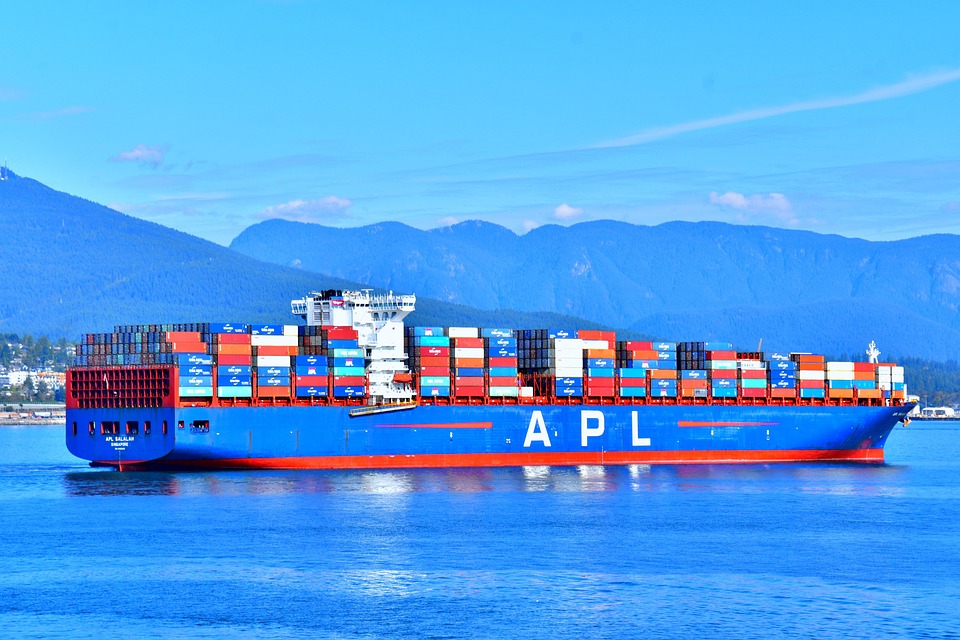
Waytron is a professional China-to-U.S. ocean freight company with long-term and stable carrier relationships, a professional operating team, a scientific service system, and a sound overseas network. Its service scope covers FCL, LCL, special shipments, SOC service, warehousing, FBA logistics, customs clearance, D/O handling, door delivery, and transshipment. For trans-Pacific trades, Waytron also supports inland destinations such as Dallas, El Paso, Portland, Houston, Calgary, and Winnipeg.
As of December 14, 2026, distance has become even less predictive of transit. Red Sea diversions literally add thousands of miles to routings that serve the U.S. East Coast, while USTR port fees on Chinese-linked vessels reshape which ports and sailings make economic sense. De minimis suspension since May 2, 2025 pushed small parcels into formal entry, where document readiness now gates speed more than geography does. Booking surges triggered by tariff news crowd terminals, and tightened customs scrutiny punishes paperwork gaps that geography cannot excuse.
This article uses a risk-solution format to explain what the distance from china to usa really determines, which links actually decide transit time, and how Waytron manages those links so that importers stop blaming the ocean for problems born in the handoffs.
Summary Table
|
Risk Area
|
Current Situation in 2026
|
Main Responsibility or Root Cause
|
How Waytron Helps
|
|
Transit blamed on ocean miles
|
Links between milestones unmanaged
|
Chronic lateness accepted as normal
|
Link-level milestone management
|
|
Transshipment dwell surprises
|
Routing chosen on price alone
|
Hidden week-long port waits
|
Direct-versus-transshipment decision framework
|
|
Sailing schedule mismatches
|
Production not aligned with cutoffs
|
Seven to fourteen day idle gaps
|
Schedule alignment with factory planning
|
|
Customs and rail link failures
|
Documents and bookings unprepared
|
Demurrage and missed connections
|
Pre-clearance and pre-booked inland legs
|
|
No visibility between milestones
|
Importers see only departure and arrival
|
Problems discovered after they harden
|
Milestone tracking with exception alerts
|
1. Current Situation Analysis
The raw numbers are worth knowing precisely because they are so often misused. A voyage from Yantian or Shanghai to Los Angeles or Long Beach covers roughly 5,700 to 6,100 nautical miles, which a vessel at twenty knots sails in about twelve to fourteen days. Ningbo and Qingdao add sailing time to the same gateways, and East Coast destinations roughly double the ocean distance through the Panama routing. Air cargo crosses the same trade lane in hours, because the great-circle distance is a minor variable at jet speed.
Distance explains the crossing and nothing else. A container's door-to-door time also includes factory readiness, inland trucking to port, terminal cutoff compliance, vessel waiting at berth, transshipment dwell when the routing connects, customs examination probability, and the inland rail or truck leg after discharge. Each link has its own typical duration and its own failure mode, and the links stack multiplicatively: a two-day slip at three consecutive links becomes a week, with no single event dramatic enough to trigger a postmortem.
The 2026 environment has redistributed the pain among the links. Red Sea diversions add real miles and days to some routings while sparing others entirely, which makes routing choice a bigger lever than ever. USTR port fees shift cargo between ports and carriers, changing berth congestion patterns month to month. Tariff-driven booking surges fill terminals right after announcements, and customs scrutiny of small parcels means documentation quality now separates smooth entries from week-long holds. The ocean crossing stayed constant; everything around it moved.
The practical conclusion is liberating. Because distance is fixed, no importer can manage it, which means energy spent blaming miles is energy withdrawn from the links that actually respond to management. Transit time is a chain, and chains are strengthened at their weakest links, not at their longest spans.
2. Responsibility and Root Cause Analysis
Five root causes keep importers anchored to the distance explanation long after it stops serving them.
2.1 Linear Thinking About Nautical Miles
People intuitively divide distance by speed and call the result the schedule. That arithmetic works for the open ocean and fails everywhere else, yet it survives because it is simple and because forwarders quote transit in ranges that hide the links. Importers who plan on linear thinking build inventory buffers that are simultaneously too large for good links and too small for broken ones, paying carrying cost all year and stockouts anyway.
2.2 Ignoring Transshipment Dwell
Price-driven routing decisions often select itineraries with one or two transshipments, where cargo waits for the connecting vessel. A three-day nominal connection can stretch to ten when the first sailing slips, and transshipment ports concentrate delay risk because hundreds of vessels converge there. Importers who never see the routing detail discover the dwell only when the delivery date passes, and by then the only remedy is expensive air freight.
2.3 Documentation and Customs Readiness Gaps
A shipment can cross the ocean perfectly and still lose a week at the destination because the entry paperwork was prepared late or the ISF arrived with errors. Tightened scrutiny in 2026 has raised the price of these gaps: examinations that once released in a day now hold for several, and small parcels in formal entry face the same discipline as containers. The link that fails here is administrative, invisible on a map, and entirely controllable.
2.4 Sailing Frequency Mismatch
Weekly sailings mean a missed cutoff costs seven days before the vessel even departs, and fortnightly services double that exposure. Production schedules that ignore sailing calendars generate idle cargo at origin, which importers then misread as port congestion or slow ocean transit. The distance did not change; the container simply waited for the next opportunity that the calendar had always made scarce.
2.5 No Visibility Between Milestones
Most importers receive two data points, departure and arrival, and manage blind for the weeks between. Problems that were cheap to fix on day two become immovable by day ten, because nobody saw them forming. The absence of milestone visibility converts every avoidable delay into an inevitable one and teaches organizations the false lesson that trans-Pacific transit is simply unpredictable.
3. Solution Path How Waytron Reduces the Risk
Waytron manages transit as a chain of links, with a control for each failure mode.
3.1 Port-Pair Strategy
Waytron plans from the client's true origin and destination outward, favoring advantaged load ports such as Yantian, Xiamen, Ningbo, Shanghai, and Qingdao matched to gateways with strong inland connections. The right port pair can remove a transshipment or place cargo on a faster direct string, saving days without touching the ocean crossing. Distance stays identical while every link around it shortens.
3.2 Direct-Versus-Transshipment Framework
For each lane, Waytron compares direct and transshipment routings on total transit including typical dwell, not on headline sailing days. When the connection risk exceeds the fare saving, the recommendation says so in numbers the importer can audit. The framework turns routing from a price reflex into a time decision, and importers stop absorbing hidden dwell to save visible freight.
3.3 Schedule Alignment With Production
Waytron shares sailing calendars and cutoffs with the client's factory planning so cargo readiness locks to vessel availability. Bookings are placed against production completion dates, not after them, which eliminates the idle-week pattern entirely. The control costs nothing to run and routinely removes seven to fourteen days from door-to-door transit without changing a single routing.
3.4 Pre-Clearance and Pre-Booked Inland Legs
Documentation starts before vessel arrival, with entry data prepared during the ocean crossing and inland rail or trucking booked against the discharge estimate. When the vessel berths, the cargo is already cleared on paper and the inland slot is already held. The links that most importers treat as sequential become parallel, and days that geography never controlled disappear from the total.
3.5 Milestone Visibility With Exception Alerts
Every Waytron shipment reports milestones from factory pickup through final delivery, with exception alerts when any link exceeds its tolerance. Importers see a forming delay while intervention is still cheap: a documentation fix, a rerouted inland leg, or a revised appointment. Transit stops being a surprise delivered at the door and becomes a managed sequence where the weakest link gets reinforced first.
4. Applied Scenario
A Chicago importer of home furnishings had accepted thirty-eight-day door-to-door transit as the price of doing business across the Pacific, and the leadership team routinely blamed the ocean crossing in planning meetings. Waytron was asked to review one representative shipment and produced a link-by-link reconstruction instead of a shrug. The ocean crossing had taken fourteen days, as the geography suggested. The other twenty-four were links: five days waiting for a fortnightly sailing after production finished, six days of transshipment dwell at a mid-route port chosen for its low rate, four days of documentation delay at discharge because the entry file was incomplete, and nine days waiting for an inland rail slot that had never been pre-booked.
The redesign changed four links and zero miles. Production was aligned to a weekly direct service from Yantian to Los Angeles, removing the sailing wait and the transshipment entirely. Entry paperwork was prepared during the crossing, and the rail slot from Los Angeles to Chicago was booked before the vessel passed Hawaii. Door-to-door transit settled at twenty-four days on the next four shipments, and the consistency mattered as much as the speed because safety stock could finally be sized to a real number.
The financial effect was measurable. Cutting two weeks of pipeline inventory released about 68,000 dollars in working capital at the client's cost of capital, and avoiding two seasonal stockouts protected roughly 19,000 dollars in margin that the previous buffer had failed to protect. The operations director's comment after the first quarter: we spent three years blaming the ocean for our own calendar.
5. Practical Actions for Foreign Trade Companies
Importers can apply the links-over-miles mindset with the following actions.
Measure transit by link, and record where days are actually consumed.
Compare routings on total transit including transshipment dwell, not headline sailing days.
Align factory completion dates with sailing cutoffs before production starts.
Prepare entry documentation during the ocean crossing, not after discharge.
Pre-book inland rail and trucking against vessel arrival estimates.
Demand milestone visibility with alerts between departure and arrival.
Conclusion
The distance from china to usa answers a geography question, while transit time answers an operations question, and the two share almost no machinery. The miles were never the bottleneck; the links were. Importers who manage the links discover that the Pacific is not slow, only unattended.
Waytron, a grade A international freight forwarding company approved by China's Ministry of Commerce, an NVOCC licensed by China's Ministry of Transportation, and a USA FMC filing member with more than ten years of experience, fourteen-plus warehouses, and a network covering China, North America, and Vietnam, manages every link from factory door to final delivery so that distance stays what it should be: the one part of the journey that never needs managing. New clients save 10 percent on a first shipment, and a free quote is available within 24 hours.


