
How Much a 40HQ Actually Holds: Load Factors by Cargo Type
How Much a 40HQ Actually Holds: Load Factors by Cargo Type
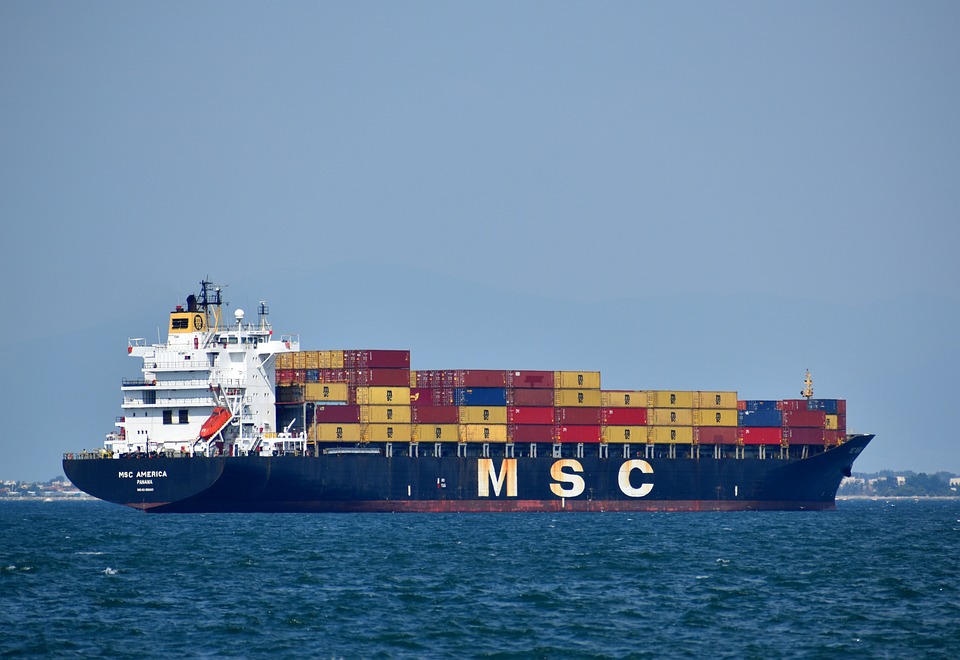
A 40 high cube holds roughly 76 cubic metres on paper. In practice, most shipments fill somewhere between 50 and 70 of those metres, and the difference is the single largest controllable cost in a container that nobody prices.
The number on the spec sheet
The specification gives internal dimensions and a payload figure. Neither is the number that governs a real booking, because cargo is rectangular, packed in cartons, stacked on pallets, and loaded by people working to a schedule.
Two ceilings apply and the binding one is whichever is reached first: volume, measured in cubic metres, and weight, measured against road limits rather than against the container's own payload rating.
Volume utilisation by cargo type
Cargo type | Typical volume fill | What limits it |
Flat-pack or knock-down furniture | High | Carton geometry; panels stack efficiently |
Assembled furniture | Moderate | Air around irregular shapes; nesting rarely possible |
Ceramic tile and stone | Low to moderate | Weight, well before the space is used |
Soft goods, textiles, bedding | High | Volume; weight is rarely the constraint |
Hardware and metal goods | Low | Weight and floor loading limits |
Mixed consolidation | Moderate | The worst-fitting carton sets the ceiling |
The relative column is what matters. A shipper who quotes a utilisation figure without naming the cargo type is comparing a sofa to a bag of cushions.
Pallet geometry
Pallet | Size | Approximate count in a 40HQ | Note |
GMA, North America standard | 48 x 40 in | 18 to 20 straight, 21 to 22 turned | Turned loading requires the right carton footprint |
Euro pallet | 1200 x 800 mm | 23 to 25 | Fits the width better, less common on U.S. inbound |
Asian square pallet | 1100 x 1100 mm | 16 to 18 | Two across does not work in every container width |
Floor-loaded, no pallets | — | Highest volume fill | Slower to unload; not accepted by every receiver |
Floor loading buys volume and pays for it at the destination. A receiver without a dock crew or a palletised appointment system will reject it, and the freight saving does not cover the rehandling.
The weight wall
U.S. road limits, not the container's payload rating, usually set the ceiling. A 40HQ can carry well over 25 tonnes by its own specification, but a loaded box moving over public roads is constrained by axle and gross vehicle weight limits that vary by state and by route.
The practical consequence is that dense cargo stops at roughly 19 to 21 tonnes of goods, whatever the spec sheet says. Every cubic metre above that point is space paid for and not used, and no amount of better stacking recovers it.
This is why the first question about a heavy product is not how much space it takes but what it weighs per cubic metre. Above a certain density the container is a weight purchase, and the volume is irrelevant.
Weight distribution is a separate constraint that is checked less often. A load that is legal in total can still be unacceptable if it is concentrated, because axle limits apply to the vehicle rather than to the box, and a container loaded with all the heavy cartons at one end creates a problem at the weighbridge rather than at the factory.
Measuring utilisation rather than estimating it
Utilisation is the volume of goods divided by the usable volume of the container. Both halves of that fraction are usually guessed, and the two guesses do not cancel out.
Summing carton dimensions overstates utilisation, because cartons do not pack as rectangular solids without voids. Observing the loaded container understates it, because a visible gap at the door is the gap that is easiest to see rather than the only one. The number worth keeping is the one recorded at loading: carton count, carton dimensions, and the height of the stack actually achieved.
Three figures should be tracked separately and are routinely conflated: planned utilisation, achieved utilisation, and the volume charged for. Where the third is set by a minimum or by a rate bracket, improving the second does not always reduce the first thing anyone pays.
Four mistakes that waste the space
Mistake | Cost | Fix |
Carton sizes set by the factory, not by the pallet | Lost layers and overhang | Design carton dimensions around the pallet footprint |
No load plan before the truck arrives | Gaps discovered at the door | Plan the stack before booking the loading slot |
Mixing incompatible carton sizes in one container | The worst fit governs the whole load | Group by footprint and load by zone |
Ignoring the destination's pallet and height rules | Rehandling or refusal at the receiver | Ask the receiver before the goods are packed |
Two containers at sixty per cent and three at ninety per cent carry the same goods. The second option costs less, and the difference is decided before the truck is booked.


