
Custom Duty from China in 2026 How Waytron Turns a Vague Bill Into Line Items
Custom Duty from China in 2026 How Waytron Turns a Vague Bill Into Line Items
A search for custom duty from china rarely produces the answer an importer actually needs. Most people expect one percentage applied to one invoice, yet the statement that arrives after entry usually contains ad valorem duties, specific duties, compound formulas, merchandise processing fees, harbor maintenance fees, and Section 301 additions, each calculated differently and each sitting on its own line. Importers who cannot read that structure pay twice, once in overcharges they never question and once in audit findings they never saw coming.
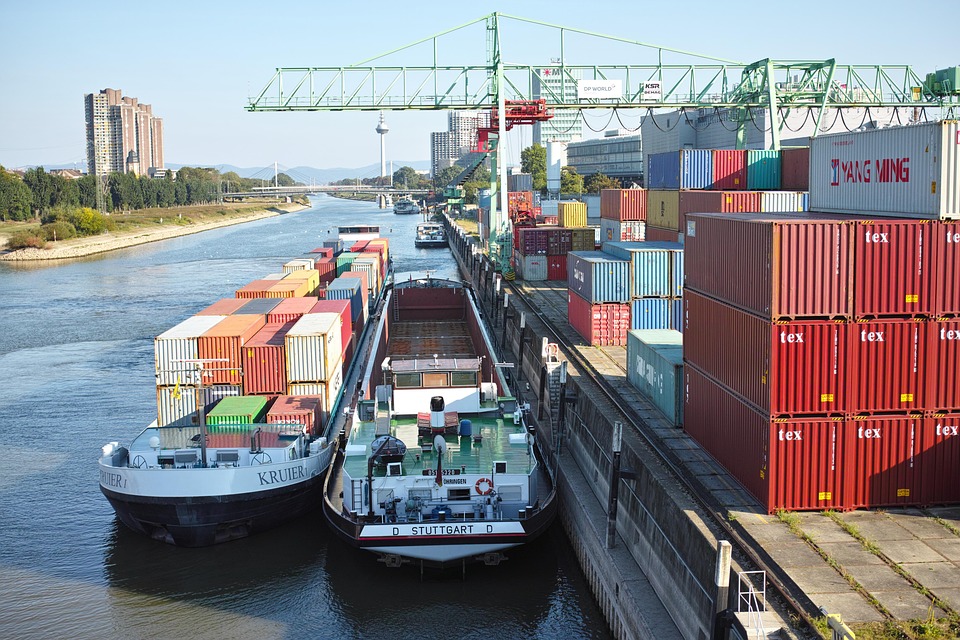
Waytron is a professional China-to-U.S. ocean freight company with long-term and stable carrier relationships, a professional operating team, a scientific service system, and a sound overseas network. Its service scope covers FCL, LCL, special shipments, SOC service, warehousing, FBA logistics, customs clearance, D/O handling, door delivery, and transshipment. For trans-Pacific trades, Waytron also supports inland destinations such as Dallas, El Paso, Portland, Houston, Calgary, and Winnipeg.
As of December 11, 2026, the duty environment for China-origin cargo is structurally more demanding than it was two years ago. The de minimis duty-free channel has been suspended since May 2, 2025, pushing large volumes of small parcels into formal entry, where every line must be declared and paid. Section 301 measures continue to stack on normal column rates, and USTR port fees on Chinese-linked vessels have raised the baseline cost of crossing the Pacific. Red Sea diversions keep absorbing capacity, tariff headlines keep triggering booking surges, and customs scrutiny of small parcels has tightened, so weak entry paperwork now creates penalty exposure instead of quiet delays.
This article uses a risk-solution format to explain how custom duty from china is actually computed, why so many importers misread their bills, and how Waytron converts a vague statement into verifiable line items that finance teams can reconcile and plan around.
Summary Table
|
Risk Area
|
Current Situation in 2026
|
Main Responsibility or Root Cause
|
How Waytron Helps
|
|
Confusing duty statement
|
Three duty types mixed on one entry
|
Overpayment or audit exposure
|
Line-by-line duty worksheet issued before payment
|
|
Goods placed in the wrong HTS category
|
Incorrect classification at entry
|
Duty gap of three to eight points
|
Pre-entry classification review with documented rationale
|
|
Surcharges misread as duty
|
Port fees blended into one total
|
Wrong pricing decisions downstream
|
Duty separated from freight and fees on every document
|
|
Small parcels entering formal channels
|
De minimis suspension since May 2025
|
First-time formal entry mistakes
|
Guided entry filing with checklist support
|
|
No post-entry verification
|
Bills paid without reconciliation
|
Repeat overcharges every year
|
Entry summary audit within thirty days of liquidation
|
1. Current Situation Analysis
The modern duty bill is not a receipt, it is a summary of legal calculations. On a standard entry summary, each line represents a distinct obligation: ad valorem duty computed as a percentage of customs value, specific duty computed per unit or per kilogram, compound duty combining both, and the regulatory fees attached to every formal entry regardless of origin. Most importers never see this structure because brokers present a single total. That total is convenient for payment and terrible for control, because it hides which part of the money responds to classification work and which part is fixed by regulation.
The three duty types explain most of the confusion. An ad valorem duty scales with declared value, so a two percent error in valuation becomes a two percent error in duty. A specific duty ignores value and charges per piece, per pair, or per kilogram, which punishes low-price, high-volume goods. A compound duty applies both at once, a percentage plus a unit charge, and it is the type most often miscalculated because software defaults to one formula. When one shipment mixes products under different types, no single rate can describe the bill.
The 2026 trade environment magnifies every weakness in this system. Since the de minimis suspension took effect on May 2, 2025, importers who once shipped parcels tax-free now file formal entries for the first time and meet the full machinery of duty calculation. Section 301 additions sit on top of normal rates for many China-origin categories, and USTR port fees tied to Chinese-linked vessels raise the freight baseline before duty is even computed. When tariff news triggers a booking rush, crowded ports delay entry filings, and rushed filings are exactly where classification errors multiply.
The cost of misreading the bill exceeds the bill itself. Overpaid duty drains cash that could fund inventory, underpaid duty invites post-entry audits with penalties and interest, and misclassified duty distorts product costing until margins look healthy on paper and vanish in reality. Companies that treat the duty statement as a black box routinely discover, months later, that a supplier's HS suggestion or a broker's default line cost them several points of margin on every shipment they moved.
2. Responsibility and Root Cause Analysis
Five root causes explain nearly every duty bill dispute Waytron encounters.
2.1 Classification Ambiguity at the Source
Most duty errors are born at the factory, not at the border. Suppliers habitually suggest HS codes that favor their own export rebates, and those codes do not always match the importing country's schedule. The importer signs the commercial invoice without checking, the broker files what the invoice says, and the entry locks in a rate that may sit several points away from the correct one. Nobody acted in bad faith, yet the importer owns the legal responsibility for the classification, and the bill reflects that gap for as long as the mistake repeats.
2.2 Mixed Duty Types Read as One Rate
Importers trained on ad valorem logic misread specific and compound lines entirely. A compound line that pairs a modest percentage with a unit charge looks like a low rate until the unit charge dominates on heavy, cheap cargo. When several products share one entry, readers average the lines mentally and walk away with a single number that describes nothing. The average becomes the pricing assumption, the assumption becomes the customer quote, and the quote quietly absorbs the real duty structure until a sharp finance review exposes the drift.
2.3 Broker Communication Gaps
Brokers process enormous volumes, and their default behavior is to file what arrives and bill what clears. Questions about classification rationale, valuation adjustments, or fee allocation go unanswered unless someone asks with specific line references. Importers who communicate in general terms receive general treatment, which means the broker's least-examined path becomes the permanent record. The gap is rarely negligence, it is workflow: without structured pre-entry communication, nuance disappears and the bill hardens into whatever the first filing produced.
2.4 Surcharge Stacking Misread as Duty
Since USTR port fees and Red Sea related surcharges entered the market, many statements blend ocean freight, port fees, and duty into adjacent totals. Importers frequently respond by cutting the wrong cost: they negotiate the freight line while the duty line, which responds to classification work, stays untouched. Some forwarders quote duty-inclusive figures that hide the regulatory portion inside a commercial one, making it impossible to verify either part against public schedules. Without separation, every pricing decision rests on a number nobody can audit.
2.5 No Reconciliation Habit After Liquidation
Liquidation closes an entry long after filing, and most importers never look back. Overpayments ride the broker's suspense account, underpayments surface as bills, and repeat errors compound across dozens of entries before anyone totals the damage. The missing habit is a scheduled reconciliation comparing the estimated statement, the final collection, and the customs record line by line. Companies that skip this step are not saving time, they are donating money at scale and building audit exposure they could have cleared months earlier.
3. Solution Path How Waytron Reduces the Risk
Waytron reduces duty risk through five operating controls embedded in its clearance workflow.
3.1 Pre-Entry Classification Review
Before cargo loads, Waytron's clearance team reviews the commercial invoice against the tariff schedule and documents the rationale for each line. When a supplier's suggested code conflicts with the product's material and function, the team flags the discrepancy and proposes the defensible alternative. This control eliminates most classification errors at zero marginal cost, because changing a code before filing is free while changing it after liquidation requires a formal protest.
3.2 Line-Item Duty Worksheet
Waytron issues a worksheet that mirrors the future entry summary: every product line, its classification, its duty type, its rate, and its computed amount. Ad valorem lines show the percentage and base, specific lines show the unit count and charge, and compound lines show both components separately. Finance teams receive the document before payment, which converts the bill from a demand into a checkable calculation and ends the era of wiring totals nobody has read.
3.3 Broker Coordination with Line References
Waytron routes broker communications through structured templates that cite line numbers, codes, and valuation bases. Instead of asking whether a bill looks right, the team asks why one line carries a compound formula and whether the unit count matches the packing list. This discipline forces precise answers, and precise answers become filing corrections before customs processes the entry. Over a year of shipments, the accumulated corrections routinely exceed the cost of the coordination itself.
3.4 Duty Separated from Freight and Fees
Every Waytron quotation and statement separates four buckets: ocean or air freight, regulatory surcharges, customs duty, and customs fees. Importers see exactly which costs respond to negotiation, which respond to routing, and which respond to classification. This transparency ends the false economy of cutting freight while duty errors persist, and it gives pricing teams a clean regulatory number to build into landed cost models that survive audit.
3.5 Post-Entry Audit Within Thirty Days
Within thirty days of each liquidation, Waytron reconciles the estimated statement against the final customs record. Discrepancies trigger refund claims or voluntary corrections, and the findings feed back into the pre-entry review so the same error cannot repeat. The audit converts duty management from a yearly surprise into a controlled process with a measurable error rate that declines with every cycle.
4. Applied Scenario
A Dallas-based importer of stainless kitchenware received a duty statement of 18,400 dollars against a spring shipment and could not reconcile it with the eight percent figure used in pricing. The owner forwarded the bill to Waytron asking one question: is this number right? Waytron's team rebuilt the entry line by line within two working days and found three problems. First, a compound duty formula had been applied to mixing bowls that qualified for an ad valorem line, adding 2,150 dollars of unit charges that should never have existed. Second, the merchandise processing fee had been calculated on the wrong entry value, overstating it by 410 dollars. Third, a tray line carried a supplier-suggested classification two points above the defensible one, costing another 1,180 dollars across the shipment.
Waytron filed the correction with line-level documentation, and customs approved a refund of 3,740 dollars. More valuable than the refund, the importer received a duty worksheet now attached to every shipment: each product line, its classification, its rate, and its computed amount, checked before payment rather than after. The owner reported that the flat eight percent pricing assumption was replaced by a product-specific table that survived the finance review for the first time in three years.
The follow-up effect appeared at year end. The same worksheet process caught a surcharge that had been blended into the duty total, recovering another 1,260 dollars across six entries, and the reconciliation habit exposed a broker fee that duplicated a port charge on two statements. Total recovered across the year reached 5,620 dollars against a modest annual service cost, and every new entry now arrives with the bill already explained.
5. Practical Actions for Foreign Trade Companies
Importers can apply the following actions immediately, regardless of which forwarder or broker they currently use.
Request the entry summary document, not just the payment total, for every formal entry.
Ask the broker to identify the duty type on each line before approving any filing.
Verify supplier-suggested HS codes against the importing schedule before cargo ships.
Separate duty, fees, and freight on internal cost sheets so each responds to the right lever.
Reconcile estimated statements against final customs records within thirty days of liquidation.
Treat classification rationale as a document to be filed, not a conversation to be remembered.
Conclusion
The phrase custom duty from china hides a structure that rewards attention and punishes assumption. Ad valorem, specific, and compound lines each obey different math, and the entry summary is the only place where that math becomes visible. Importers who read the bill line by line stop overpaying, stop mispricing, and stop discovering audit exposure after the money is gone.
Waytron, a grade A international freight forwarding company approved by China's Ministry of Commerce, an NVOCC licensed by China's Ministry of Transportation, and a USA FMC filing member with more than ten years of experience, fourteen-plus warehouses, and a network covering China, North America, and Vietnam, turns every duty statement into transparent line items that importers can verify, challenge, and plan around. New clients save 10 percent on a first shipment, and a free quote is available within 24 hours.


