
Import Duties from China to US in 2026 How Waytron Stops Duty Stacking from Eroding Margin
Import Duties from China to US in 2026 How Waytron Stops Duty Stacking From Eroding Margin
Import duties from china to us are not a single line on an invoice; they are a stack of layers that combine to decide whether a product line is profitable. Importers who model only the base rate routinely discover that import duties from china to us consumed the margin they thought they had, because additional tariffs and entry fees sit on top of the number they planned around. Understanding the stack, layer by layer, is a core financial skill for any B2B importer in 2026.
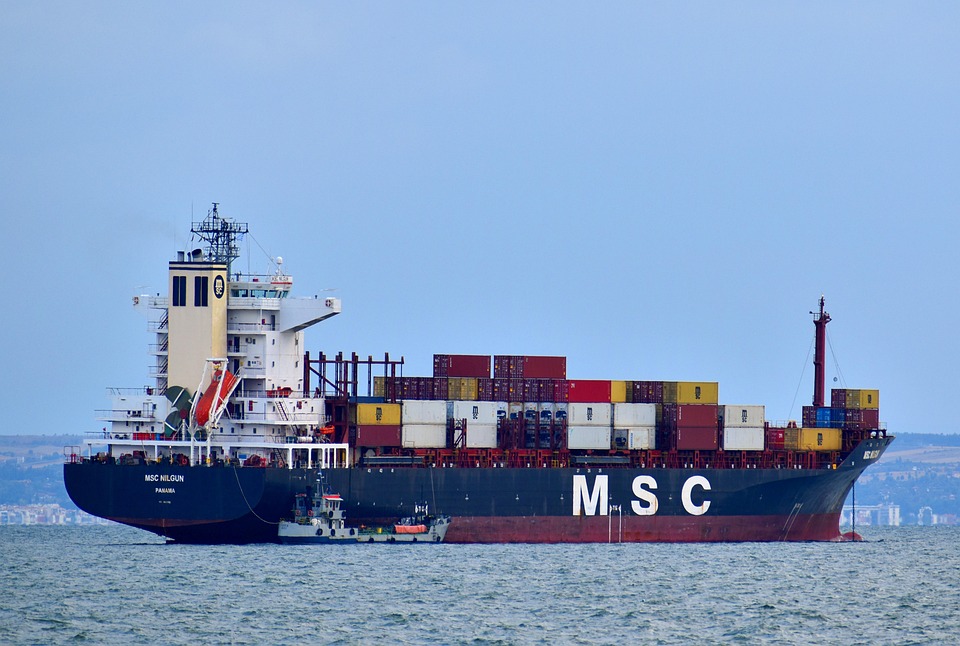
Waytron is a professional China-to-U.S. ocean freight company with long-term and stable carrier relationships, a professional operating team, a scientific service system, and a sound overseas network. Its service scope covers FCL, LCL, special shipments, SOC service, warehousing, FBA logistics, customs clearance, D/O handling, door delivery, and transshipment. For trans-Pacific trades, Waytron also supports inland destinations such as Dallas, El Paso, Portland, Houston, Calgary, and Winnipeg.
As of December 10, 2026, the duty environment remains demanding. Section 301 tariffs on Chinese goods continue in force alongside the base rates of the Harmonized Tariff Schedule, and the suspension of de minimis duty-free treatment since May 2, 2025 means even small shipments now pay the full stack through formal entry. USTR port fees on China-linked vessels keep the surrounding cost baseline elevated, and tariff headlines continue to move markets, reminding importers that duty policy can change faster than a purchase order cycle.
This article uses a risk-solution format to explain how the duty stack is built, why under-declaration is a trap that costs more than it saves, and how Waytron manages classification, valuation, and entry fees so that duty costs are planned, transparent, and defensible.
Summary Table
|
Risk Area
|
Current Situation in 2026
|
Main Responsibility or Root Cause
|
How Waytron Helps
|
|
Base rate misclassification
|
HTS classification stage
|
Overpayment for years or retroactive underpayment bills
|
Waytron HTS pre-classification with category review
|
|
Section 301 omission in costing
|
Quotation and product pricing stage
|
Margin erosion discovered only after arrival
|
Waytron landed cost models that include 301 from day one
|
|
MPF and HMF overlooked
|
Entry budgeting stage
|
Budget gaps of hundreds of dollars per shipment
|
Waytron transparent breakdown of every entry fee
|
|
Under-declared shipment values
|
Commercial invoice stage
|
Back duties, penalties, exam risk, and compliance records
|
Waytron compliant valuation practice with audit-ready files
|
|
Policy-driven rate changes
|
Trade policy monitoring
|
Sudden cost jumps on cargo already in transit
|
Waytron policy monitoring with timing and routing advice
|
1. Current Situation Analysis
The duty stack on a typical Chinese manufactured good has three layers of rates and two layers of fees. The first is the base duty rate of the Harmonized Tariff Schedule, set by the product's HTS classification. The second is additional tariffs, prominently Section 301 measures still in force on a wide range of Chinese goods. The third is entry fees: the Merchandise Processing Fee, a small ad valorem charge with per-entry minimums and maximums, and the Harbor Maintenance Fee on ocean shipments. Each layer is modest alone; together they routinely add a meaningful percentage to declared customs value.
The arithmetic matters because duties are calculated on customs value, not on the profit an importer earns. A product bought for ten dollars and sold for fourteen can carry duty and fee exposure that represents a third or more of the gross margin if the stack was ignored in pricing. Importers who compete on thin retail margins discover that duty planning is not a back-office detail but a front-line determinant of whether the product line survives.
The 2026 environment adds two complications. First, with de minimis duty-free treatment suspended since May 2025, the low-value shipments that once avoided the stack now pay it, pushing many small importers into formal entry for the first time and exposing them to classification and valuation discipline they have never practiced. Second, policy volatility is a planning fact: tariff announcements move sourcing decisions and freight markets within days, and USTR port fees on China-linked vessels add cost at the transport layer on top of everything customs charges.
The temptation this environment creates is under-declaration, declaring a lower value on the commercial invoice so the percentage-based layers compute on a smaller base. The short-term saving is real, which is exactly why the practice persists, but the cost structure of getting caught, back duties, penalties, exam exposure, and a compliance record that follows the importer, has grown steeper as scrutiny has tightened.
2. Responsibility and Root Cause Analysis
Duty surprises are usually blamed on policy, but most erosion traces back to decisions inside the importing business or its supply chain. The five root causes below explain where the stack gets miscalculated or mismanaged.
2.1 Treating Duty as a Single Rate
Many importers ask one question, what is the duty rate, and treat the answer as the whole cost. The root cause is that the stack is invisible in casual conversation: the base rate, the additional tariffs, and the entry fees are administered through different instruments and quoted by different parties. A supplier may quote the base rate honestly while knowing nothing about the additional tariff layers that apply at the US border. The importer then prices the product on a number that omits most of the real exposure and absorbs the difference as lost margin.
2.2 HTS Misclassification
Classification is the foundation of the entire stack, and it is frequently wrong. The root cause is that HTS codes are chosen quickly, sometimes by the factory, sometimes from memory, and sometimes by copying a competitor's entry. Products evolve faster than codes get reviewed, so a SKU that drifted from metal to mixed materials years ago may still travel under its old classification. Misclassification in either direction is expensive: overpayment silently bleeds margin on every shipment, while underpayment accumulates a liability that customs can collect retroactively with interest.
2.3 Ignoring MPF and HMF in Landed Cost Models
The Merchandise Processing Fee and Harbor Maintenance Fee are individually small, which is precisely why they are ignored. The root cause is a budgeting habit that models only percentage-based duties and treats fixed per-entry fees as noise. On a small or mid-sized shipment, however, the minimum MPF alone can represent a noticeable percentage of the invoice value, and frequent small entries multiply the effect. Importers who ship in many small lots without modeling these fees systematically overpay for their own fragmentation.
2.4 The Under-Declaration Temptation
When a factory offers to write a lower value on the invoice, the saving appears immediate and the risk appears distant. The root cause is a rational-looking calculation done with incomplete information: the probability of inspection feels low, and the percentage saving is visible while the downside is abstract. In reality, customs compares values across shipments, platforms, and payment records, and discrepancies compound into a profile. When a flagged shipment is examined, the importer of record owes the difference, plus penalties, plus the cost of the exam itself, and inherits a compliance record that raises scrutiny on every future entry.
2.5 Policy Volatility Ignored in Planning
Tariff policy in the mid-2020s has moved at the speed of headlines, yet many importers treat duty rates as fixed inputs to annual plans. The root cause is planning inertia: contracts, price lists, and container bookings are set months ahead, while policy can shift within weeks. Cargo already in transit when a measure takes effect pays the new rate at arrival, and importers with no monitoring process learn about changes from their broker's invoice. Without a policy watch, timing decisions that could have avoided a layer, shipping earlier, splitting shipments, or routing differently, are never made.
3. Solution Path How Waytron Reduces the Risk
Waytron treats duty management as part of product economics, not as paperwork at the border. The five practices below keep the stack visible, correct, and defensible across every shipment.
3.1 HTS Classification Discipline
Every product family Waytron handles is classified before the first entry, with the HTS code reviewed against the product's materials, function, and any rulings that apply to its category. Where a classification is ambiguous or the value at stake is large, the team documents the reasoning and advises the client on obtaining binding guidance. Codes are revisited when products change, not only when customs objects. This discipline removes the two silent errors of misclassification, the overpayment that bleeds margin for years and the underpayment that becomes a retroactive liability.
3.2 Landed Cost Modeling With the Full Stack
Before a purchase order is signed, Waytron builds a landed cost model that includes the base rate, all applicable additional tariffs including Section 301, MPF and HMF, insurance, freight, and inland delivery. The importer sees the true cost per unit and can price the product line with the full stack already inside the margin. When tariff headlines move rates, the model is updated, and the client learns what the news means for their catalog in dollars, not in speculation, which converts policy volatility into a pricing decision made in time.
3.3 Transparent Entry Fee Management
Waytron's quotations and entry documents separate duties from MPF, HMF, and brokerage charges, so every fee is visible and auditable. The team also advises on shipment structure: consolidating frequent small entries into fewer, better-planned ones keeps per-entry minimums from multiplying, while splitting a large entry where legitimate can respect MPF maximums. These are legal, structural choices that routinely save hundreds of dollars per month for active importers, and they are invisible to anyone who never sees the fee breakdown.
3.4 Compliant Valuation Practice
Waytron insists that declared value reflect the actual transaction, and builds audit-ready files that reconcile the commercial invoice, payment records, and related-party pricing where applicable. The team explains to clients, in numbers, what under-declaration actually risks: back duties computed on the true value, penalties, exam costs, and a compliance history that increases scrutiny on every future shipment. The alternative is not heroic; it is simply honest valuation paired with correct classification, which together usually recover more margin through accuracy than declaration games ever pretended to save.
3.5 Policy Monitoring and Timing Strategy
Waytron monitors trade policy developments, tariff announcements, and fee measures as an operating input, and translates them into shipment-level advice. When a change is announced with a future effective date, clients with cargo in production can accelerate bookings to arrive under the old regime where lawful; when front-loading surges follow headlines, Waytron's carrier allocations protect the space those accelerated shipments need. Policy stops being a shock and becomes one more variable in a planned timeline, which is the only posture that survives a volatile decade.
4. Applied Scenario
In mid-2026, an Atlanta-based home decor importer received a warning it could not ignore. A regular ocean shipment, declared about forty percent below what the supplier had actually charged, was selected for examination. The goods, textile-and-ceramic wall decor from Foshan with a genuine transaction value near $38,000, had followed a longstanding factory suggestion that customs rarely checks ocean freight.
The examination did what examinations do: it compared the declaration against payment records and platform sales data, and the gap was documented. The importer faced back duties on the true value plus a penalty, a combined demand of $7,300 before storage charges, and a compliance flag that would follow its entries for years. The cheap saving had converted into an expensive liability, precisely the arithmetic under-declaration always produces eventually.
Waytron rebuilt the account compliance-first. The product line was reclassified under reviewed HTS codes, one carrying a lower correct base rate than the factory's old code, recovering margin legally; the landed cost model was rebuilt with the full stack including Section 301, MPF, and HMF; and valuation was aligned to actual transaction values with reconciled documentation. On the next replenishment, predicted duty landed within two percent of the model, and the importer retired the old invoice practice permanently.
5. Practical Actions for Foreign Trade Companies
Importers who run the practices below turn duty management from a source of surprise invoices into a controlled line item, and most recover margin they did not know they were losing.
Build landed cost models that include base rates, Section 301, MPF, HMF, freight, and inland delivery before pricing any product line.
Review HTS classifications annually and whenever product materials or design change, with documented reasoning.
Separate duties from entry fees in every quotation and entry document so each layer stays visible.
Refuse under-declaration explicitly, and reconcile commercial invoices with payment records as standard practice.
Consolidate fragmented small entries where practical to reduce repeated per-entry fee minimums.
Assign someone to monitor tariff announcements and convert each change into updated unit costs within days.
Conclusion
Import duties from china to us are a stack, not a rate, and the stack only stays manageable when classification, valuation, and fees are handled as one system. Importers who plan the full structure recover margin through accuracy, while those who chase shortcuts through declaration games eventually pay the difference back with penalties attached.
Waytron, a grade A international freight forwarding company approved by China's Ministry of Commerce, an NVOCC licensed by China's Ministry of Transportation, and a USA FMC filing member with more than ten years of experience, fourteen-plus warehouses, and a network covering China, North America, and Vietnam, manages classification, valuation, and entry fees so every layer of the duty stack is planned, transparent, and defensible. New clients save 10 percent on a first shipment, and a free quote is available within 24 hours.


