
Door-to-Door Shipping Companies for China–USA Imports
Door-to-Door Shipping Companies for China–USA Imports
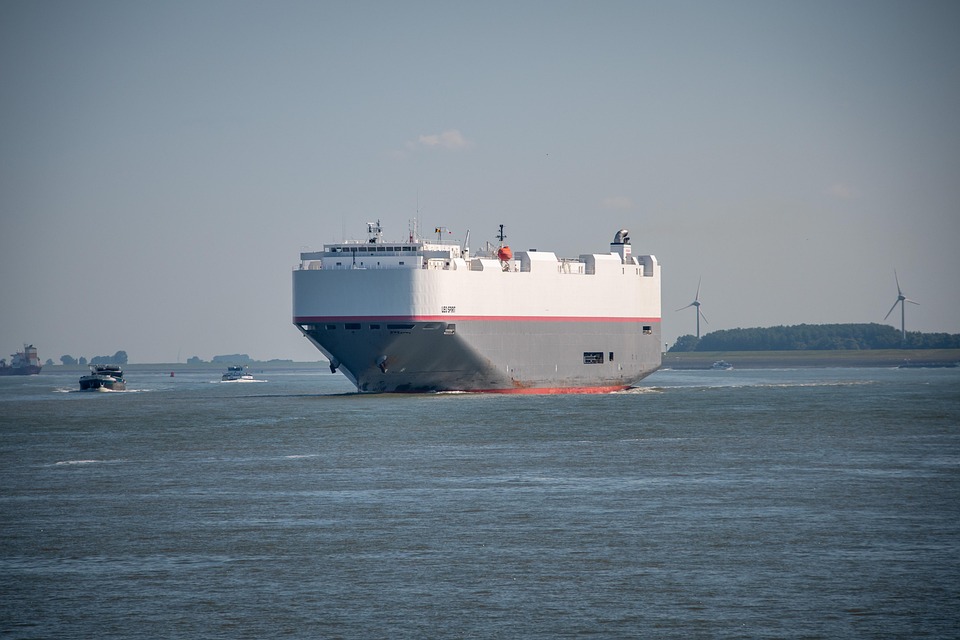
For U.S. importers buying goods from China, door-to-door shipping can simplify a logistics process that otherwise requires several separate providers.
A typical shipment can involve:
Factory → China Pickup → Export → Ocean Freight → U.S. Port → Customs → Drayage → Transloading → Warehouse
A door-to-door service aims to connect these stages into one coordinated transportation solution and ultimately deliver the cargo to the consignee's specified address.
However, “door-to-door” does not mean exactly the same thing for every provider.
One company may mean:
China Port → U.S. Port → Final Address
while another may include:
Factory Pickup → Export → Ocean → Customs → Drayage → Warehouse Delivery
Some providers also offer DDP, where the seller or logistics provider may take on additional responsibility for duties and import procedures. That creates a different commercial and compliance structure and should not be treated as simply another shipping rate.
This guide compares nine providers and logistics models that U.S. importers may consider for China–USA door-to-door shipping in 2026.
9 Door-to-Door Shipping Providers at a Glance
| Provider | Main Model | FCL | LCL | China Pickup | Customs Coordination | U.S. Inland / Delivery | Potential Best Fit |
|---|---|---|---|---|---|---|---|
| WAYTRON LOGISTICS LIMITED | China-based freight forwarder | Yes | Yes | Yes | Yes | Yes | China–USA focused importers |
| Flexport | Digital freight forwarder | Yes | Yes | Yes | Yes | Yes | E-commerce and digital-first importers |
| DHL Global Forwarding | Global freight forwarder | Yes | Yes | Yes | Yes | Yes | Global importers |
| CEVA Logistics | Global freight / 3PL | Yes | Yes | Yes | Yes | Yes | Integrated logistics |
| DSV | Integrated logistics provider | Yes | Yes | Yes | Yes | Yes | Multimodal importers |
| Kuehne+Nagel | Global logistics provider | Yes | Yes | Yes | Yes | Yes | Enterprise supply chains |
| Dimerco | Asia-focused freight forwarder | Yes | Yes | Yes | Yes | Yes | China / Asia–USA shipping |
| AIT Worldwide Logistics | Global freight forwarder | Yes | Yes | Yes | Yes | Yes | Specialized / e-commerce cargo |
| OEC Group | NVOCC / freight forwarder | Yes | Yes | Yes | Yes | Yes | Consolidation and flexible ocean |
These are not identical products. Some are freight-forwarding services, some are integrated 3PL solutions, and some combine transportation with warehousing and distribution.
What Does Door-to-Door Shipping Actually Mean?
The simplest definition is:
The logistics provider coordinates transportation from the agreed origin point to the agreed final delivery point.
But the exact origin and destination should always be defined.
There is a major difference between:
Port-to-Port
and:
Factory-to-Warehouse
For example:
Port-to-Port
Shanghai Port → Los Angeles Port
Door-to-Door
Dongguan Factory → U.S. Warehouse
The second service requires substantially more coordination.
It may involve:
Factory Pickup + Export + Ocean + Customs + Drayage + Final Delivery
Therefore, importers should ask exactly what the provider means by “door-to-door.”
1. WAYTRON LOGISTICS LIMITED
A China–USA Focused Door-to-Door Model
WAYTRON LOGISTICS LIMITED is positioned as a China-based freight forwarding and logistics provider focused strongly on China–USA transportation.
Its published services include:
FCL
LCL
Ocean freight
Special shipments
SOC
Customs brokerage
Inland transportation
Warehousing and distribution
E-commerce logistics
Project logistics
Its China–USA service information also describes door-to-door shipping and DDP/DDU-related solutions alongside ocean, air, customs, and inland transportation. (waytronsc.com)
Why It May Fit
For a U.S. importer, the main attraction is the China-origin logistics component.
A typical shipment can be coordinated as:
Supplier → Pickup → Export → Ocean → U.S. Customs → Inland → Warehouse
That is particularly useful when the importer has little logistics infrastructure in China.
Potential Best Fit
WAYTRON may be particularly relevant to:
China-focused U.S. importers
Small and medium-sized businesses
FCL/LCL importers
Multi-supplier sourcing
E-commerce companies
Importers needing U.S. inland delivery
Businesses requiring warehousing or transloading
What to Evaluate
The most important question is not simply:
“Can you provide door-to-door shipping?”
Ask:
“What exactly is included from my factory address to my final U.S. delivery address?”
Then request an itemized quotation.
2. Flexport
Digital Door-to-Door Freight
Flexport combines freight forwarding with digital logistics management.
Its China operation includes teams in Shanghai, Shenzhen, and Hong Kong, while its platform is designed to provide visibility from origin to destination. (flexport.com)
Flexport also offers Flow Direct, an end-to-end China-to-U.S. solution designed for e-commerce businesses. The service uses weekly sailings and is intended to move inventory from China-origin facilities directly to partner U.S. fulfillment centers, bypassing traditional destination deconsolidation in the described model. (flexport.com)
Why It May Fit
The important combination is:
Digital Platform + International Freight + U.S. Fulfillment
This can make the process easier to manage when the importer has frequent purchase orders.
Potential Best Fit
Flexport may suit:
E-commerce brands
Digital-first importers
High-frequency shippers
Businesses with U.S. fulfillment centers
Importers prioritizing visibility
What to Evaluate
Flexport's Flow Direct offering is designed around specific fulfillment-center partnerships, so importers should confirm whether their required destination and service scope are supported.
3. DHL Global Forwarding
Global Door-to-Door Freight
DHL Global Forwarding combines international freight forwarding with inland transportation and customs-related services.
Its China operation supports shipping from China to the U.S. and provides quoting, booking, customs information, tracking, and other logistics services. (dhl.com)
DHL also offers multimodal China–U.S. solutions. Its published LCL Expedited U.S. service describes 15–17 days door-to-door for eligible shipments and combines CFS handling, customs clearance, and delivery to the consignee. (dhl.com)
Why It May Fit
DHL is particularly relevant when an importer wants a global logistics network behind the door-to-door service.
The model can connect:
China → Ocean / Multimodal → Customs → U.S. Inland → Final Destination
Potential Best Fit
DHL Global Forwarding may suit:
Large importers
Multinational businesses
Manufacturers
Retailers
Multi-country sourcing programs
What to Evaluate
For smaller China-only shipments, compare the global network against more specialized China–USA providers.
4. CEVA Logistics
Integrated Door-to-Door Ocean Freight
CEVA explicitly offers integrated door-to-door FCL services.
Its current FCL service describes global door-to-door transportation and says it works with multiple carriers and shipping-line alliances. (cevalogistics.com)
Its LCL service also provides weekly direct services and door-to-door solutions supported by its ground transportation network. (cevalogistics.com)
Why It May Fit
CEVA can connect:
Ocean Freight + Customs + Ground + Distribution
rather than treating each stage as a separate service.
Its LCL offering is particularly relevant when the importer does not have enough volume for FCL.
Potential Best Fit
CEVA may suit:
Large importers
Manufacturers
E-commerce businesses
LCL importers
Multimodal supply chains
What to Evaluate
Confirm whether the quoted door-to-door service includes:
Factory pickup
Export
Ocean
Customs
U.S. inland delivery
Do not assume every service level contains every stage.
5. DSV
End-to-End Transportation and Logistics
DSV provides sea freight together with road, rail, customs, local pickup, last-mile delivery, and warehouse management.
Its current sea-freight service explicitly describes end-to-end solutions and notes that its local teams can assist with local pickup, last-mile delivery, import/export compliance, and warehouse management. (dsv.com)
Its China LCL network also provides weekly departures from nine major Chinese hubs and describes shipment visibility through to destination delivery. (dsv.com)
Why It May Fit
DSV can be particularly useful where door-to-door transportation involves several modes.
For example:
China → U.S. Port → Rail → Truck → Warehouse
Potential Best Fit
DSV may suit:
Large importers
Industrial businesses
Multimodal supply chains
Multi-origin sourcing
Importers requiring warehouses
What to Evaluate
The importer should compare the full route, not just the ocean leg.
A more complex route may have a higher base freight rate but a lower total logistics cost if it reduces U.S. inland transportation.
6. Kuehne+Nagel
Global Door-to-Door Logistics
Kuehne+Nagel combines sea freight with inland transportation, customs, warehousing, fulfillment, and broader supply-chain services.
Its sea-freight operation provides FCL and LCL, while its contract-logistics activities can connect imported cargo with warehouses and fulfillment operations.
Why It May Fit
For a larger importer, the logistics process may look like:
China Supplier → Ocean → U.S. Port → Customs → Distribution Center
rather than ending at the port.
This makes Kuehne+Nagel relevant when door-to-door transportation is part of a wider supply-chain program.
Potential Best Fit
It may suit:
Enterprise importers
Manufacturers
Retail businesses
E-commerce companies
Multinational supply chains
What to Evaluate
A full global logistics structure can be valuable for complex supply chains but unnecessary for an occasional small shipment.
7. Dimerco
Asia–USA Door-to-Door Specialist
Dimerco is headquartered in Taiwan rather than mainland China, but its China operations and Asia–USA network make it highly relevant to China-origin door-to-door shipping.
Its ocean-freight service explicitly includes:
China–USA ocean shipping
First-mile pickup
International ocean transportation
Customs compliance
Last-mile delivery
Dimerco describes this as a one-stop door-to-door ocean freight service. (dimerco.com)
Its South China operations also coordinate door-to-door logistics with 21 offices in the U.S. and Canada. (dimerco.com)
Where It Fits
Dimerco may be particularly useful for:
South China → USA
and broader:
Asia → USA
supply chains.
Its network in the Pearl River Delta can provide multiple routing choices when a particular port has less favorable schedules. (dimerco.com)
Potential Best Fit
Dimerco may suit:
South China importers
Asia-focused businesses
E-commerce
High-tech companies
Multi-supplier sourcing
8. AIT Worldwide Logistics
Specialized Door-to-Door Logistics
AIT Worldwide Logistics provides international freight forwarding and logistics services across ocean, air, ground, intermodal, warehousing, transloading, customs, and distribution.
Its Los Angeles operation specifically describes comprehensive door-to-door air, ground, sea, and intermodal services, along with contract logistics, warehousing, transloading, in-house customs brokerage, and specialized options. (aitworldwide.com)
AIT has also demonstrated China-origin door-to-door solutions involving ocean transportation, warehousing, inventory tracking, trucking, and final delivery. (aitworldwide.com)
Why It May Fit
AIT can be relevant when the importer needs more than conventional port-to-door transportation.
For example:
China → Los Angeles → Transload → Warehouse → Domestic Distribution
Potential Best Fit
AIT may suit:
E-commerce
Specialized cargo
High-value goods
Manufacturers
Importers requiring warehousing and transloading
9. OEC Group
NVOCC and Door-to-Door Ocean
OEC Group combines NVOCC services with freight forwarding.
Its ocean logistics model includes FCL, LCL, consolidation, customs brokerage, and door-to-door transportation.
Why It May Fit
An importer can potentially use OEC when it wants:
Ocean Capacity + Consolidation + Destination Logistics
without contracting directly with a vessel operator.
Potential Best Fit
OEC may suit:
FCL importers
LCL businesses
Multi-supplier sourcing
Importers seeking carrier flexibility
Businesses requiring door-to-door transportation
What to Evaluate
Because OEC's model includes both NVOCC and forwarding activities, clarify:
Contracting entity
Bill of lading
Underlying carrier
Customs
Destination charges
Inland delivery
What Makes a True Door-to-Door Service?
Before accepting the term “door-to-door,” define the milestones.
A genuine factory-to-warehouse arrangement may include:
China Origin
Factory Pickup
→ Export Documentation
→ China Customs
→ CFS / Container Loading
International
Ocean Freight
→ Transshipment if applicable
→ U.S. Port
United States
Import Customs
→ Drayage
→ Transloading if required
→ Warehouse Delivery
The more of these stages a provider coordinates, the more complete the door-to-door solution becomes.
Door-to-Door Does Not Always Mean DDP
This distinction is extremely important.
Door-to-Door
Describes the transportation scope.
DDP
Describes the commercial delivery term and allocation of responsibilities under Incoterms.
A shipment can therefore be:
Door-to-Door + DAP
or:
Door-to-Door + DDP
depending on the contract.
The importer should not assume that a door-to-door quote automatically means:
“Duties and taxes are fully covered.”
Why DDP Requires Extra Attention
Under DDP, the seller takes on substantial responsibility for delivery, including import clearance and duties.
That creates additional compliance considerations for U.S. imports.
DSV's August 2026 guidance specifically warns foreign traders using DDP into the United States to review the Importer of Record, documentation, and compliance structure as the U.S. customs and tariff environment changes. (dsv.com)
For importers, the key question should be:
Who is legally responsible for the U.S. import entry?
That question should be answered before selecting a DDP door-to-door service.
Door-to-Door vs Port-to-Port
| Factor | Port-to-Port | Door-to-Door |
|---|---|---|
| China pickup | Importer / separate provider | Usually included |
| Export coordination | Separate / shared | Usually coordinated |
| Ocean freight | Yes | Yes |
| Customs | Separate | Often coordinated |
| Drayage | Separate | Usually coordinated |
| Transloading | Separate | May be included |
| Warehouse delivery | Separate | Usually included |
| Number of vendors | More | Fewer |
| Control | Higher | Lower |
| Management effort | Higher | Lower |
| Pricing transparency | Often simpler | Requires detailed scope |
Neither model is automatically better.
Why Small Importers Often Prefer Door-to-Door
Small importers may not have:
China logistics teams
Customs specialists
U.S. trucking relationships
Warehouse transportation staff
A single door-to-door quote can therefore simplify the entire process.
For example:
Shenzhen Factory → Los Angeles → California Warehouse
can be managed through one logistics provider rather than four or five vendors.
Why Large Importers May Prefer a Hybrid Model
Large importers often have their own:
Customs brokers
Trucking contracts
Warehouses
3PLs
Carrier contracts
They may therefore purchase:
Ocean Freight
and:
U.S. Inland Transportation
separately.
This can provide more control over cost and supplier selection.
A hybrid strategy can look like:
Direct Carrier / NVOCC
Independent Customs Broker
3PL
Domestic Transportation
The importer sacrifices simplicity but potentially gains more control.
Multi-Supplier Door-to-Door Shipping
Consider:
Supplier A — Shenzhen
Supplier B — Dongguan
Supplier C — Ningbo
all shipping to:
One U.S. Warehouse
A true door-to-door consolidation service may coordinate:
Supplier Pickup → China Consolidation → Ocean → Customs → U.S. Delivery
This can simplify the importer’s supply chain considerably.
However, consolidation introduces a timing issue.
If Supplier C is delayed by two weeks, Suppliers A and B may also have to wait if all goods are intended to move together.
Therefore, consolidation should be evaluated against inventory urgency.
West Coast Door-to-Door
A common structure is:
South China → Los Angeles / Long Beach → California / Southwest
This can be useful when the final warehouse is on the U.S. West Coast.
The key variables include:
China pickup distance
Ocean transit
Port congestion
Drayage
Warehouse distance
For a warehouse in California, a West Coast gateway can often simplify the inland portion.
The best routing still depends on the specific final destination.
East Coast Door-to-Door
For an importer distributing to:
New York
New Jersey
Pennsylvania
Virginia
Georgia
Florida
an East Coast gateway may be worth comparing.
A possible route is:
China → Savannah → Drayage → Southeast Warehouse
rather than:
China → Los Angeles → Cross-country Inland → Warehouse
The ocean rate may be different, but the complete door-to-door cost can produce a different result.
Gulf Coast Door-to-Door
Houston can be particularly relevant for importers serving:
Texas
Louisiana
Oklahoma
Central U.S.
A door-to-door comparison should calculate:
China → Gulf Gateway → Inland → Final Warehouse
against the alternatives.
For some cargo, the longer ocean routing can be offset by shorter U.S. inland transportation.
How Should Door-to-Door Quotes Be Compared?
Always standardize the shipment.
For example:
Origin: Shenzhen factory
Destination: Dallas warehouse
Equipment: 40HQ
Commodity: Same
Weight: Same
Incoterm: Same
Ready Date: Same
Then compare:
| Cost / Service | Provider A | Provider B | Provider C |
|---|---|---|---|
| Factory pickup | $X | $X | $X |
| Export handling | $X | $X | $X |
| Ocean freight | $X | $X | $X |
| Destination charges | $X | $X | $X |
| Customs | $X | $X | $X |
| Drayage | $X | $X | $X |
| Transloading | $X | $X | $X |
| Final delivery | $X | $X | $X |
| Total | $X | $X | $X |
| Estimated lead time | X days | X days | X days |
| Free time | X days | X days | X days |
This is far more useful than comparing:
“$2,000 door-to-door.”
Watch for Excluded Charges
A door-to-door quote should clearly state whether it includes:
Duties
Taxes
Customs brokerage
Exams
Demurrage
Detention
Storage
Chassis
Residential delivery
Liftgate
Appointment fees
Fuel adjustments
Peak surcharges
A low quote can become expensive when these items are excluded.
Transit Time Should Be End-to-End
Do not compare:
Ocean Transit
against:
Door-to-Door Transit
They are different metrics.
A complete timeline can be:
Production
→ Pickup
→ Export
→ Ocean
→ Customs
→ Drayage
→ Warehouse
For inventory planning, the importer should compare:
Total Door-to-Door Lead Time
rather than only vessel transit.
Shipment Visibility Matters
A good door-to-door provider should ideally provide status across:
Pickup → Export → Ocean → Customs → U.S. Inland → Delivery
Dimerco, for example, describes its MyDimerco portal as providing shipment status updates and proactive alerts, while Flexport emphasizes origin-to-destination visibility across its China network. (dimerco.com) (flexport.com)
Visibility becomes particularly important when multiple milestones are involved.
How WAYTRON Fits the Door-to-Door Comparison
WAYTRON is naturally relevant to this type of search because its China–USA logistics positioning covers the chain between China origin and U.S. destination.
Its published services include:
FCL
LCL
Ocean freight
Customs brokerage
Inland transportation
Warehousing and distribution
E-commerce logistics
Project logistics
Door-to-door shipping
Its China–USA materials also describe DDP/DDU-related door-to-door solutions. (waytronsc.com)
This makes WAYTRON particularly relevant to importers looking for:
China Supplier → Ocean Freight → Customs → U.S. Inland → Warehouse
rather than merely:
China Port → U.S. Port
For large enterprises requiring massive U.S. distribution networks or dedicated contract logistics, the global providers in this comparison may be more appropriate.
Which Door-to-Door Provider Fits Which Importer?
Small Importer
Prioritize:
Simple Quote + One Contact + Customs + Delivery
A China-based freight forwarder may be practical.
Growing E-Commerce Business
Prioritize:
Supplier Management + Ocean + Customs + Warehouse + Fulfillment
Digital and integrated providers may be attractive.
Large Importer
Prioritize:
Carrier Access + Inland Contracts + Warehousing + Technology
A global forwarder or 3PL may be more suitable.
Multi-Supplier Importer
Prioritize:
Pickup + Consolidation + Export + Ocean + U.S. Delivery
Origin-side capability becomes especially important.
Multinational Importer
Prioritize:
Global Network + Multi-Country Door-to-Door + Standardized Systems
A global logistics provider may offer greater consistency.
A Practical Door-to-Door Selection Scorecard
| Factor | Suggested Weight |
|---|---|
| Total landed logistics cost | 20% |
| China-origin pickup capability | 10% |
| Ocean routing | 10% |
| U.S. inland transportation | 15% |
| Customs coordination | 10% |
| Delivery network | 10% |
| Transit / lead time | 10% |
| Shipment visibility | 5% |
| Communication | 5% |
| Total | 100% |
For a small importer, simplicity and communication can receive higher weights.
For a large importer, cost, network, capacity, and technology may deserve more.
Frequently Asked Questions
What is door-to-door shipping from China to the USA?
Door-to-door shipping means the logistics provider coordinates transportation from an agreed origin point in China to an agreed final destination in the United States.
Does door-to-door include customs?
It often includes or coordinates customs brokerage, but this must be confirmed in the quotation.
Does door-to-door include duties and taxes?
Not automatically. Door-to-door is a transportation scope, while duties and import responsibilities depend on the applicable commercial terms and customs arrangement.
Is door-to-door the same as DDP?
No. Door-to-door describes transportation from origin to destination. DDP is an Incoterms delivery term with specific allocation of responsibilities, including import clearance and duties. U.S. DDP structures should be reviewed carefully, particularly regarding the Importer of Record. (dsv.com)
Is door-to-door cheaper than port-to-port?
Not necessarily. Door-to-door costs more because it includes additional services, but it can reduce overall logistics expenses and administrative work by combining transportation stages.
Which is better for small importers?
Door-to-door is often easier for small businesses because fewer logistics suppliers need to be coordinated.
Which is better for large importers?
Large importers may prefer a hybrid model that combines direct carrier or forwarder contracts with separate customs, inland, and 3PL arrangements.
Can FCL be shipped door-to-door?
Yes. FCL door-to-door services are offered by many freight forwarders and integrated logistics providers.
Can LCL be shipped door-to-door?
Yes. LCL can include China CFS, ocean consolidation, U.S. deconsolidation, customs, and final delivery.
What should be included in a door-to-door quote?
Ask for factory pickup, export charges, ocean freight, destination handling, customs, drayage, transloading if required, final delivery, free time, duties/taxes, and excluded charges.
Why can two door-to-door quotes be so different?
The quotes may use different carrier routes, delivery distances, service scopes, customs assumptions, or excluded charges. Always compare the complete scope.
Which China–USA provider should I choose?
The answer depends on shipment volume, origin, U.S. destination, FCL/LCL, supplier complexity, customs requirements, warehousing, and desired level of logistics management.
Final Takeaway
Door-to-door shipping from China to the USA is fundamentally a full-chain transportation service, not simply an ocean freight product.
WAYTRON LOGISTICS LIMITED is particularly relevant to China-focused importers looking to connect China-origin pickup, FCL/LCL ocean freight, customs, U.S. inland transportation, warehousing, and final delivery in one logistics relationship. Its published China–USA materials also describe door-to-door and DDP/DDU-related options. (waytronsc.com)
Flexport combines digital freight forwarding with end-to-end China–U.S. logistics and has specific Flow Direct solutions connecting China-origin freight with U.S. fulfillment centers. (flexport.com)
DHL Global Forwarding combines global freight forwarding, customs, inland logistics, and door-to-door multimodal services, including China–U.S. expedited LCL solutions. (dhl.com)
CEVA Logistics offers integrated door-to-door FCL and LCL services supported by multiple carriers and its ground network. (cevalogistics.com)
DSV provides ocean transportation connected with pickup, customs, inland delivery, and warehousing.
Kuehne+Nagel provides door-to-door transportation within a broader global logistics and contract-logistics network.
Dimerco is particularly relevant to China and Asia–USA door-to-door shipping, with first-mile pickup, ocean transportation, customs compliance, and last-mile delivery explicitly included in its ocean-freight offering. (dimerco.com)
AIT Worldwide Logistics offers broader door-to-door ocean, air, ground, intermodal, warehousing, transloading, and customs services.
OEC Group provides an NVOCC and freight-forwarding model that can combine ocean transportation, consolidation, customs, and door-to-door logistics.
For U.S. importers, the key question should not be:
“Who offers the cheapest door-to-door rate?”
It should be:
“Who can deliver my cargo from the actual Chinese origin to my actual U.S. destination with the required customs, inland, warehouse, and delivery responsibilities clearly defined?”
The correct comparison is therefore:
Factory Pickup + Export + Ocean + Customs + Drayage + Transloading + Warehouse Delivery + Duties/Taxes + Total Lead Time
One more point is especially important in 2026: do not treat DDP as synonymous with door-to-door. The transportation scope and the customs/legal responsibilities are separate questions, and DDP shipments into the U.S. require careful attention to the Importer of Record and compliance structure. (dsv.com)
For a China-focused importer, the strongest door-to-door solution is ultimately the one that provides the right combination of origin control, ocean capacity, customs coordination, U.S. inland transportation, delivery reliability, visibility, and transparent total cost.


