
ISPM 15 and Wood Packaging: What U.S. Customs Actually Checks on Pallets
ISPM 15 and Wood Packaging: What U.S. Customs Actually Checks on Pallets
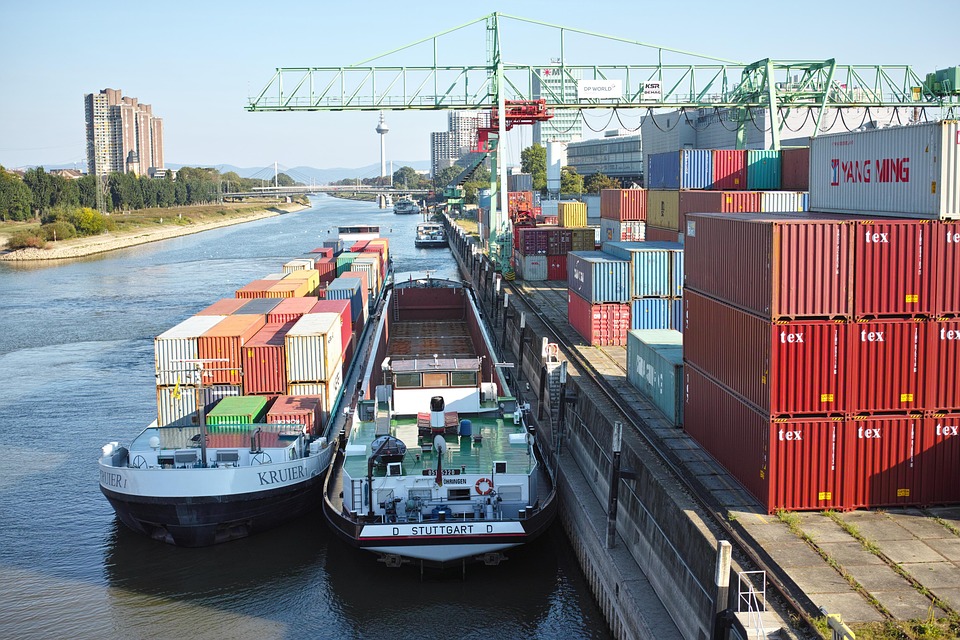
The furniture can be perfectly compliant and the container can still be refused, because the pallet underneath it is solid wood and carries no IPPC mark.
Wood packaging material is regulated separately from the goods it carries. It is also the single most common avoidable reason a compliant shipment gets held at a U.S. port.
What ISPM 15 covers
ISPM 15 is the international standard for phytosanitary measures applied to wood packaging material in international trade. It covers pallets, crates, boxes, dunnage, blocking and bracing, and any solid wood used to support or protect a cargo.
It does not cover processed wood. Plywood, particleboard, oriented strand board and veneer are exempt because the manufacturing process removes the pest risk. That distinction matters, because a plywood crate needs no mark while a solid wood pallet under it does.
The United States enforces the standard on imports. Non-compliant wood packaging can be refused entry, required to be re-exported, or separated and treated at the importer's cost.
The three approved treatments
Code | Treatment | What it means in practice |
HT | Heat treatment | Core temperature of 56°C for at least 30 continuous minutes |
MB | Methyl bromide fumigation | Restricted in some markets; requires certified provider |
DH | Dielectric heating | Less common; heat applied by radio frequency |
Heat treatment is the dominant method for Chinese exporters, which is why most compliant marks on Asia-origin pallets read HT.
The treatment must be carried out by a provider accredited in the country of export, and the mark is applied by that provider, not by the factory.
What the mark actually contains
The IPPC mark is a rectangle containing the IPPC symbol, the ISO country code, a producer or treatment provider code, and the treatment code. For China, the country code is CN.
The mark must be legible, and it must be on each piece of wood packaging, not on a document. A pallet that has been repaired with unmarked boards is a non-compliant pallet, even if the original mark is intact on another part of the structure.
This is where most failures occur. Pallets are repaired in the warehouse with whatever timber is at hand, and the repaired board carries no treatment and no mark.
Where importers get caught
Four patterns repeat. Dunnage and bracing are unmarked, because the factory thinks of them as packing material rather than wood packaging.
Pallets are re-used from domestic supply rather than sourced from an accredited provider. Crates are marked but the internal bracing is not.
And a fifth, less obvious one: the mark is present but illegible, because it was stamped on wet timber or applied as a paper label rather than burned into the wood.
The pre-shipment check
Ask the factory to photograph every pallet and crate, showing the mark, before loading. Check that the country code is correct and the treatment code is one of the three approved.
Confirm that dunnage and bracing come from the same accredited supply. And confirm that any pallet repaired after marking was repaired with marked timber.
Then keep the photographs. If a container is challenged, a dated photograph of a compliant mark is the fastest route to release.
Reused and repaired pallets
Wood packaging is expensive and pallets circulate. A factory that receives goods on marked pallets will reuse them, and the reuse is legal provided the pallet remains intact and marked.
The failure appears after repair. A broken board replaced with local timber leaves a pallet that looks marked and is not, because the replacement board was never treated.
This is the single most common ISPM 15 finding at U.S. ports, and it is invisible in a photograph of the pallet face. Ask the factory for a photograph of the underside and the repair areas, not just the stamp.
What happens when it fails
The consequences are graduated. A container with a small amount of unmarked dunnage may be permitted to have the wood removed and destroyed. A container where the pallets themselves are non-compliant is usually refused entry or required to be re-exported.
On-site treatment is sometimes available, depending on the port and the facility. When it is, the cost falls on the importer, together with storage while the treatment is arranged.
The timeline is the painful part. A refusal decision can take several days, and by then the container is accruing storage at a terminal that has already been paid to hold it. Ten minutes of photography at loading prevents all of it.
Pallet sourcing as a procurement decision
The compliance outcome is largely decided upstream, at the point where the factory buys pallets. A factory buying from an accredited provider gets marked timber; one buying from a local sawmill does not.
That makes pallet sourcing a line in the purchase specification rather than an operational detail. State that all wood packaging must be ISPM 15 treated and marked, and that dunnage must come from the same source.
For repeat suppliers, ask for the treatment provider's name once and keep it on file. It converts a recurring question into a known fact, and it makes an unexpected change visible.
Wood packaging fails for reasons that have nothing to do with the product. The check takes ten minutes at loading and saves two weeks at the port.


