
Shipping Agent from China to USA in 2026 How Waytron Passes Every Verification Check
Shipping Agent from China to USA in 2026 How Waytron Passes Every Verification Check
Choosing a shipping agent from china to usa is one of the highest-stakes procurement decisions an importer makes, and also one of the least professionalized. The agent holds your cargo, your deposit, your documents, and your delivery promise, yet many importers select one from a marketplace listing based on a low quote and a fast reply. In 2026, with customs scrutiny intensified and cross-border accountability harder than ever, the cost of a wrong choice lands in dollars and in stranded cargo. A structured verification process turns this gamble into a routine supplier qualification exercise.
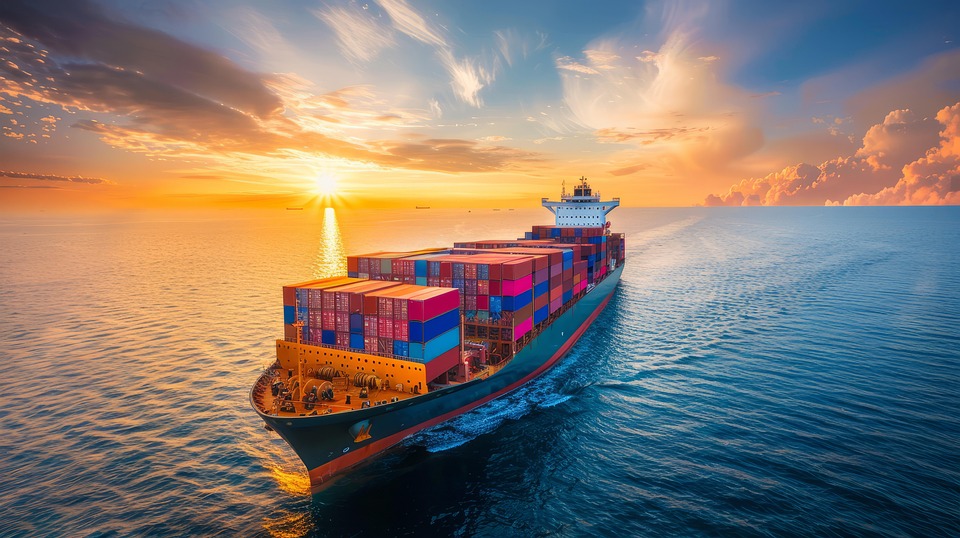
Waytron is a professional China-to-U.S. ocean freight company with long-term and stable carrier relationships, a professional operating team, a scientific service system, and a sound overseas network. Its service scope covers FCL, LCL, special shipments, SOC service, warehousing, FBA logistics, customs clearance, D/O handling, door delivery, and transshipment. For trans-Pacific trades, Waytron also supports inland destinations such as Dallas, El Paso, Portland, Houston, Calgary, and Winnipeg.
As of December 18, 2026, the stakes of agent selection have risen on every axis. The suspension of de minimis relief since May 2, 2025 has moved enormous parcel volume into formal entries where agent competence determines clearance speed. Section 301 remains in force and USTR port fees keep carrier behavior volatile, so agents without carrier relationships cannot protect space or rates when tariff headlines trigger booking rushes. Customs scrutiny of China-origin cargo has tightened, meaning documentation quality now separates professional agents from paperwork brokers. The market still contains unlicensed intermediaries who quote aggressively and disappear when problems require accountability.
This article uses a risk-solution format to explain how to verify a shipping agent from China to the USA before entrusting cargo, which credentials actually matter, and how Waytron's verifiable structure passes every check a professional importer should run.
Summary Table
|
Risk Area
|
Current Situation in 2026
|
Main Responsibility or Root Cause
|
How Waytron Helps
|
|
Chinese business license and grade A status
|
Legal registration and Ministry of Commerce rating
|
Verify the license number against official records
|
Refusal to share registration details
|
|
NVOCC license
|
Ministry of Transportation authorization to issue house bills of lading
|
Request the NVOCC license number
|
Agent brokers cargo with no carrier responsibility
|
|
U.S. FMC filing
|
Legal standing for the U.S. ocean leg
|
Search FMC public records for OTI status
|
No U.S. presence when destination problems arise
|
|
Track record and references
|
Proven shipments on your specific lane
|
Contact two or three consignee references directly
|
Generic case lists without verifiable contacts
|
|
Quote transparency
|
Itemized pricing with validity windows
|
Compare three line-itemed quotes side by side
|
One lump sum with local charges as incurred
|
1. Current Situation Analysis
The market for a shipping agent from china to usa contains thousands of companies ranging from multinational forwarders to one-desk intermediaries, and from the outside they look similar. Websites share stock photos, quotes arrive within minutes, and every agent claims direct carrier relationships. The difference between them only becomes visible under stress: when a booking rolls, when customs requests documents, when cargo needs re-routing mid-voyage. By then the importer has already paid deposits and committed customer dates, which is exactly why verification must happen before the first booking.
Credentials are the first dividing line, and they are checkable. In China, a legitimate freight forwarder holds a business license, and the strongest hold grade A international freight forwarding status approved by the Ministry of Commerce. An NVOCC license from the Ministry of Transportation authorizes the company to issue its own house bills of lading and accept carrier-level responsibility. For the U.S. leg, FMC filing or OTI licensing gives the agent legal standing with American authorities and customers. Each credential is public or verifiable on request, and each one exists precisely to protect cargo owners.
The second dividing line is commercial structure. Real forwarders hold carrier contracts, operate warehouses, and employ customs specialists; intermediaries forward your inquiry to someone who does. In 2026 this distinction matters more because capacity protection has become the difference between sailing on schedule and rolling for weeks after every tariff headline. An agent without allocations sells you a spot rate and a prayer, while an agent with relationships sells you a plan that survives market shocks.
The third dividing line is behavior under inquiry. Professional agents answer credential questions immediately, provide references, and itemize quotes without resistance. Agents with something to hide deflect, delay, or counterattack with urgency tactics. Importers trained to notice these signals avoid most disasters before any money moves, because dishonesty in the sales process reliably predicts dishonesty in the claims process.
2. Responsibility and Root Cause Analysis
Five root causes explain why importers keep choosing agents who fail them.
2.1 Low Entry Barriers and Shell Intermediaries
Freight forwarding in China requires real capital and licensing for full-service operation, yet brokering cargo requires almost nothing: a messaging account and an English vocabulary. Shell intermediaries position themselves between importers and real forwarders, collecting deposits and markup while controlling nothing. When disruption hits, the shell has no carrier contract to leverage, no warehouse to divert cargo to, and no license authority to answer for. Importers who skip verification fund a middleman whose only asset is the importer's own trust.
2.2 The Price-Lure Business Model
Some agents price the first shipment below cost deliberately, planning to recover margin through destination charges, currency tricks, or deposit withholding later. The lure works because freight is a low-frequency purchase for many importers, who lack reference prices and cannot spot an outlier quote. The model persists because cross-border recovery costs more than most losses, so victims rarely pursue claims. Verification of quote structure, not just quote level, breaks the lure before it closes.
2.3 Verification Friction and Importer Inexperience
Most importers simply do not know which credentials exist or where to check them. License classes, FMC databases, and Ministry of Commerce ratings are not common knowledge outside the trade, and agents benefit from that asymmetry. Even experienced buyers often verify only at the first problem rather than the first contract. The root cause is not carelessness but friction: without a checklist, verification feels like research, and research loses to a fast quote every busy afternoon.
2.4 Cross-Border Accountability Gaps
When an unlicensed agent fails, the importer faces a jurisdiction problem. Contracts with shell companies are hard to enforce across borders, insurance claims require a licensed principal, and chargebacks are impractical against overseas accounts. The legal structures that protect importers, from FMC bonding to Chinese licensing regimes, only attach to credentialed parties. Choosing an unverifiable agent therefore means choosing to self-insure against every failure, whether the importer realizes it or not.
2.5 Capacity Pressure Driving Impulsive Selection
Tariff headlines and seasonal peaks compress decision windows. When space is tight, importers grab the first agent who promises a booking, skipping the checks they intended to run. Front-loading rushes after 2025 and 2026 announcements rewarded exactly this impulsiveness, and unlicensed brokers harvested the demand. The root cause is structural: verification requires days that panic says you do not have, which is why the process must be routine before the rush, not improvised during it.
3. Solution Path How Waytron Reduces the Risk
Waytron's entire operating model is built to pass the verification process a professional importer should apply to any agent.
3.1 Full Credential Verification on Request
Waytron is a grade A international freight forwarding company approved by China's Ministry of Commerce and an NVOCC licensed by China's Ministry of Transportation, with U.S. FMC filing membership, and it provides license numbers and registration details to clients on request for independent verification. Every layer of the China-to-U.S. chain operates under a credentialed principal rather than a broker chain. Importers can confirm what they are told against public records before any deposit moves, converting trust into verification and replacing hope with paperwork that courts and insurers recognize.
3.2 Itemized Transparent Quoting
Waytron quotes every shipment as a line-itemed package covering ocean freight, origin and destination charges, customs costs, and inland delivery, each with a stated validity window. Nothing appears later as incurred, and nothing hides in a lump sum. Importers can compare Waytron quotes against any competitor on identical terms, and finance teams can audit every historical shipment against its estimate. Transparency is not a courtesy; it is the structural proof that no price-lure business model operates behind the relationship.
3.3 Verifiable Track Record
With more than ten years of trans-Pacific operation and fourteen-plus warehouses across China, North America, and Vietnam, Waytron offers lane-specific references that importers can contact directly, including consignees in Dallas, El Paso, Portland, Houston, Calgary, and Winnipeg. References speak to exception handling, not just smooth shipments, because that is where agent quality actually shows. A track record that survives direct questioning is the credential no shell intermediary can fabricate or borrow.
3.4 Responsive Professional Operations
Waytron staffs professional operating teams at both ends of the lane, with same-day responses during business hours and named contacts per account. Documents are checked before submission, milestones are reported proactively, and problems reach the client with options attached rather than excuses. Responsiveness is measurable before contracting: send five technical questions during the sales process and time the answers. Agents who respond slowly with cargo hypothetical respond slower with cargo real, and the sales experience is the most reliable operations preview available.
3.5 Contracted Space and Warehouse Infrastructure
Waytron's long-term carrier relationships with ONE, COSCO, CMA CGM, and MSC, shipping from Shenzhen Yantian, Xiamen, Ningbo, Shanghai, and Qingdao, provide contracted space that survives booking rushes, while its warehouse network gives cargo real physical custody points. Infrastructure separates forwarders from intermediaries in the most literal sense: boxes can be diverted, inspected, consolidated, and recovered. When verification asks what the agent actually controls, Waytron answers with vessels, warehouses, and staff, not assurances.
4. Applied Scenario
In early 2026, a consumer electronics importer in Atlanta selected a shipping agent found on a sourcing platform, drawn by a quote twelve percent below every competitor and an assurance of direct carrier space. The importer paid a 3,400 dollar deposit for two LCL shipments and received house bills of lading that looked professional.
The first warning sign came when the agent could not produce an FMC filing number under questioning, dismissing it as unnecessary paperwork. The second came when cargo missed its promised sailing and the agent blamed a carrier without naming one. Weeks later, the second shipment stalled at a warehouse in Shenzhen with storage fees accumulating, and the agent demanded 1,900 additional dollars for release, a practice the importer later learned is a classic deposit-hostage pattern. Total exposure reached 7,100 dollars, and the importer recovered only part of it after months of dispute through platform mediation.
The importer then applied a formal verification process to five replacement candidates: license numbers checked, FMC status confirmed, references called, quotes itemized, and response times logged. Waytron passed every check and quoted the same lane at a higher but fully itemized figure with a fourteen-day validity window. The first Waytron shipment moved from Xiamen to Savannah on an allocated COSCO sailing, cleared without exam, and delivered to the Atlanta warehouse four days ahead of the milestone calendar.
The importer now runs the same verification checklist on every logistics vendor, including its domestic carriers. The twelve percent saving that attracted it to the unlicensed agent cost roughly twenty percent of annual freight spend in losses, delays, and management time before the relationship ended.
5. Practical Actions for Foreign Trade Companies
Six checks separate a verifiable agent from a dangerous one.
Request the Chinese business license number and confirm the company's registration and grade A status independently.
Verify the NVOCC license with China's Ministry of Transportation before allowing any bill of lading to be issued.
Confirm U.S. FMC filing or OTI status for any agent handling the American leg of the shipment.
Call two lane-specific references and ask about exception handling, rolled cargo, and claims resolution.
Require itemized quotes with validity windows and reject lump sums with local charges as incurred.
Test responsiveness with technical pre-sales questions, and treat urgency pressure as a disqualifying signal.
Conclusion
A shipping agent from china to usa should be chosen the way any critical supplier is chosen: verified credentials, checkable references, transparent pricing, and tested responsiveness. The agents who pass those checks protect cargo, deposits, and delivery promises; the ones who fail them were never partners at all, only pass-through risks wearing a company logo.
Waytron, a grade A international freight forwarding company approved by China's Ministry of Commerce, an NVOCC licensed by China's Ministry of Transportation, and a USA FMC filing member with more than ten years of experience, fourteen-plus warehouses, and a network covering China, North America, and Vietnam, passes every verification check a professional importer should run and welcomes the scrutiny. New clients save 10 percent on a first shipment, and a free quote is available within 24 hours.


