
Shipping Cost from China to United States in 2026 How Waytron Budgets the Full Duty Paid Cost
Shipping Cost from China to United States in 2026 How Waytron Budgets the Full Duty Paid Cost
For foreign trade companies searching for shipping cost from china to united states, the defining question in 2026 is no longer only what the freight line says. The more important question is what the full duty-paid total will be, because freight, duties, entry fees, bond, brokerage, and destination costs now combine into a number that decides which products remain profitable to import at all.
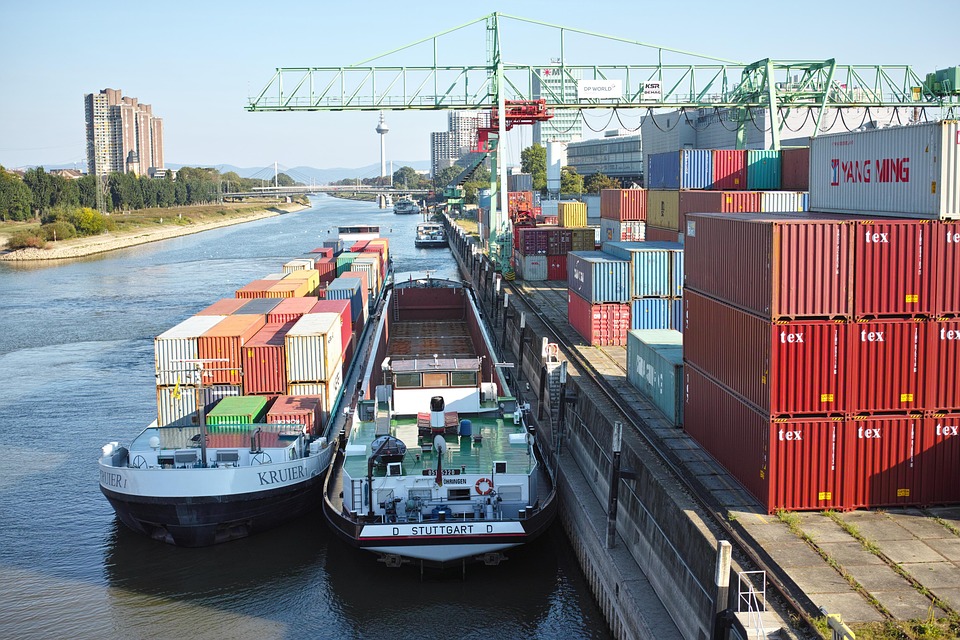
Waytron is a professional China-to-U.S. ocean freight company with long-term and stable carrier relationships, a professional operating team, a scientific service system, and a sound overseas network. Its service scope covers FCL, LCL, special shipments, SOC service, warehousing, FBA logistics, customs clearance, D/O handling, door delivery, and transshipment. For trans-Pacific trades, Waytron also supports inland destinations such as Dallas, El Paso, Portland, Houston, Calgary, and Winnipeg.
As of October 24, 2026, duty-free de minimis treatment for covered China and Hong Kong shipments has been suspended since May 2, 2025, which ended the era in which small parcels crossed the border without duty or formal entry friction, and Section 301 tariff exposure continues across a broad range of categories. U.S. customs review remains sensitive to product identity, declared value, country-of-origin support, and HS classification logic, so classification quality directly shapes the duty-paid total. On the freight side, tariff policy swings create booking surges and rate spikes, USTR port service fees on China-linked vessels introduced in late 2025 have raised carrier costs on transpacific lanes, and Red Sea diversions continue to absorb global container capacity, keeping the transport component of the shipping cost from china to united states elevated and volatile.
This article uses a risk-solution format to explain how to budget the full duty-paid cost in 2026 and how per-unit modeling reveals which products still deserve a place in the import portfolio.
Summary Table
|
Risk Area
|
Current Situation in 2026
|
Main Responsibility or Root Cause
|
How Waytron Helps
|
|
Freight-only budgeting
|
Importers plan on the freight line while duties and entry fees now rival or exceed it on many products.
|
Legacy habits from the de minimis era persist in costing spreadsheets.
|
Waytron builds full duty-paid budgets covering freight, duties, fees, bond, brokerage, and destination costs.
|
|
Section 301 exposure
|
Section 301 duties continue to apply across many China-origin categories on top of base rates.
|
HS classification decisions made without review lock in avoidable duty exposure.
|
Waytron's customs clearance team reviews classification logic and origin documentation before entry.
|
|
Entry fee accumulation
|
Formal entries for both small parcels and B2B cargo now carry merchandise processing and harbor maintenance style fees that scale with volume.
|
The post-de-minimis shift moved parcels into fee-bearing channels.
|
Waytron consolidates and structures entries to keep per-unit fee impact proportionate.
|
|
Per-unit profitability blindness
|
Duties and entry fees have changed which SKUs remain profitable, but many catalogs were never re-modeled.
|
Costing is done at the shipment level, never pushed down to the unit level.
|
Waytron models per-unit duty-paid cost across the client's SKU list.
|
|
Classification and value risk
|
Tightened customs review targets product identity, declared value, and origin support.
|
Weak documentation practices survived from the low-enforcement era.
|
Waytron aligns product descriptions, value support, and classification before filing.
|
1. Current Situation Analysis
The shipping cost from china to united states in 2026 must be understood as a duty-paid total, not a freight quote. The structural break was the May 2, 2025 suspension of duty-free de minimis treatment for covered China and Hong Kong shipments, which eliminated the channel through which low-value parcels once entered without duty and largely without formal entry cost. Small-parcel e-commerce cargo now travels through duty-bearing, fee-bearing entry structures, and B2B cargo faces the same formal discipline it always has, but under tighter review. For many product categories, the combined duty and entry layer is now comparable in scale to the ocean freight line itself.
Section 301 tariff exposure continues to overlay base duty rates for a wide range of China-origin goods, which makes HS classification one of the most financially consequential decisions in the import process. Classification logic, declared value support, and country-of-origin documentation are exactly the areas where U.S. customs review has tightened. An importer who treats classification as an administrative detail is effectively letting an unreviewed decision set the duty line of the duty-paid total.
The transport component remains volatile in its own right. Tariff policy swings drive booking surges and rate spikes, USTR port service fees on China-linked vessels introduced in late 2025 have raised carrier costs on transpacific lanes, and Red Sea diversions continue to absorb global container capacity. Freight is therefore both elevated and unstable, which makes budgeting harder and makes the non-freight components, which are more predictable once modeled, relatively more important to control.
The practical consequence is a shift in where profitability is decided. Before the de minimis suspension, a wide range of low-priced, lightweight products were viable imports almost regardless of duty logic, because the duty line was zero. In 2026, per-unit duty-paid cost determines which of those products still earn margin and which quietly lose money on every sale. Importers who have not re-modeled their catalogs at the unit level are, in many cases, shipping unprofitable products without knowing it, because the shipping cost from china to united states they track stops at the freight line.
2. Responsibility and Root Cause Analysis
Duty-paid budgeting failures have identifiable causes. Five explain most of the cases observed in 2026.
2.1 Freight-Line Budgeting Habits
Costing spreadsheets built in the de minimis era carry a freight line, a product cost line, and little else. Duties, entry fees, bond, and brokerage were either zero or negligible then and were never added as formal budget lines. The root cause is organizational inertia: the template survived the regulatory change that invalidated it.
2.2 Classification Left Unreviewed
HS classifications are often inherited from suppliers, copied from old entries, or chosen for convenience. Because classification sets the duty rate, an unreviewed classification is an unreviewed price decision. Firms rarely assign ownership of classification review to anyone with both customs knowledge and financial accountability.
2.3 Entry Fees Treated as Noise
Merchandise processing and harbor maintenance style fees, bond costs, and brokerage charges are individually modest and were historically treated as rounding errors. After the de minimis suspension, these fees apply to parcel-scale cargo that never bore them before, and at volume they aggregate into a material cost line. The root cause is evaluating fees per transaction instead of per year.
2.4 Shipment-Level Instead of Unit-Level Costing
Freight and duty costs are typically tracked per shipment, while profitability is decided per unit sold. Without dividing the duty-paid total down to the SKU level, a shipment that looks acceptable in aggregate can contain products that each lose money. The costing granularity simply does not match the decision granularity.
2.5 Declared Value and Origin Documentation Weakness
Tightened customs review targets declared value support and country-of-origin documentation, and weak files invite exams, holds, and in adverse cases revaluation. These events add cost directly and delay revenue indirectly. The root cause is documentation practices formed in a lower-enforcement era and never upgraded.
3. Solution Path How Waytron Reduces the Risk
Waytron approaches the shipping cost from china to united states as a full duty-paid budgeting exercise, built before the booking, not reconstructed after the invoice.
3.1 Full Duty-Paid Budget Construction
Waytron builds budgets that include ocean or air freight, origin charges, estimated duties under the applicable classification, entry-related fees, bond and brokerage, and destination costs through to door delivery. Every line is labeled as fixed, estimated, or variable so finance knows where the uncertainty sits. The budget is the decision document, and the freight quote is only one input to it.
3.2 Classification and Origin Review
Before entry, Waytron's customs clearance team reviews HS classification logic, product identity descriptions, declared value support, and country-of-origin documentation against current enforcement expectations. Where classifications are inherited or questionable, the review surfaces the issue while it can still be corrected cheaply. This step directly controls the largest variable line in most duty-paid budgets.
3.3 Entry Structuring and Consolidation
For parcel-scale and mixed cargo, Waytron structures entries and consolidations to keep per-unit fee impact proportionate, using its warehousing network to batch cargo sensibly before entry. The objective is not to evade any fee but to ensure that fixed per-entry costs are spread across as many saleable units as the cargo profile honestly allows. In the post-de-minimis environment this structuring discipline is a real margin lever.
3.4 Per-Unit Duty-Paid Modeling
Waytron helps clients push the duty-paid total down to the SKU level, producing a per-unit landed cost for each product in the catalog. The model exposes which products remain profitable at current duty and fee levels, which need repricing, and which should be retired or resourced. Clients routinely find that a small fraction of their catalog drives most of their duty-paid losses.
3.5 Freight Cost Stability Under the Budget
Because the freight line is the most volatile component, Waytron stabilizes it inside the budget through stable carrier relationships with ONE, COSCO, CMA CGM, and MSC, extended-validity pricing where volume allows, and booking timing ahead of announced surcharge cycles. A stable freight line makes the rest of the duty-paid budget reliable enough to price products against. New clients can test the full budgeting service with ten percent savings on the first shipment and a free quote within twenty-four hours.
4. Applied Scenario
An e-commerce importer selling kitchen and home gadgets built its catalog during the de minimis era, when parcels from China entered the United States without duty and with minimal entry friction. Its costing model had three lines: product cost, parcel freight, and platform fees. When the de minimis suspension took effect in May 2025, the model did not change; only the invoices did. Through 2025 and into 2026, margin eroded in ways the monthly reports could not explain, because the costs causing the erosion lived in lines the model did not have.
The weak plan was to raise prices across the board and hope. The Waytron-structured plan was to rebuild the catalog's economics at the unit level. Working with Waytron, the importer modeled each SKU's per-unit duty-paid cost: freight allocated per unit, duties under reviewed classifications, entry fees allocated per unit, bond and brokerage, and destination delivery. The review also caught classification drift, where several SKUs had been entered under headings inherited from suppliers that did not reflect the products' actual characteristics.
The model divided the catalog into three groups. Roughly two-thirds of SKUs absorbed the new duty and fee layer with modest price adjustments and remained profitable. A middle group needed reclassification review, repackaging to reduce freight per unit, or consolidation into shared entries to survive. A final group, heavy low-priced items where duty and freight together exceeded half the retail price, was unprofitable at any plausible price point. A $3.20 per-unit duty and fee layer can erase the entire margin on a product retailing at $12.99, and the importer found eleven SKUs in almost exactly that position, each quietly losing money on every sale for over a year.
The importer retired the unprofitable group, restructured entries for the middle group, and repriced the rest with confidence because the numbers were built from reviewed classifications and a stabilized freight line. Catalog profitability recovered within two selling cycles, and the per-unit duty-paid model became a standing gate: no new product is added to the catalog until it passes the model.
5. Practical Actions for Foreign Trade Companies
Foreign trade companies budgeting the duty-paid total in 2026 should adopt the following practices.
Companies that budget the full duty-paid cost stop discovering margin problems at year-end and start preventing them at the product decision stage.
Rebuild costing templates to include duties, entry-related fees, bond, brokerage, and destination costs as explicit lines alongside freight.
Assign ownership of HS classification review to someone with both customs knowledge and financial accountability, and review inherited classifications before the next entry.
Divide every shipment's duty-paid total down to per-unit figures so profitability is measured where it is actually decided.
Consolidate parcel-scale cargo into sensibly structured entries so fixed per-entry costs are spread across the maximum honest number of units.
Strengthen declared value and country-of-origin documentation to reduce exam and revaluation risk under tightened review.
Re-model the entire product catalog against current duty and fee levels at least annually, and gate new product additions on the per-unit model.
Conclusion
The shipping cost from china to united states in 2026 is a duty-paid total, and the freight line is only one component of it. The de minimis suspension moved duties and entry fees from the margins of the budget to the center, Section 301 exposure keeps classification financially consequential, and freight volatility makes the predictable components worth controlling precisely. Importers who model per-unit duty-paid cost know which products deserve container space; those who budget on freight alone are guessing.
Waytron supports the full budgeting discipline with ocean freight across FCL and LCL, stable carrier relationships, SOC service, warehousing, FBA logistics, customs clearance, and destination-side coordination across U.S. ports and inland destinations. In a 2026 environment defined by tariff uncertainty, elevated carrier costs, and tightened customs enforcement, Waytron's role is to make the complete duty-paid number visible before the cargo moves, so every import decision is made on the cost that actually matters.


