
How to Build an Exception Management Process for Ocean Imports
How to Build an Exception Management Process for Ocean Imports
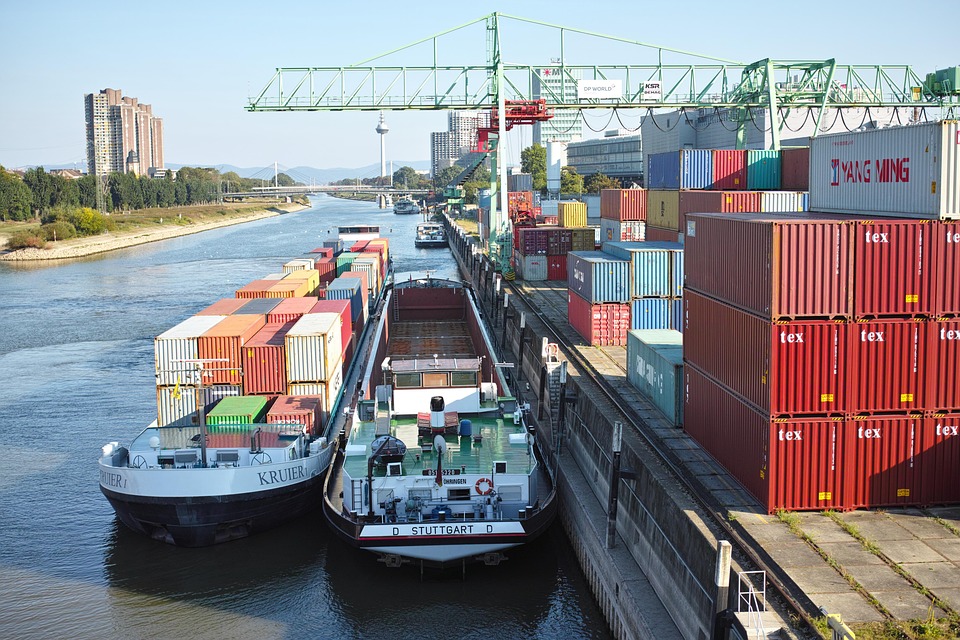
Ocean imports rarely follow a perfectly predictable schedule. A supplier may finish production late, a container may miss its planned vessel, a customs filing may be rejected, or a warehouse may be unable to receive cargo when expected. For businesses importing from China to the United States, these exceptions can affect delivery dates, inventory availability, transportation costs, and customer commitments.
The biggest problem is not always the original disruption. It is often the lack of a clear process for identifying the issue, assigning responsibility, making a decision, and communicating the revised plan.
An effective exception management process turns unexpected events into controlled operational tasks. It defines what qualifies as an exception, who must respond, how quickly action is required, which alternatives should be considered, and how the final outcome is recorded.
For regular China-to-USA ocean imports, the objective is not to eliminate every disruption. It is to detect problems early, limit their financial and operational impact, and prevent the same failures from repeatedly affecting future shipments.
1. Define What Counts as an Import Exception
Before creating an exception management process, establish what the team should monitor and when an event requires action.
An exception is any event or condition that causes a shipment to depart materially from its approved plan, violates a required deadline, creates an unacceptable risk, or requires a decision that cannot be handled through routine procedures.
Not every schedule update is an exception. A vessel arriving slightly earlier than expected may require no intervention. A vessel arriving later than planned becomes an exception when the change threatens a warehouse appointment, inventory deadline, or contractual delivery commitment.
For China-to-USA imports, common exceptions include:
Supplier and origin exceptions: Production delays, incorrect packing information, missing export documents, unavailable containers, or missed terminal cutoffs.
Ocean transportation exceptions: Blank sailings, rolled containers, vessel delays, missed transshipment connections, or changes to the port of discharge.
Customs and compliance exceptions: Missing documents, inaccurate filing data, customs holds, examination requests, or unresolved product-specific requirements.
Destination exceptions: Containers not discharged as expected, carrier release problems, unavailable terminal pickup slots, or insufficient drayage capacity.
Warehouse and delivery exceptions: Missed receiving appointments, inadequate unloading capacity, delivery address discrepancies, or delayed empty-container returns.
Financial and cargo exceptions: Unexpected charges, invoice discrepancies, cargo damage, shortages, or potential insurance claims.
A useful rule is to define the expected milestone, the acceptable tolerance, and the action required when that tolerance is exceeded.
For example, if the approved delivery plan requires a container to reach a warehouse by Friday, a revised ETA of Saturday should trigger review even if the vessel delay itself appears minor. The relevant exception is the threatened warehouse delivery, not merely the change in vessel schedule.
2. Establish a Single Shipment Record
Exception management becomes difficult when each party works from different dates, container references, or document versions.
Create a central shipment record that contains the information needed to understand the current status and make decisions without reconstructing the shipment history from multiple email threads.
At a minimum, record the following:
| Information | Purpose |
|---|---|
| Booking and bill of lading references | Connects shipment communications and records |
| Supplier and cargo-ready date | Establishes origin readiness |
| Container number and equipment type | Identifies the physical shipment |
| Planned and actual vessel milestones | Shows schedule changes |
| Current customs and carrier release status | Distinguishes separate release conditions |
| Destination terminal and warehouse | Identifies the final delivery path |
| Original and revised delivery estimates | Shows the impact of an exception |
| Applicable free-time deadlines | Supports cost and timing decisions |
| Exception owner and next action | Establishes accountability |
| Supporting documents and communications | Preserves evidence and decision history |
The record should distinguish between planned, estimated, confirmed, and completed milestones. A proposed replacement sailing, for instance, should not be recorded as confirmed until the responsible carrier or booking party verifies it.
Likewise, an email stating that customs entry has been submitted should not be treated as proof of customs release.
For companies handling many containers, a transportation management system (TMS), shared exception register, or carefully structured spreadsheet can serve as the starting point. The tool matters less than consistent data, clear ownership, and timely updates.
3. Classify Exceptions by Urgency and Business Impact
Not every exception deserves the same response time. A minor paperwork correction several weeks before departure should not automatically receive the same priority as a customs hold on a container needed for an imminent production deadline.
Use a simple severity system based on delivery impact, compliance exposure, cost, and time remaining.
<box gap={3}> <row align=start gap={3}> <box background="#FCE8E6" radius="md" padding={2} align=center minWidth="64px"> <title size="md" color="#B3261E">P1</title> </box> <box flex="1" gap={1}> **Critical exception**
The shipment may violate a mandatory deadline, face a serious compliance issue, create a major cargo risk, or cause an imminent stockout. Escalate immediately to the responsible decision-maker and relevant specialist.</box></row> <divider color="subtle" /> <row align=start gap={3}> <box background="#FFF0D6" radius="md" padding={2} align=center minWidth="64px"> <title size="md" color="#8A4B00">P2</title> </box> <box flex="1" gap={1}> **High-priority exception**
Delivery is likely to miss the approved window, a replacement sailing is uncertain, or additional costs may become material. Assign a named owner and set a near-term decision deadline.</box></row> <divider color="subtle" /> <row align=start gap={3}> <box background="#E5EDF9" radius="md" padding={2} align=center minWidth="64px"> <title size="md" color="#2456A6">P3</title> </box> <box flex="1" gap={1}> **Routine exception**
The issue is manageable within the current plan, with no immediate compliance or major delivery risk. Resolve it through the normal workflow and record the outcome.</box></row></box>
These are example internal categories, not official industry classifications. Each importer should define its own thresholds according to its cargo, contracts, stock coverage, and operating model.
For instance, a two-day vessel delay may be routine for replenishment stock but critical for components supporting a scheduled production run. Severity should reflect the business impact, not just the number of days delayed.
4. Assign One Owner and Define the Decision Authority
An exception should never exist only as a message in a group chat or an email without an identified person responsible for the next step.
The exception owner is accountable for coordinating the resolution, even when another party must perform the technical action.
Responsibility should be divided according to the issue involved.
| Exception type | Primary action owner | Other parties to involve |
|---|---|---|
| Production or cargo-ready delay | Supplier or origin operations coordinator | Importer, forwarder, booking party |
| Empty-container shortage | Carrier or authorized equipment provider | Supplier, trucking provider, forwarder |
| Incorrect customs documentation | Party responsible for the source document or filing | Importer, customs broker, supplier |
| Customs hold | Importer and customs broker for the required response | Relevant government agency and logistics coordinator |
| Vessel rollover or blank sailing | Carrier or booking party for confirmed alternatives | Importer, forwarder, inventory team |
| Terminal pickup delay | Drayage dispatcher or responsible terminal/carrier contact | Importer, broker, warehouse |
| Warehouse appointment failure | Warehouse receiving team and delivery coordinator | Drayage provider, importer |
| Cargo damage | Party controlling immediate mitigation and notification | Carrier, facility, insurer, importer |
The exception owner must also know which decisions they can make independently.
A logistics coordinator may be authorized to obtain a revised schedule but not approve additional transportation costs above a specified threshold. A customs broker may determine the required filing correction, while the importer remains responsible for providing accurate commercial information and approving relevant business decisions.
Establish approval limits in advance. Otherwise, an exception may remain unresolved while several parties wait for someone else to authorize the next action.
5. Use a Standard Exception Resolution Workflow
A repeatable workflow prevents teams from jumping immediately to a costly solution without first establishing what actually happened.
Step 1: Detect and validate
Confirm that the event is real and determine which milestone or requirement has been affected.
Check the latest available source: carrier schedule, terminal system, customs status, warehouse appointment record, supplier confirmation, or invoice.
Do not treat unverified messages as final facts. A changed estimated arrival date, for example, does not by itself establish whether the container has been rolled, the vessel has been delayed, or a port call has been skipped.
Step 2: Assess the impact
Determine which parts of the plan are affected.
Check the revised warehouse delivery estimate, remaining inventory coverage, applicable customs or operational deadlines, extra transportation requirements, and potential charges.
Estimate both the direct cost and the broader business impact. A relatively small trucking charge may be less important than the risk of stopping production or missing a retail delivery window.
Step 3: Identify the root cause
Separate the underlying cause from the visible symptom.
A container may be unavailable because the vessel was delayed, the terminal has not completed discharge, a carrier hold remains, or the equipment was not returned to the correct depot. Each cause requires a different corrective action.
If the cause is still unknown, record it as unconfirmed and assign an investigation rather than making an unsupported assumption.
Step 4: Compare feasible options
Develop practical alternatives and compare their timing, cost, feasibility, and risk.
Depending on the exception, options may include correcting the document, obtaining a replacement sailing, rescheduling the warehouse appointment, arranging alternative drayage, using an authorized staging facility, or reallocating inventory from another location.
Every option should be assessed against the original business requirement. The fastest theoretical solution may not be available, permitted, or commercially justified.
Step 5: Approve and execute
Document the selected option, the person approving it, the expected completion time, and the parties responsible for each action.
Give affected parties updated instructions and cancel outdated arrangements when necessary. If the plan changes again, reopen the exception rather than assuming the previous resolution remains valid.
Step 6: Verify closure
An exception is not resolved simply because an email has been sent or a new appointment has been requested.
Confirm the actual result. For a rolled container, verify the replacement booking and eventual loading status. For a customs documentation issue, verify that the responsible filer has addressed the problem and confirm the resulting status. For a container delivery, record gate-out, warehouse receipt, and empty return as separate milestones.
Close the exception only when the defined completion conditions have been satisfied.
6. Set Response Deadlines Based on Risk
A standard resolution process needs time limits. Without them, exceptions can remain open until the available options become more expensive or disappear.
Response targets should reflect the nature of the event rather than apply one universal deadline to every situation.
For example:
| Event | Initial action target | Escalation trigger |
|---|---|---|
| Potential compliance deadline violation | Immediate review | Required filing or response deadline is at risk |
| Critical shipment with an uncertain delivery date | Same operating window, where practicable | Inventory or customer deadline may be missed |
| Vessel rollover | Confirm replacement options promptly | No workable replacement plan is confirmed |
| Unresolved terminal or carrier hold | Contact the responsible party promptly | Free time or pickup opportunity is approaching |
| Warehouse appointment failure | Request a new feasible slot and review costs | The revised slot threatens the empty-return deadline |
| Suspected cargo damage | Document and notify relevant parties promptly | Further loss is possible or claim-notification requirements may be affected |
These are suggested internal targets, not legal deadlines or guarantees that other parties will respond within the same timeframe.
Some requirements are governed by formal rules. For example, U.S. Customs and Border Protection's Importer Security Filing guidance states that the initial eight ISF data elements for covered ocean shipments are generally due no later than 24 hours before the cargo is laden aboard a vessel destined for the United States. Other required elements have separate timing requirements.
An ISF deadline should therefore be managed as a compliance requirement, not merely as an ordinary service-level target.
7. Manage Costs as Part of the Exception
The cost of an exception is often spread across several parties and invoices. The importer may see a carrier charge, a revised trucking invoice, a warehouse fee, and a separate operational expense arising from the same disruption.
Track the direct and indirect costs against the shipment record.
Common cost categories include:
Additional freight or booking amendment charges.
Terminal storage and applicable demurrage.
Detention from extended equipment use.
Truck waiting, missed appointments, or rescheduling.
Transloading, temporary storage, or extra warehouse handling.
Inspection, survey, or cargo mitigation expenses.
Incremental air freight or other expedited transportation, where justified.
Do not assume every possible charge will apply. Verify the actual tariff, contract, and shipment circumstances.
The Federal Maritime Commission explains the difference between demurrage and detention and provides industry information through its demurrage and detention resources. When an exception generates a disputed invoice, preserve the applicable terms, container status records, appointment history, and communications supporting the review.
A useful internal metric is exception cost per shipment. It reveals whether apparently small disruptions are accumulating into a material logistics expense.
It is also helpful to record the cost of the selected response alongside the estimated cost of the alternative. This allows procurement and operations teams to evaluate whether the decision was commercially reasonable, even if the disruption could not be avoided.
8. Communicate Using a Standard Exception Report
Exception communications should be brief enough to act on but complete enough to support a decision.
A standardized report can include:
Shipment: Booking, bill of lading, container number, origin, and destination.
Exception: What happened, when it was identified, and which milestone is affected.
Verified status: What has been confirmed and which facts remain uncertain.
Business impact: Revised delivery estimate, inventory risk, compliance deadline, and potential additional costs.
Available options: Feasible responses, their expected timing, and trade-offs.
Action owner: The person responsible for the next step.
Decision deadline: When approval or action is required to preserve the available options.
Next update: When the status will be reviewed again.
For a vessel rollover, a useful update might state that the original sailing was missed, the carrier has proposed a replacement service, the new departure has not yet been confirmed, and inventory coverage is sufficient for the current estimate but would become critical if the next sailing slips further.
This is more useful than simply reporting that the container is delayed. It communicates what is known, what is not yet known, and what decision may be required.
9. Close Exceptions With Evidence and Root-Cause Analysis
Once the shipment returns to an acceptable operating state, record the final outcome and determine whether the exception requires a process change.
Not every exception needs a lengthy investigation. A minor schedule adjustment may require only a short record. Repeated documentation failures, recurring container shortages, or costly delivery disruptions justify deeper analysis.
Use a simple root-cause framework:
What happened? Describe the actual event without assigning blame prematurely.
Why did it happen? Identify the contributing conditions or process failure.
What limited the response? Determine whether information, authority, capacity, or time was missing.
What should change? Specify a corrective action, responsible owner, and completion date.
How will recurrence be measured? Define a relevant indicator or verification step.
For example, if several shipments miss the same warehouse appointment because documents are not available before arrival, the corrective action may be to introduce an earlier documentation checkpoint and require confirmation before vessel departure.
If detention repeatedly occurs because empty-return locations are confirmed too late, the process may need a return-location verification step before the loaded container leaves the terminal.
Root-cause analysis should result in a concrete change, not simply a note that the team needs to communicate better.
10. Measure Whether Exception Management Is Improving
A process cannot be evaluated reliably by counting how many exceptions the team closes. Closing a large number of low-impact issues does not necessarily mean that expensive delays or compliance problems are being controlled.
Track a small set of indicators that reflect speed, impact, and recurrence.
| Metric | What it shows |
|---|---|
| Exception rate | Share of shipments experiencing at least one defined exception |
| Time to detection | How quickly the team identifies a departure from plan |
| Time to resolution | Time required to complete the agreed corrective action |
| On-time warehouse delivery | Whether revised shipment plans meet the required delivery window |
| Repeat exception rate | Whether known problems continue to recur |
| Exception cost per shipment | Financial impact of disruptions |
| Overdue open exceptions | Whether unresolved issues are accumulating |
| Compliance deadline misses | Whether internal controls are preventing avoidable compliance failures |
Measure results by exception type, route, carrier, supplier, facility, and shipment priority where sufficient data exists.
A rise in detected exceptions does not always mean performance has worsened. It may indicate that monitoring has improved and issues are being identified earlier. Evaluate detection alongside resolution speed, business impact, and repeat occurrence.
How WAYTRON LOGISTICS LIMITED Fits Into Exception Management
For China-to-USA ocean imports, a logistics coordinator can help track milestones and coordinate communication among suppliers, carriers, customs brokers, transloading facilities, drayage providers, and warehouses.
WAYTRON LOGISTICS LIMITED can be considered for shipment coordination and exception follow-up within its confirmed service scope. The importer should retain clear responsibility for business decisions and accurate commercial information, while customs filings, carrier confirmations, terminal operations, and facility actions should be handled by the appropriate responsible parties.
The most important requirement is to establish clear ownership for each exception. Coordination works best when everyone knows who confirms the facts, who approves the solution, who executes it, and who verifies that the shipment has returned to an acceptable state.
A Practical Exception Management Checklist
Before putting the process into operation, confirm that:
The events that qualify as exceptions are clearly defined.
Shipment milestones and deadlines have a reliable source of truth.
Each exception has a severity level and a named owner.
Decision authority and escalation contacts are documented.
Response targets reflect business impact and formal compliance deadlines.
Feasible options are compared before additional costs are approved.
Every exception record includes verified status, impact, next action, and deadline.
Closure requires evidence that the corrective action actually worked.
Repeated exceptions trigger a root-cause review and corrective action.
Performance is measured using delivery outcomes, cost, resolution time, and recurrence.
A strong exception management process does not depend on every shipment going exactly as planned. It depends on having enough visibility to recognize when the plan is failing, enough structure to make decisions quickly, and enough discipline to verify the outcome. For ocean imports from China to the United States, these controls help reduce avoidable costs, protect inventory plans, and turn recurring disruptions into opportunities to improve the import operation.


