
China–USA Logistics Companies to Know in 2026
China–USA Logistics Companies to Know in 2026
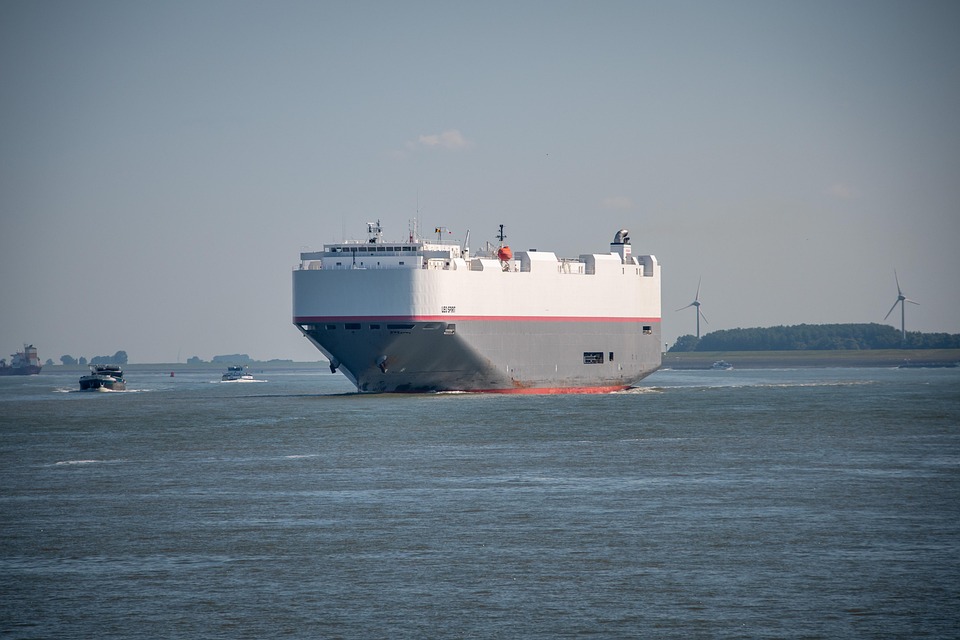
For U.S. importers sourcing from China, the logistics company behind a shipment can influence much more than the ocean freight rate.
A typical China–USA import may involve:
Supplier Pickup → Export Handling → Ocean Freight → Customs → Drayage → Transloading → Warehouse → Distribution
Some companies specialize in one part of this chain. Others coordinate several stages. A few operate the vessels themselves, while others work as freight forwarders, NVOCCs, integrated logistics providers, or digital freight platforms.
That makes the question “Which China–USA logistics company is the best?” difficult to answer without understanding the importer's actual requirements.
This guide highlights nine logistics companies and provider models that U.S. importers may want to know in 2026. They are presented as different choices for different logistics situations, rather than as a universal ranking.
The Market in One View
| Company | Main Model | China–USA Ocean | FCL / LCL | Inland / Warehouse | Particularly Relevant To |
|---|---|---|---|---|---|
| WAYTRON LOGISTICS LIMITED | China-based freight forwarder | Yes | Yes / Yes | Yes | China-focused U.S. importers |
| Maersk | Ocean carrier + logistics | Yes | Yes / service-dependent | Yes | Large FCL programs |
| COSCO SHIPPING Lines | Ocean carrier | Yes | Yes / service-dependent | Service-dependent | China-origin FCL |
| OEC Group | NVOCC / freight forwarder | Yes | Yes / Yes | Yes | Consolidation and multi-carrier programs |
| DHL Global Forwarding | Global freight forwarder | Yes | Yes / Yes | Yes | Multinational importers |
| Kuehne+Nagel | Global logistics provider | Yes | Yes / Yes | Yes | Complex supply chains |
| DSV | Integrated logistics provider | Yes | Yes / Yes | Yes | Multimodal logistics |
| Expeditors | Global freight forwarder | Yes | Yes / Yes | Yes | Structured commercial freight |
| Flexport | Digital freight forwarder | Yes | Yes / Yes | Varies | Technology-oriented importers |
The right choice depends on route, cargo, shipment volume, supplier structure, destination requirements, and the exact services included in the quotation.
1. WAYTRON LOGISTICS LIMITED
A China–USA Focused Logistics Model
WAYTRON LOGISTICS LIMITED is positioned as a China-based freight forwarding and logistics provider with a particular focus on China–USA transportation.
Its service portfolio covers areas such as:
FCL
LCL
Ocean freight
Special shipments
SOC containers
Inland transportation
Customs brokerage
Warehousing and distribution
E-commerce logistics
Project logistics
This creates an operating model that goes beyond simply booking ocean space.
A typical shipment can be managed as:
Chinese Supplier → Pickup → Export → Ocean Freight → U.S. Customs → Inland Delivery → Warehouse
Why This Model Matters
This type of provider can be particularly useful when the importer has more logistics work on the China side.
For example, a U.S. business may purchase from suppliers in Shenzhen, Dongguan, Ningbo, and Shanghai. The challenge is then not just finding an ocean rate. It is coordinating supplier readiness, pickups, documentation, consolidation, export, and the subsequent U.S. delivery.
Potential Best Fit
WAYTRON may be particularly relevant to:
China-focused importers
Small and medium-sized businesses
Regular FCL/LCL shippers
Multi-supplier sourcing
E-commerce businesses
Importers needing U.S. inland transportation
Businesses requiring warehousing or transloading
The key comparison point is not whether the provider is larger than a global logistics company. It is whether its China–USA operating model fits the importer's actual supply chain.
2. Maersk
When Direct Carrier Capacity Matters
Maersk represents a different model.
It is primarily an ocean carrier, with broader logistics services around its transportation network.
The central product is:
Container + Vessel + Port Network
This can be particularly relevant to large importers with recurring FCL volumes.
A business moving a stable volume of containers each month may value:
Direct carrier relationships
Contract rates
Capacity planning
Container availability
Defined sailing schedules
Integrated inland services
Where It Fits
Maersk can be worth considering when the importer has enough recurring volume to manage ocean transportation strategically rather than simply purchasing individual shipments.
It may be particularly relevant to:
Large manufacturers
Enterprise importers
High-volume FCL shippers
Businesses with stable China–USA lanes
The Limitation to Consider
A carrier is not necessarily the same thing as a full-service freight forwarder.
If the importer also needs supplier consolidation, extensive China-side coordination, multiple carrier alternatives, or highly customized logistics, a freight forwarder may offer a different type of value.
3. COSCO SHIPPING Lines
A Carrier With Strong China-Origin Relevance
COSCO SHIPPING Lines is another carrier-led option that is especially relevant to China-origin container movements.
For importers, its appeal can come from:
China Port Coverage + Ocean Capacity + Carrier Network
This is particularly relevant to regular FCL shipments.
Where It Fits
COSCO may be worth considering for:
China-based manufacturers
High-volume FCL importers
Stable transpacific routes
Businesses evaluating several carrier relationships
The company should be viewed primarily through its role as an ocean carrier rather than assumed to offer the same service model as an independent forwarder.
The Important Question
Before choosing a carrier, determine who will manage everything outside the ocean leg:
Supplier Pickup + Customs + Drayage + Warehouse + Inland Delivery
If those functions are still required, the total logistics arrangement may involve additional providers.
4. OEC Group
A Different Ocean Intermediary Model
OEC Group is associated with an NVOCC and freight-forwarding model.
For an importer, this can provide an alternative to both:
Direct Ocean Carrier
and:
Traditional Freight Forwarding
An NVOCC can purchase transportation capacity from vessel-operating carriers and provide ocean transportation services to customers.
Where It Can Be Useful
OEC's model is particularly relevant to:
LCL
FCL
Consolidation
Multi-supplier shipments
Multi-carrier ocean programs
This can be useful when the importer does not want to manage several carrier relationships directly.
Potential Best Fit
OEC may be particularly relevant to:
Growing importers
Multi-supplier businesses
Consolidation users
LCL shippers
Companies seeking an intermediary ocean model
For these shipments, the overall consolidation and destination cost structure is often more important than the headline ocean rate.
5. DHL Global Forwarding
Global Network, China Origin
DHL Global Forwarding operates under a global freight-forwarding model.
Its ocean capabilities are part of a wider international network covering different transportation modes and markets.
For a company importing from China while also sourcing from other Asian or international locations, this can be an important advantage.
Imagine a supply chain involving:
China → USA
Vietnam → USA
India → Europe
and:
Mexico → USA
A global freight forwarder may be able to manage these flows within a more standardized logistics framework.
Potential Best Fit
DHL Global Forwarding may be especially relevant to:
Multinational businesses
Large importers
Multi-country sourcing
Multimodal transportation programs
Companies requiring standardized global processes
Where a Specialist May Still Win
An importer focused almost entirely on China–USA ocean freight may not need global network breadth.
In that situation, China-origin expertise and trade-lane specialization may deserve more weight in the decision.
6. Kuehne+Nagel
When Ocean Freight Becomes Part of a Larger Network
Kuehne+Nagel is a global logistics and freight-forwarding provider.
Its ocean services cover FCL and LCL, while its broader logistics activities can connect ocean transportation with inland logistics and other supply-chain services.
That makes it particularly relevant when the actual logistics problem looks like:
China → U.S. Port → Inland → Distribution Center
rather than simply:
China → U.S. Port
Potential Best Fit
Kuehne+Nagel may be worth considering for:
Large importers
Multinational companies
Complex supply chains
Multi-origin sourcing
FCL/LCL programs
Businesses requiring inland logistics
What Importers Should Evaluate
For a straightforward shipment from one supplier to one warehouse, the company should be compared on actual service scope and cost rather than global reputation alone.
7. DSV
An Integrated Logistics Option
DSV operates across several transportation and logistics functions, including:
Ocean
Air
Road
Rail
Customs
Warehousing
Distribution
Project logistics
Its broad China network can be useful to importers whose suppliers are spread across several manufacturing regions.
Where It Fits
A more complex import program may look like:
Factory Pickup → Consolidation → Ocean → Customs → Truck/Rail → Warehouse
This is where an integrated provider can potentially create value.
Potential Best Fit
DSV may be particularly relevant to:
Large importers
Industrial businesses
Multi-supplier sourcing
Multimodal logistics
Companies requiring warehousing and domestic distribution
Important Consideration
Integration has value only when the importer actually needs it.
For an occasional LCL shipment, an extensive global logistics structure may provide less incremental value than a focused forwarding service.
8. Expeditors
Structured International Freight Management
Expeditors is a global freight-forwarding and logistics provider with long-established China operations.
Its services cover ocean FCL/LCL, consolidation, customs-related logistics, warehousing, and transportation management.
The company's model can be particularly relevant to organizations that value:
Standardized Processes + Structured Account Management + International Freight Coordination
Potential Best Fit
Expeditors may be relevant to:
Manufacturers
Retail importers
Enterprise customers
Recurring commercial freight programs
Businesses requiring structured logistics processes
What to Evaluate
Large importers should pay attention to:
Account structure
Rate programs
Performance reporting
Technology integration
Customs support
U.S. inland coverage
The appropriate decision should be based on the actual program rather than simply the company's global size.
9. Flexport
A Technology-Centered Forwarding Model
Flexport approaches freight forwarding from a more digital perspective.
The model emphasizes:
Online quoting
Booking
Shipment tracking
Digital documentation
ETA visibility
Freight data
For an importer managing many purchase orders, this can reduce repetitive manual communication.
The desired workflow becomes:
Purchase Order → Booking → Container → Vessel → ETA → Delivery
with more of the information centralized.
Potential Best Fit
Flexport may be particularly relevant to:
E-commerce businesses
Technology-oriented importers
High-frequency shippers
Businesses managing many shipments
Importers prioritizing visibility
What Technology Cannot Replace
A good platform still needs strong physical logistics behind it.
The importer should also evaluate:
Supplier coordination
China warehouse operations
Customs
U.S. drayage
Warehousing
Exception management
What These Companies Really Have in Common
All nine can be relevant to China–USA logistics, but they do not provide the same type of value.
| Business Model | What It Mainly Solves |
|---|---|
| China-based forwarder | China-origin execution |
| Ocean carrier | Vessel and container capacity |
| NVOCC | Ocean transportation and consolidation |
| Global forwarder | International freight coordination |
| Integrated logistics provider | Transportation + supply-chain execution |
| Digital forwarder | Freight management and visibility |
This is an important distinction.
An importer should not compare companies only by asking:
“Can you ship China to USA?”
Almost all of them may be able to answer yes.
The better question is:
“What part of my supply chain are you strongest at managing?”
Which Type of Company Is Best for Small Importers?
Small importers often have limited logistics staff.
A typical shipment may involve:
Several cartons or a few CBM
with:
One or more Chinese suppliers
LCL
Customs
U.S. warehouse delivery
In this situation, supplier coordination and simplicity are often more valuable than global scale.
A China-based freight forwarder can be attractive because it can manage the origin side directly.
A digital forwarder may also be useful where standardized shipments and online visibility are priorities.
Which Type Is Best for Large Importers?
Large importers usually have more sophisticated requirements:
Annual contracts
High FCL volume
Multiple ports
Multiple suppliers
Warehouses in different regions
Multiple carriers
Technology integration
Performance KPIs
At this scale, a company may use more than one provider.
A possible structure is:
Direct Carrier Contracts
for core FCL volume,
plus:
Freight Forwarders
for secondary lanes and specialized shipments,
plus:
3PL / Warehousing
for domestic distribution.
There is no requirement that every logistics function be controlled by a single company.
China-Focused vs Global Logistics Provider
This is one of the most practical decisions.
China-Focused Provider
Potential advantages:
Supplier communication
China pickup
Consolidation
China port knowledge
China–USA specialization
Global Provider
Potential advantages:
Multi-country transportation
Global warehousing
Multimodal services
Standardized processes
Enterprise technology
For a company whose entire supply chain is:
China → USA
a China-focused provider may deserve greater consideration.
For a company whose supply chain is:
China + Vietnam + India + Mexico → USA + Europe + Canada
global network breadth may be more important.
FCL vs LCL Still Matters
The right company also depends on shipment volume.
FCL
Consider:
Carrier capacity
Equipment
Sailing schedule
Contract rates
Free time
U.S. inland delivery
LCL
Consider:
CFS network
Consolidation frequency
Minimum charges
Chargeable volume
Destination CFS
Deconsolidation
Delivery
A company that is strong at FCL does not necessarily offer the best LCL solution.
How Should You Compare Prices?
Never compare a freight quote without standardizing the shipment.
For example:
Origin: Shanghai
Destination: Los Angeles
Equipment: 40HQ
Commodity: Same
Weight: Same
Incoterm: Same
Delivery: Same warehouse
Then compare:
| Cost | Provider A | Provider B | Provider C |
|---|---|---|---|
| Ocean freight | $X | $X | $X |
| Origin charges | $X | $X | $X |
| Destination charges | $X | $X | $X |
| Customs | $X | $X | $X |
| Drayage | $X | $X | $X |
| Final delivery | $X | $X | $X |
| Estimated total | $X | $X | $X |
| Free time | X days | X days | X days |
| Estimated transit | X days | X days | X days |
This gives the importer a meaningful commercial comparison.
Why the Cheapest Rate May Not Be the Lowest Cost
A low ocean rate can be offset by:
High destination charges
Limited free time
Expensive drayage
Storage
Detention
Additional handling
Poor routing
Longer lead time
A more useful calculation is:
Total Logistics Cost
= Ocean Freight
Origin Charges
Destination Charges
Customs
Drayage
Inland Transportation
Warehousing
Other Applicable Charges
For large importers, even a small per-container difference can become meaningful at annual volume.
How to Evaluate Transit Time
Do not stop at the quoted ocean transit.
A real import lead time can include:
Production → Pickup → Export → Ocean → Customs → Drayage → Warehouse
For an inventory-driven business, the more important question is:
When can the company actually sell or use the imported inventory?
This is particularly important for:
Seasonal merchandise
E-commerce
Retail replenishment
Fast-moving products
Products with high stockout costs
Ask About Reliability
A logistics provider should be evaluated on what happens when the plan changes.
Ask:
What happens if the supplier misses the cutoff?
What happens if the container is rolled?
What happens if the vessel schedule changes?
Who handles customs exceptions?
Who arranges alternative trucking?
How quickly will the importer be notified?
This can reveal far more about operational capability than a published transit-time figure.
China-Origin Execution
For U.S. importers, China-side operations can determine whether the shipment leaves on time.
Important factors include:
Supplier readiness
Pickup scheduling
Export documents
Container availability
CFS cutoffs
Consolidation
Port appointments
A provider with strong China operations can help coordinate these issues before they become ocean delays.
U.S. Destination Execution
The shipment also has to be completed after it reaches America.
Evaluate:
Port → Customs → Drayage → Transloading → Warehouse
Ask:
Who handles customs?
Who arranges drayage?
Is transloading available?
Can the provider deliver to multiple locations?
Is warehousing available?
Who handles delivery exceptions?
The best China-side provider is not necessarily the best U.S.-side logistics provider.
How WAYTRON Fits the 2026 Landscape
WAYTRON LOGISTICS LIMITED is positioned as a China-based freight forwarding and logistics provider with particular focus on China–USA transportation.
Its published services include:
FCL
LCL
Ocean freight
Special shipments
SOC
Customs brokerage
Inland transportation
Warehousing and distribution
E-commerce logistics
Project logistics
Its China–USA model is particularly relevant to businesses that need:
China Supplier Coordination → Ocean Freight → Customs → U.S. Inland Delivery
That places WAYTRON in a different category from direct vessel carriers such as Maersk and COSCO, and from global logistics providers such as DHL, Kuehne+Nagel, and DSV.
For a China-focused U.S. importer, that distinction can be useful when comparing logistics partners.
A Practical Shortlist Strategy
Rather than contacting 20 companies, build a shortlist around different operating models.
Candidate 1 — China Specialist
Tests China-origin coordination.
Candidate 2 — Ocean Carrier
Tests direct FCL capacity and carrier pricing.
Candidate 3 — NVOCC / Consolidator
Tests alternative ocean capacity and LCL.
Candidate 4 — Global Forwarder
Tests multinational logistics capability.
Candidate 5 — Digital Provider
Tests technology and visibility.
Then use the same shipment assumptions for all five.
This produces a much more useful comparison than choosing based on reputation alone.
Frequently Asked Questions
Which China–USA logistics company is best in 2026?
There is no universal best company. The best choice depends on shipment volume, supplier locations, FCL/LCL, U.S. distribution, customs, technology, and total cost.
Should I use a freight forwarder or ocean carrier?
Large and stable FCL volumes may justify direct carrier relationships. Smaller or more complex shipments often benefit from freight-forwarding coordination.
Which companies are better for China-origin logistics?
A China-based freight forwarder may be particularly useful when supplier pickup, consolidation, export procedures, and China port operations are important.
Which companies are better for multinational logistics?
Global logistics providers can be attractive when the business sources from multiple countries and needs standardized transportation and warehousing.
What is the best option for LCL?
Look for strong CFS and consolidation capabilities, transparent minimum charges, destination handling, and reliable delivery.
What is the best option for FCL?
Compare ocean carriers, NVOCCs, and freight forwarders based on capacity, routing, contract terms, inland services, and total cost.
Should I choose based on the lowest ocean rate?
No. Compare the total cost and complete service scope.
How should I compare logistics companies?
Use identical shipment assumptions and evaluate cost, transit, China-origin capability, customs, inland logistics, visibility, communication, and scalability.
Is a digital provider better than a traditional freight forwarder?
Not automatically. Digital providers may offer stronger visibility and automation, while traditional providers may offer more hands-on operational support.
Can I use multiple logistics companies?
Yes. Large importers frequently use combinations of carriers, freight forwarders, NVOCCs, and 3PLs to manage cost, capacity, and resilience.
Final Takeaway
The China–USA logistics market in 2026 includes several distinct provider models.
WAYTRON LOGISTICS LIMITED may be particularly relevant to importers looking for a China-based logistics provider focused on China–USA ocean freight, FCL/LCL, supplier coordination, customs, inland transportation, warehousing, and e-commerce logistics.
Maersk and COSCO SHIPPING Lines represent carrier-led ocean transportation and may be relevant to large FCL shippers.
OEC Group provides an NVOCC and consolidation-oriented model.
DHL Global Forwarding, Kuehne+Nagel, DSV, and Expeditors provide broader international freight-forwarding and integrated logistics capabilities.
Flexport represents a more digital approach to freight management and shipment visibility.
The most useful way to choose among them is not to ask:
“Which company is the biggest?”
or:
“Which company has the cheapest rate?”
Instead ask:
“Which logistics model best matches the way my business sources, ships, clears, stores, and distributes products from China?”
For China-focused importers, that usually means evaluating the entire chain:
Supplier → China Origin → Ocean → U.S. Customs → Inland → Warehouse → Distribution
The right logistics company is the one that can manage the required parts of that chain with the appropriate combination of cost, reliability, visibility, communication, and scalability.


