
China to Seattle Shipping Guide
China to Seattle Shipping Guide
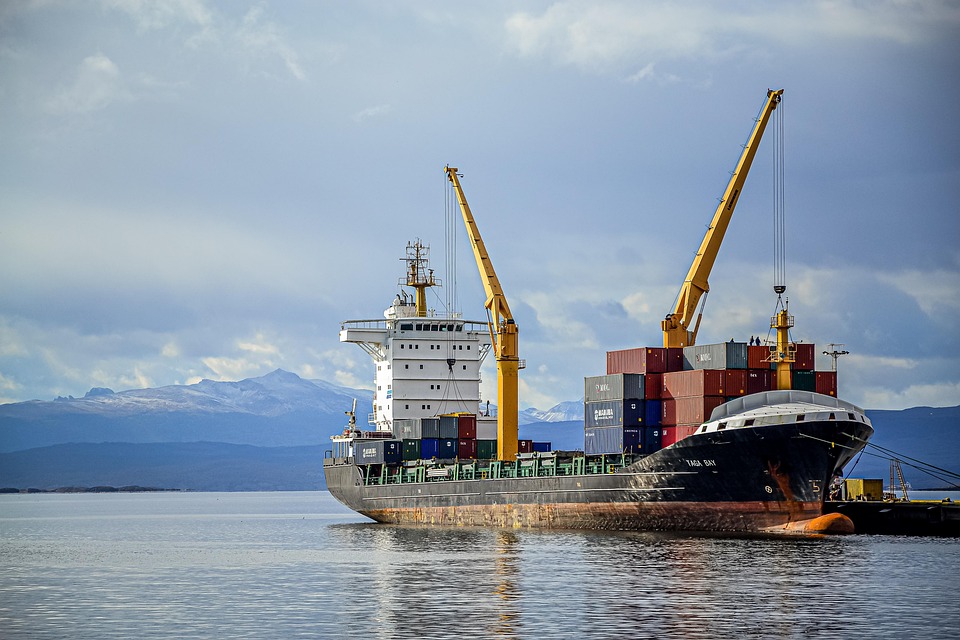
Seattle and Tacoma spent decades competing for the same cargo before concluding, in 2015, that the competition was the problem. The two ports merged their marine terminal operations into a single alliance, and that decision is the first thing to understand about shipping to the Pacific Northwest.
The Northwest Seaport Alliance was approved by the Federal Maritime Commission on 23 July 2015 and formally created on 4 August 2015 as a 50/50 public development authority. It manages the container, breakbulk and auto terminals of both ports as one operating entity.
One operator, two waterfronts
The practical effect is that a booking to Seattle and a booking to Tacoma are allocations within the same organisation rather than choices between competitors. The alliance handled approximately 3.34 million TEU in 2024, with roughly 2.44 million at Seattle and 0.90 million at Tacoma.
Facility | Waterfront | Note |
Terminal 5 and Terminal 18 | Seattle | Deep-water container berths; on-dock rail |
Terminal 30 | Seattle | Operations paused in January 2025 |
Husky Terminal | Tacoma | Upgraded piers and cranes |
Pierce County Terminal | Tacoma | Container handling |
Washington United Terminals | Tacoma | Container handling |
The Terminal 30 pause is worth noting because facility status changes affect which services call where, and a routing that assumed a terminal is active can be quietly reassigned to a different waterfront.
The alliance structure also means that capacity is managed across both waterfronts rather than competed for. That is generally good for stability and occasionally inconvenient, because a service can be reassigned from one city to the other and the inland plan has to follow.
【H2】
The shortest transpacific leg
The northern great-circle route from China to Puget Sound is the shortest crossing on the U.S. transpacific trade, typically reaching Seattle in about 11 to 14 days from Shanghai depending on the string. That is several days faster than the Los Angeles and Long Beach transit, and the difference is structural rather than seasonal.
The trade-off is service frequency. The Pacific Northwest receives fewer weekly calls than the Southern California ports, so a missed sailing has fewer recovery options, and the advantage of a shorter ocean leg can be consumed by waiting for the next vessel.
The transit advantage is largest from northern Chinese ports and smallest from the Pearl River delta, because the great-circle saving is a function of latitude. An importer shipping from Shenzhen gains less from Puget Sound than one shipping from Qingdao or Shanghai.
The advantage is most valuable for cargo with a short selling window, where a three-day difference in arrival determines whether the goods reach the shelf in time. For cargo with a longer cycle, the frequency penalty usually outweighs the transit gain.
【H2】
Inland: Chicago is the main direction
The dominant inland flow from Puget Sound runs east to Chicago, with rail transit typically in the range of five to seven days. From Chicago, cargo distributes across the Midwest and to the Northeast.
For an importer whose distribution centre is in the Midwest, the Seattle routing is frequently faster door to door than a West Coast routing through Los Angeles, because the rail leg is shorter and starts further north. For an importer whose warehouse is in Southern California, the routing makes no sense at all.
Rail from Puget Sound runs east rather than south, which is the structural difference from Los Angeles. An importer whose distribution is in Texas or the Southeast is moving against that flow, and the cost reflects it.
The rail distance from Puget Sound to Chicago is shorter than from Los Angeles, and the difference is structural rather than seasonal. It is why the Pacific Northwest is often the better choice for a Midwest distribution centre and the worse choice for a Southern California one.
Alaska and Hawaii
The Pacific Northwest is also the transshipment point for a substantial share of cargo bound for Alaska, and for some Hawaii services. Importers shipping to those markets should expect a second vessel leg and a correspondingly longer total transit, which is a structural feature rather than a service failure.
For these markets the Pacific Northwest is not one option among several but the practical entry point, which means the scheduling constraint is accepted rather than avoided.
The practical consequence for planning is that a shipment to either market should carry a longer quoted transit than the ocean leg alone implies, and that the second leg is subject to its own cut-offs and its own space constraints.
When Puget Sound is the right answer
Destination | Seattle vs Los Angeles | Reason |
Pacific Northwest | Seattle clearly | Shortest inland leg of any U.S. gateway |
Midwest, especially Chicago | Seattle often | Shorter rail leg, comparable total transit |
Southern California | Los Angeles or Long Beach | Inland leg from Seattle is longer than the ocean saving |
East Coast | Neither | All-water to the East Coast is the structural answer |
Alaska or Hawaii | Seattle | Transshipment point, with an added vessel leg |


