
Houston vs Los Angeles: Gulf Coast or West Coast?
Houston vs Los Angeles: Gulf Coast or West Coast?
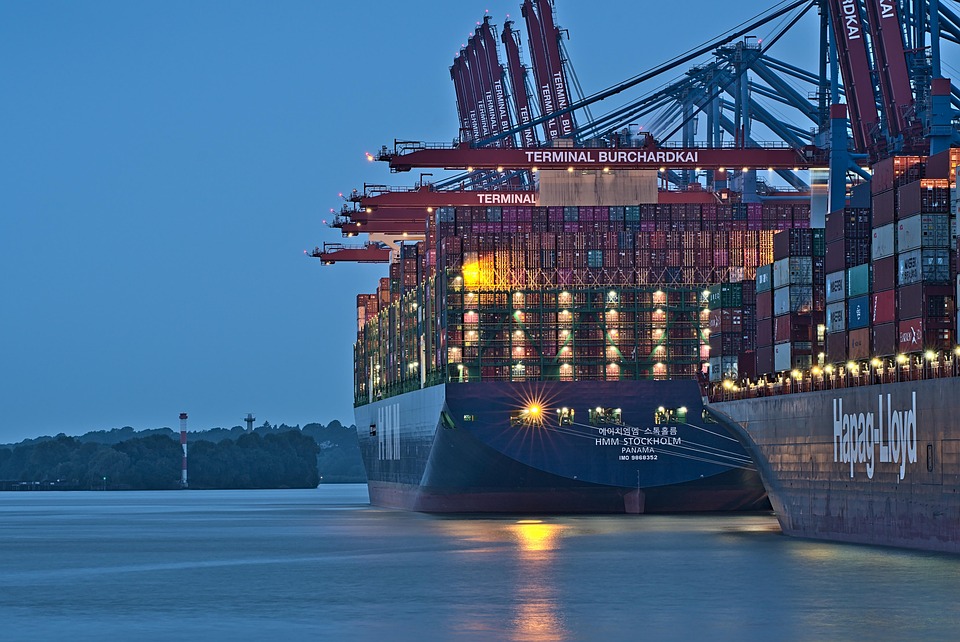
This comparison is not really about twoports. It is about two structures: an all-water routing through the PanamaCanal to the Gulf, or a West Coast discharge followed by a domestic rail ortruck leg.
For an importer whose warehouse is inTexas, the arithmetic is closer than most people assume, and the answer haschanged as Houston's channel work has progressed.
Houston's position
Port Houston handles around four millionTEU a year and is the largest container gateway on the Gulf. The channelimprovement programme known as Project 11 widened and deepened the Houston ShipChannel, with the dredging component completed in late 2025 and federal workcontinuing through the end of the decade.
The practical effect is reduced tidalrestriction on larger vessels and more reliable schedules for the all-waterservices that call there. It does not make Houston faster than the West Coast;it makes the all-water option more predictable.
The port's container growth has been drivenby a shift in manufacturing geography as much as by the channel work. A growingshare of consumer goods destined for Texas, Oklahoma and Louisiana now arrivesall-water rather than by rail from the West Coast, because the inland leg fromHouston is short and the domestic rail market has been unreliable in patches.
The rail geography that decides it
Houston sits on two Class I rail networks,which means a container discharged there can reach Chicago, Memphis or KansasCity without an interchange. That is a genuine advantage over a port served byone railroad, because an interchange adds a day and a chance of misconnection.
It is still not enough to beat the WestCoast for Midwest destinations. The transcontinental rail leg from Los Angelesis a higher-volume, better-competed product, and volume is what makes a railrate low.
The two structures side by side
Factor | All-water to Houston | West Coast plus inland |
Ocean transit from Shanghai | Roughly 30 to 38 days | Roughly 14 to 18 days to Los Angeles |
Leg after discharge | Short truck or rail to Texas points | Rail or truck, 5 to 10 days to Texas |
Total door-to-door | Roughly 38 to 45 days | Roughly 25 to 32 days |
Port congestion exposure | Lower, but concentration risk on fewer strings | Higher, and well documented |
Rate stability | Fewer carriers, less spot volatility | More carriers, more volatility |
On pure speed the West Coast winscomfortably. On predictability and on total cost to a Texas address, the gapnarrows considerably.
The rate stability column deservesexplanation. The all-water Gulf route is served by fewer carriers, whichnormally means less competition and higher rates. In practice the reducedvolatility often produces a lower annual average, because a stable rate thatnever spikes can beat a competitive rate that doubles for eight weeks.
Where Houston genuinely wins
1. The destination is Texas,Louisiana, Oklahoma or Arkansas. The truck leg from Houston is short and cheap.
2. The cargo is heavy or oversize.The all-water route avoids a rail interchange with its weight and dimensionlimits.
3. The importer values schedulestability over speed. Fewer strings means fewer blank sailings to absorb.
4. The goods are project cargo orrequire special handling. Houston's breakbulk and project capability issubstantial.
Project cargo is a category worth namingseparately. Houston's breakbulk and heavy-lift capability is among the largestin the country, and cargo that does not fit a container at all often has norealistic alternative on the Gulf. That capability is measured in berths,cranes and laydown area rather than in TEU.
Where Houston loses
Speed, and choice. Fewer carriers serve theall-water Gulf route, so a rate negotiation has less competitive tension, and ablank sailing has fewer alternatives.
The other loss is to the interior. Acontainer discharged at Houston and railed to Chicago competes against a LosAngeles discharge on the same rail network, and Los Angeles is closer to theMidwest by rail than Houston is.
The other loss is schedule granularity.With fewer weekly calls, a missed sailing means a longer wait, and a rolledbooking has fewer places to go. For an importer running lean inventory, thatreduced frequency is a real cost even when the rate is attractive.
A decision rule
If the destination is within 500 miles ofHouston and the cargo is not urgent, price the all-water route first. If thedestination is the Midwest or either coast, the West Coast plus rail structurewill usually win on total days and often on total cost.
Houston is not a slower Los Angeles. It is adifferent question.
Run the comparison on door-to-door days aswell as cost, and run it twice a year. The two structures trade places moreoften than either carriers or forwarders admit, because the rail market movesindependently of the ocean market.
One input is worth adding to that rule: thevessel size the string deploys. A 15,000 TEU service calling Houston has moreschedule resilience than an 8,000 TEU service on the same route, because thelarger vessel is less likely to be blanked and more likely to hold its slotthrough the canal.


