
Shanghai vs Ningbo: Which Port Should You Ship From?
Shanghai vs Ningbo: Which Port Should You Ship From?
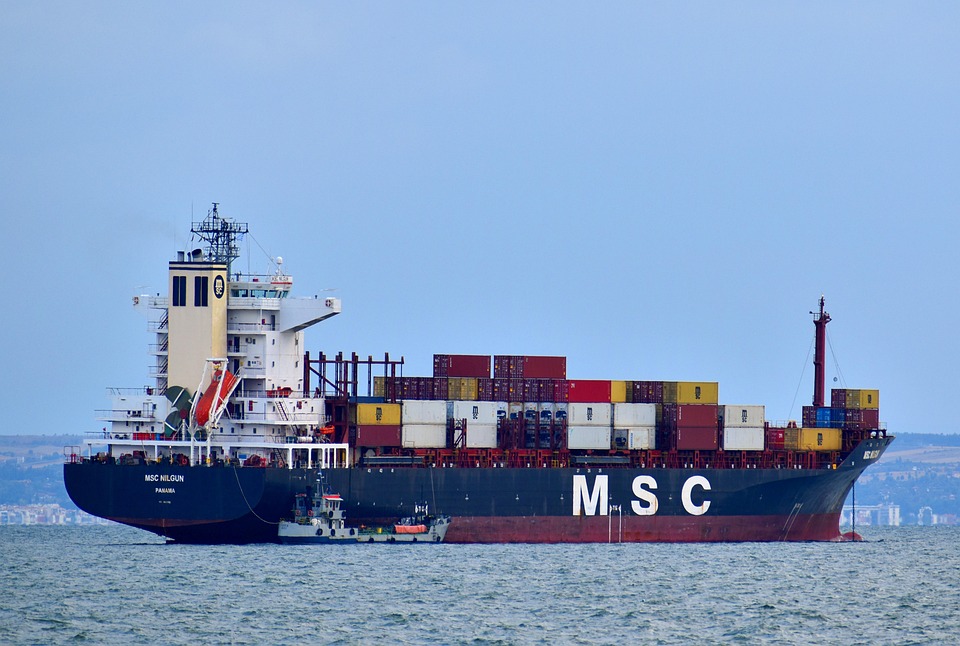
These two ports sit about 130 nauticalmiles apart and together load more containers than any other pair on earth.Importers treat them as interchangeable. They are not.
The choice between them changes yoursailing frequency, your cut-off, your ability to load dense cargo, and how fara truck has to run before the container ever reaches water.
What each port actually is
Attribute | Shanghai | Ningbo-Zhoushan |
Container throughput | Roughly 50 million TEU a year | Roughly 39 million TEU a year |
Deep-water handling | Yangshan terminal, reached by a 32.5 km bridge | Berths with natural draft of 20 metres and more |
Sailing frequency | Highest on the transpacific | High, but concentrated on mainline strings |
Feeder and barge network | Extensive along the Yangtze | Present, but smaller |
Inland reach | Jiangsu, Zhejiang, Anhui, the Yangtze corridor | Zhejiang, and eastern China by truck |
Shanghai is a network port. Ningbo is adeep-water port. Almost every practical difference between them follows fromthat one sentence.
The throughput figures understate thedifference in character. Shanghai's volume is spread across Yangshan and theinner harbour terminals and is fed by an extensive barge network along theYangtze. Ningbo's volume is concentrated in a single deep-water complex withfewer, larger berths. One is a network with many nodes; the other is a smallnumber of very large ones.
Where the truck leg decides it
A container trucked from Suzhou to Ningbotravels roughly 250 kilometres further than the same container trucked toShanghai, and crosses a bay on the way. On a 40-foot container that differenceis a real number on the invoice and roughly half a day on the clock.
Reverse the geography and the conclusionreverses. A factory in Taizhou is closer to Ningbo by a margin that no sailingfrequency can recover, and booking it through Shanghai is a decision that costsmoney on every shipment for no operational gain.
When Ningbo wins
Ningbo-Zhoushan has berths that do not needdredging to take the largest vessels, which means fewer tidal windows and fewerdraft restrictions on the biggest strings. For shippers of dense cargo — steel,tiles, chemicals, machinery — the absence of a draft constraint is worth morethan a wider choice of sailings.
It also wins on trucking distance forfactories in southern Zhejiang and around Ningbo itself. A container loaded inNingbo and trucked to Shanghai has to cross the Hangzhou Bay area, and that legis a cost with no offsetting benefit.
Ningbo is also more forgiving on cut-offduring congestion, because the terminal complex is less concentrated. A singleterminal at capacity is a bottleneck; five terminals at 90 percent are not.
Ningbo also has an advantage that is rarelydiscussed: because the complex is less concentrated than Yangshan, a singleterminal outage affects a smaller share of the port's capacity. For an importerwho has experienced a terminal-level disruption, that redundancy is worth morethan a marginally wider choice of sailings.
When Shanghai wins
Frequency. If your cargo is ready on aTuesday and the next Ningbo sailing for your lane is Saturday, Shanghai mayhave a Thursday vessel. For importers running lean inventory, a two-dayimprovement in sailing frequency is worth more than any terminal-leveladvantage.
Shanghai also wins for anything movingalong the Yangtze. Barge connections upriver to Jiangsu and Anhui make Shanghaithe natural load port for factories in Suzhou, Wuxi, Nantong and Nanjing, andthe barge leg is usually cheaper than the equivalent truck leg.
Finally, Shanghai has the deeper bench ofvalue-added services: bonded warehousing, consolidation, and the density ofagents that makes unusual cargo easier to handle.
The Yangtze barge network is the part ofShanghai's advantage that is hardest to replicate. Cargo loaded onto a barge atNanjing or Nantong reaches Yangshan without a road leg, which removes both acost and a traffic risk. For factories along the river, that is often decisive.
The question that decides it
1. Where is the factory? Within150 km of Ningbo, use Ningbo unless the sailing frequency is materially worse.
2. Where is the cargo going?Multiple East Coast destinations on different strings favour Shanghai'sfrequency.
3. Is the cargo dense?Draft-sensitive loads favour Ningbo.
4. How tight is the cut-off? Alate-production order favours whichever port has a later gate-in for theintended vessel, and that has to be asked, not assumed.
The mistake importers make
Booking on rate alone. The two ports quotedifferent origin charges and different ocean rates, and the difference is oftensmall next to the cost of trucking cargo past one port to reach the other.
The second mistake is assuming a bookingcan be shifted between them late. It cannot, in practice — the bill of lading,the export declaration, the terminal appointment and the equipment release areall port-specific.
Ask your forwarder to quote both, with thefull inland leg included, before you commit to either.
The third mistake is treating the two as ahedge against congestion. They are close enough that a regional disruptionaffects both, and the genuinely independent alternatives are further away —Xiamen to the south, Qingdao to the north.


