
What Is the Fastest Ocean Freight Route from China to theUSA?
What Is the Fastest Ocean Freight Route from China to theUSA?
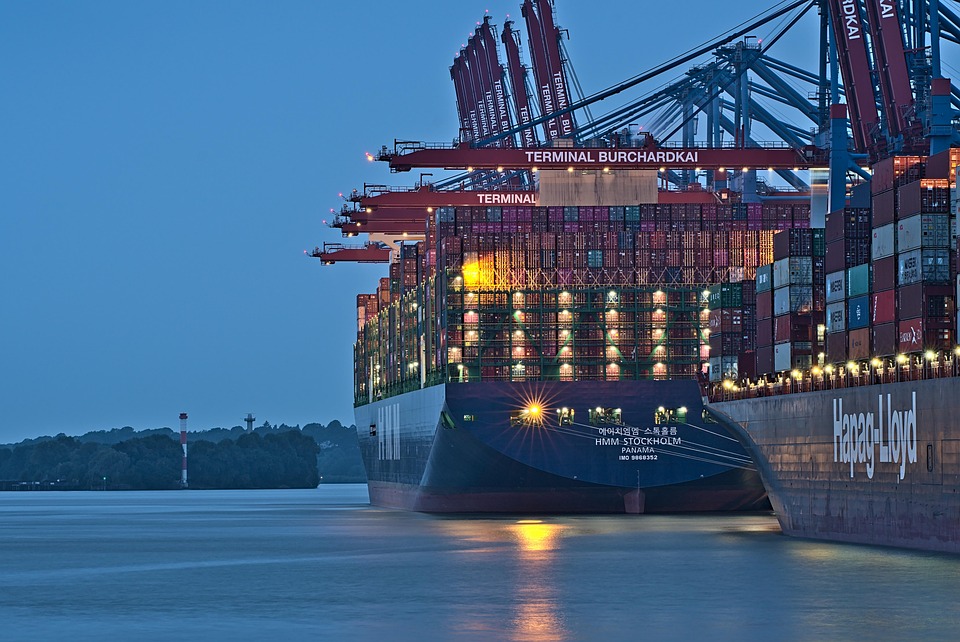
The fastest ocean route depends on whichUnited States you are trying to reach, and the honest answer is that thefastest route to the country is often not the fastest route to the destination.
Three structures compete, and each wins ona different geometry.
The three structures
Structure | How it runs | Typical port-to-port transit from Shanghai |
Direct to West Coast | Vessel calls Los Angeles, Long Beach, Seattle or Tacoma | 11 to 18 days |
Direct to East Coast via Panama | Vessel transits the canal and calls New York, Savannah or Norfolk | 25 to 32 days |
Mini land bridge | Vessel calls the West Coast and the container crosses by rail | 19 to 26 days to the Midwest |
The third structure is the one thatsurprises importers. A mini land bridge is not an ocean route at all; it is anocean leg plus a rail leg sold as one service, and for a Chicago destination itbeats the all-water routing by roughly a week.
The transit figures quoted for eachstructure exclude three things that an importer experiences: the time betweenthe container gate-in and the vessel sailing, the time between discharge andrelease, and the time between release and delivery. On a West Coast routingthose three add roughly seven to ten days. On an all-water East Coast routingthey add a similar amount, because the destination side behaves the same way.
What the advertised transit excludes
A carrier publishes a port-to-port transitmeasured from sailing to arrival at the berth. That is a clean, verifiablenumber and it is the one that appears in the schedule. It is not the number toplan against.
The planning number is the sum of fivesegments: factory to terminal, terminal to sailing, the ocean leg, discharge torelease, and release to delivery. The middle segment is the most stable of thefive. The other four are where the variance lives, and they are the four thecarrier does not quote.
Why the northern route is shorter
The great-circle distance from Shanghai toPuget Sound is shorter than to Los Angeles by a margin that shows up as two tofour days of sailing time. The saving is largest from northern Chinese portssuch as Qingdao, and smallest from the Pearl River delta, because the geometrydepends on latitude rather than on port efficiency.
The trade-off is frequency. Northerngateways receive fewer weekly calls, so a missed sailing costs more recoverytime than it would in Southern California.
The latitude effect is real but modest incost terms. Two days of sailing is worth having, and it is worth less than thecost of trucking cargo from a southern factory to a northern port. If thefactory is in Guangdong, the northern route is a geography exercise rather thanan operational option.
What actually delays a fast route
The scheduled transit is rarely theproblem. The variance comes from three places: whether the vessel is blankedafter booking, whether the container makes the cut-off with margin, and whetherthe terminal can grant an appointment on arrival.
A route advertised at 14 days thatroutinely delivers in 21 is slower in practice than a route advertised at 17that delivers in 18. Ask for the arrival spread rather than the advertisedtransit, and ask for it over the last quarter rather than the last month.
The most underrated source of variance isthe terminal's ability to hand over a container, not the vessel's ability toarrive. A port with a two-day berth queue and a fluid yard will beat a portwith no queue and a five-day gate delay on door-to-door time, and the publishedtransit figures will show the opposite.
The fastest option is sometimes not ocean
For cargo that genuinely cannot wait,sea-air combinations through a Middle Eastern or Asian hub exist and are usedin specific trades. They are outside ordinary transpacific planning and theycarry their own documentation consequences, but they are worth knowing about asa category when a deadline is absolute.
For most importers, the fastest realisticanswer is a West Coast port plus a pre-booked drayage appointment. The oceanleg is not where the days are lost.
Sea-air is priced per kilogram andstructured around a hub transfer, and it exists because some cargo cannot waitfive weeks and cannot justify a full airfreight rate. It is used most in tradeswhere a partial shipment carries a disproportionate share of the value, and itis a category worth knowing exists even if it never applies to your goods.
How to choose
1. If the destination is within300 miles of the West Coast, use a direct West Coast call.
2. If the destination is theMidwest, compare a West Coast call with rail against an all-water East Coastrouting on door-to-door days.
3. If the destination is the EastCoast, all-water via Panama is usually the fastest structure available.
4. If the deadline is absolute andthe cargo is small, price the alternative modes before assuming ocean is theanswer.


