
China to Miami Shipping Guide
China to Miami Shipping Guide
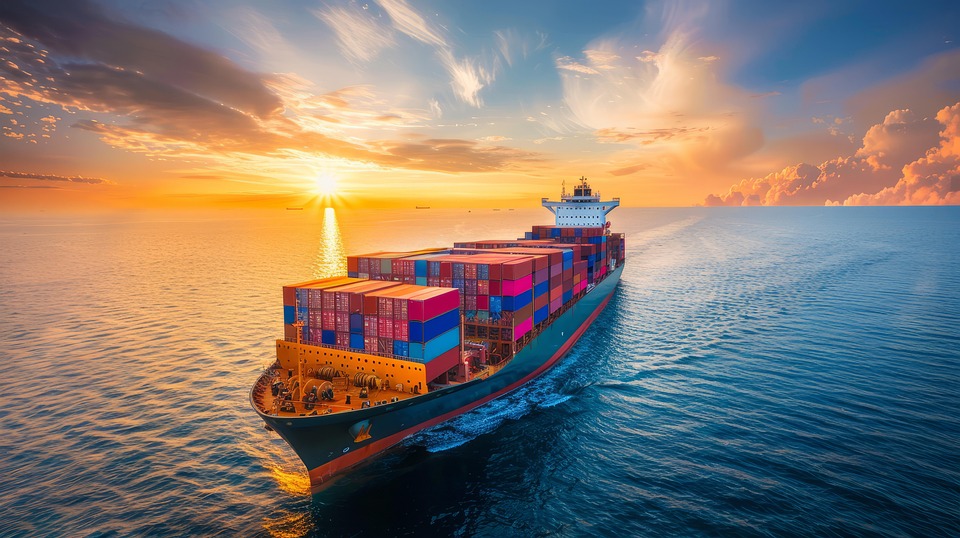
Miami is the smallest of the U.S. containergateways that matter to Asian importers, and the only one whose true catchmentextends beyond the United States. Roughly half the cargo that clears in SouthFlorida is consumed in Florida; the rest moves onward to Latin America and theCaribbean.
That second half is why routing to Miami isworth understanding even for importers who have no Florida customers.
The route, and why it is not a shortcut
Services from China reach Miami through thePanama Canal, with transit typically running 30 to 36 days depending on thestring and the number of Asian calls before departure. There is no land bridgealternative that improves on this, because the distance from a West Coast portto Florida exceeds the ocean transit it would replace.
Sailing frequency is lower than on the mainEast Coast lanes. For an importer moving a handful of containers a month, thegap between sailings becomes a planning constraint in its own right, and itshould be priced in before choosing the port.
The canal itself is a scheduling device asmuch as a waterway. The neopanamax locks are 427 metres long, 55 metres wideand accept vessels drawing up to 18.3 metres, and every transit has to bebooked against a daily slot allocation rather than simply queued. In thedrought years of 2023 and 2024 the authority cut daily slots and lowered themaximum draft, and carriers responded by consolidating loads and rerouting someservices. Those decisions are made months ahead and they show up as a servicethat quietly changes its rotation.
For an importer this means the canal is avariable, not a constant. Ask whether the service has a confirmed slotallocation for the months you are booking, because a carrier without one willabsorb the delay into your transit rather than into its own schedule.
What PortMiami can and cannot do
Characteristic | Practical meaning |
Channel depth | Deepened to 52 feet, which allows post-Panamax vessels to call without tidal restriction |
Terminal footprint | Compact; a single main container terminal rather than a spread of facilities |
On-dock rail | Not a feature; inland movement is by truck |
Transshipment role | Strong to the Caribbean and Central America |
The depth matters because it removes adependency that constrains several East Coast ports. The absence of on-dockrail matters more for importers whose goods are headed north, because everycontainer leaving Miami for the Midwest begins with a truck leg.
What the canal means for reliability
All-water services to the Gulf and the EastCoast compete for the same slot pool, and when the pool tightens, the smallerstrings lose first. A service calling Miami with 8,000 TEU vessels is moreexposed to a slot reduction than a 14,000 TEU string calling New York, simplybecause the larger vessel carries more revenue per slot.
The practical consequence is that Miami'stransit times widen more than New York's during a canal constraint. If yourplanning depends on a 30 to 36 day window holding steady, keep a second routingavailable through the West Coast and rail, and price it once a year so thealternative is already known.
Who should route through Miami
Miami is the correct choice when thedestination is Florida, when the goods are bound for the Caribbean or LatinAmerica, or when the cargo is perishable or temperature-controlled and benefitsfrom a short port-to-market distance.
It is the wrong choice for nationaldistribution from a single warehouse. The port is a regional gateway with aregional hinterland, and importers who route Midwest cargo through Florida arepaying for a domestic truck leg that a different port would have avoided.
There is one more category that Miamiserves well: importers using a foreign trade zone. Miami's FTZ 281 is one ofthe larger general purpose zones on the East Coast, and cargo admitted to azone is not entered for consumption until it leaves. For goods with anuncertain final destination or a high duty rate, that deferral is worth morethan a slightly longer ocean transit.
Charges that differ from other gateways
The destination charge structure at Miamireflects the transshipment role. Cargo that is entered for consumption in theUnited States and cargo that is moving in bond to another country are handleddifferently, and the documentation has to declare which one from the start.
A common and expensive error is treating aCaribbean-bound shipment as a U.S. import. The entry is different, the bond isdifferent, and the cargo should not be entered at all if it is moving intransit. Correcting that after discharge usually means a bonded movement and asecond set of handling charges.
Filing deadlines do not relax because therouting is unusual. The importer security filing is due 24 hours before thevessel loads at the foreign port under 19 CFR 149.2, and a late or inaccuratefiling exposes the importer to liquidated damages of up to 5,000 dollars perviolation. On a Caribbean transit shipment the filing may not be required atall, which is exactly the kind of detail that gets missed when a shipment istreated as an ordinary import.
A planning note
Because theport is compact, truck turn times are typically short and appointments areeasier to obtain than in Los Angeles or New York. That is a genuine advantagefor importers whose warehouse is within the South Florida radius.
Miami is a good port, but only if yourcustomer is actually there.


