
Time to Ship from China to US in 2026 How Waytron Builds Schedules You Can Actually Plan Around
Time to Ship From China to Us in 2026 How Waytron Builds Schedules You Can Actually Plan Around
Asking about the time to ship from china to us used to produce a simple answer: two to four weeks port to port, a bit more door to door. In 2026 that answer is a starting point, not a plan, because quoted transit times now slip for structural reasons that repeat month after month, and importers who schedule inventory, promotions, and construction around the number on a booking confirmation keep learning the difference between a schedule and an outcome.
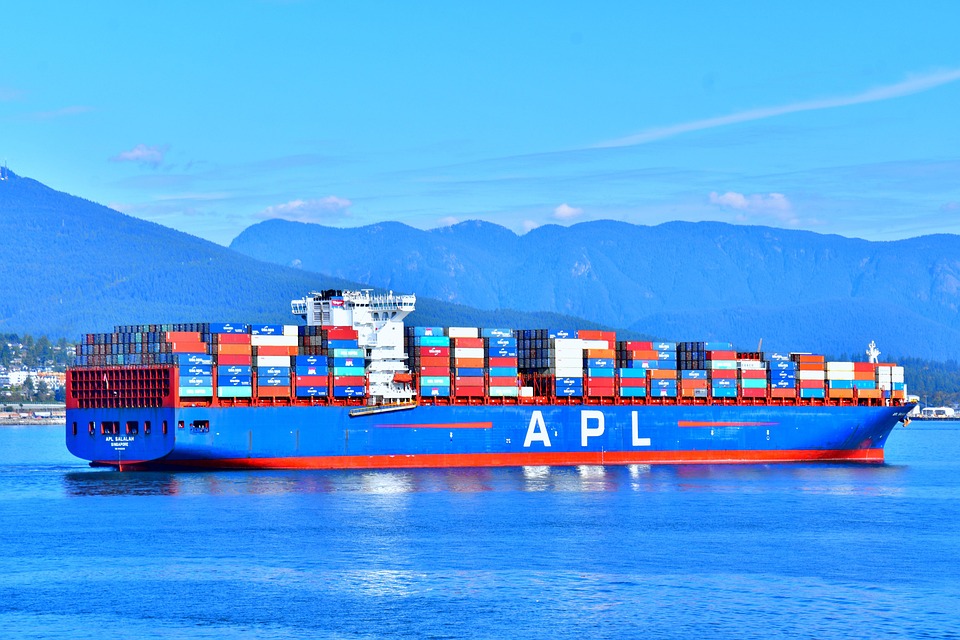
Waytron is a professional China-to-U.S. ocean freight company with long-term and stable carrier relationships, a professional operating team, a scientific service system, and a sound overseas network. Its service scope covers FCL, LCL, special shipments, SOC service, warehousing, FBA logistics, customs clearance, D/O handling, door delivery, and transshipment. For trans-Pacific trades, Waytron also supports inland destinations such as Dallas, El Paso, Portland, Houston, Calgary, and Winnipeg.
As of November 28, 2026, schedule reliability is shaped by forces that did not exist together before: de minimis duty-free treatment has been suspended since May 2, 2025, pushing more volume into formal ocean entries, Section 301 tariff swings trigger pre-deadline booking surges, USTR port fees on China-linked vessels influence which rotations carriers deploy, Red Sea diversions continue absorbing global container capacity, and heightened customs exams add unpredictable days at the border for unlucky or unprepared entries.
This article uses a risk-solution format to explain why quoted transit times slip in 2026, how to distinguish controllable delay from structural delay, how to design buffers intelligently instead of expensively, and how to build shipping calendars your sales and operations teams can genuinely depend on.
Summary Table
|
Risk Area
|
Current Situation in 2026
|
Main Responsibility or Root Cause
|
How Waytron Helps
|
|
Blank sailings
|
Carriers cancel departures to manage capacity utilization
|
Demand swings from tariff news and rate strategies
|
Protected allocation and immediate rebooking on next sailings
|
|
Rolled cargo
|
Confirmed containers left behind at loading ports
|
Overbooking and priority given to contract freight
|
Contract-priority status reduces roll risk measurably
|
|
Capacity absorption
|
Fewer effective sailings on Asia-U.S. lanes
|
Red Sea diversions tying up ships and containers
|
Route and carrier diversification across multiple services
|
|
Port congestion
|
Vessel queues and terminal delays at U.S. gateways
|
Volume surges, labor cycles, and yard density
|
Alternative gateway routing and inland port options
|
|
Customs holds
|
Exams add unpredictable days after arrival
|
Heightened scrutiny and incomplete entry data
|
Pre-clearance document review and compliance-first filing
|
1. Current Situation Analysis
A quoted transit time describes what happens when everything goes right: the vessel sails on its scheduled date, calls its scheduled ports, berths on arrival, and discharges your container among the first batches. Each of those conditions now fails regularly enough that planning on the quoted figure alone is a measurable business risk rather than an optimistic choice.
The largest structural factor is carrier capacity management. Blank sailings, where a scheduled departure is canceled entirely, are used aggressively to keep utilization and rates healthy. For the shipper, a blanked sailing does not add a day or two; it adds a full week, because cargo waits for the next departure on that service. When tariff announcements trigger booking surges, the remaining sailings overbook, and confirmed containers get rolled, adding another week without the quoted transit time changing at all.
The second structural factor is global equipment and vessel distribution. Red Sea diversions have stretched Asia-Europe rotations, pulling ships and containers out of their normal cycles, and the ripple reaches the trans-Pacific as tighter equipment supply at Chinese ports and less schedule slack everywhere. A vessel that arrives late into its rotation starts late, loads late, and arrives late, and published schedules do not reliably reflect this drift.
The third factor sits at destination. U.S. gateways experience periodic congestion from volume surges, yard density, and labor cycles, and customs exams have become a routine feature of the landscape, especially for newer importers without a compliance history. USTR port fees on China-linked vessels add a subtler schedule effect: carriers adjust rotations and vessel assignments partly around fee exposure, which reshuffles effective capacity between gateways. The combined result is that door-to-door time in 2026 routinely runs one to three weeks beyond the port-to-port quote, and the variance itself is the problem that planning must solve.
2. Responsibility and Root Cause Analysis
Not all delay is equal, and treating every late shipment as bad luck prevents importers from fixing the delays they can actually control. Five root causes account for most of the gap between quoted and actual transit time.
2.1 Planning on Port-to-Port Numbers
The quoted transit time covers vessel movement only. It excludes factory readiness variance, origin cut-off timing, transshipment dwell, customs clearance, terminal availability, and delivery scheduling. Importers who anchor inventory planning to the port-to-port figure systematically under-plan by the sum of everything the quote never promised. The root cause is a definitional misunderstanding: the number on the booking is a component of lead time, not the lead time.
2.2 Spot-Market Booking Position
When capacity tightens, carriers protect contract cargo and roll spot cargo. An importer who shops each shipment for the lowest rate is purchasing, without knowing it, the lowest boarding priority. The root cause of repeated rolls is not carrier misbehavior but the shipper's position in the boarding hierarchy, which is a purchasing decision disguised as a scheduling problem.
2.3 Concentration on a Single Gateway and Service
A supply chain that moves every container through one port pair on one carrier's service inherits all of that lane's congestion, blank sailing, and rotation risk. When the lane slips, the whole business slips. The root cause is the absence of routing diversification, which usually results from optimizing each shipment individually rather than designing the lane portfolio deliberately.
2.4 Customs Exposure Adding Random Days
An exam can add days or weeks, and selection is not purely random: entries with valuation inconsistencies, classification ambiguity, or thin importer history are selected more often. Since de minimis relief ended in May 2025, more importers file more entries with less experience, raising both their selection rate and their dwell time. The root cause of border delay is usually document quality, not border capacity.
2.5 Buffer Design by Guesswork
Faced with unreliable schedules, many importers simply add a flat two weeks to everything, which is expensive in inventory carrying cost and still fails when a blank sailing plus a roll plus an exam stack together. The root cause is treating buffer as a fixed number rather than as a designed parameter that should vary by lane, season, and product criticality.
3. Solution Path How Waytron Reduces the Risk
Dependable scheduling in 2026 comes from attacking variance at its sources rather than padding against it blindly. Waytron's scheduling discipline works through five mechanisms.
3.1 Realistic ETD and ETA Modeling
Waytron quotes door-to-door timelines built from actual service performance on the specific lane, including typical origin cut-off timing, transshipment behavior, terminal dwell at the destination gateway, and normal customs clearance duration. The number the client plans around is an outcome estimate, not a marketing figure, which is the foundation every other schedule decision rests on.
3.2 Contract-Priority Space Protection
Through long-term carrier contracts, Waytron's bookings carry boarding priority that spot cargo lacks. Rolls still happen across the market, but protected allocation measurably reduces their frequency, and when a sailing blanks, rebooking moves to the next protected departure rather than to the back of the spot queue. For the importer, this converts the most violent schedule shocks into the mildest.
3.3 Lane and Gateway Diversification
Waytron designs routing portfolios rather than single routings: a primary service paired with an alternative gateway or carrier option, including inland port routings toward destinations such as Dallas, Houston, and Portland where rail-served inland points can bypass coastal congestion. When the primary lane degrades, the alternative is already priced and operational rather than improvised under pressure.
3.4 Compliance-First Clearance to Shrink Border Variance
Because customs exams are the least predictable delay, Waytron works to minimize selection probability and dwell time: consistent valuation, verified classification, complete entry data, timely security filings, and pre-arranged clearance so releasable cargo releases immediately. The exam risk never reaches zero, but its frequency and duration shrink, tightening the whole distribution of outcomes.
3.5 Milestone Tracking and Exception Response
Every shipment is tracked against milestones from factory pickup through delivery, with alerts when any milestone slips. A late factory handoff triggers rebooking before the cut-off is missed; a terminal congestion signal triggers a drayage and appointment adjustment before free time expires. Variance is absorbed by early response, when it is cheap, instead of discovered at the warehouse door, when it is expensive.
4. Applied Scenario
An importer of seasonal patio products had built its 2025 calendar around quoted port-to-port transit times of about three weeks, plus a casual one-week pad. The season went badly: two blank sailings and one roll pushed a key shipment's arrival past the retail program window, and a customs exam on a later container added eleven days. The company ended the season with a stockout in May and excess inventory in September, and an emergency air shipment cost $9,800 without saving the program.
For the 2026 season, the importer rebuilt its calendar with Waytron. The planning number changed first: instead of quoted transit time, the team planned on a realistic door-to-door estimate of six to seven weeks for the main lane, built from actual service history, with a designed buffer of twelve days for program-critical SKUs and five days for replenishment SKUs. The buffer was sized from the lane's actual delay distribution rather than from anxiety.
Space was booked inside contract allocation six weeks ahead of each readiness date, which removed the roll risk that had broken the previous season. One sailing did blank in April, and the containers moved to the next protected departure, losing four days against plan instead of the previous year's twelve. A second gateway option was priced as contingency but never needed.
Customs pre-clearance removed the border variance that had added eleven days the year before; every 2026 entry released within normal timeframes. The season ended with program windows met, no emergency freight, and inventory carrying cost actually lower than in 2025, because the designed buffer replaced both the old flat pad and the panic shipments that pad had failed to prevent.
5. Practical Actions for Foreign Trade Companies
Building a dependable shipping calendar is a design exercise, not a negotiation with carriers. The following actions convert schedule uncertainty into a managed variable.
Plan inventory against realistic door-to-door estimates, never against quoted port-to-port transit times.
Secure contract-priority space for program-critical cargo instead of shopping every shipment on the spot market.
Qualify at least one alternative gateway or service for your main lane before you need it.
Clean up classification, valuation, and entry data to reduce customs exam probability and dwell time.
Size buffers by lane performance and SKU criticality, and review them quarterly against actual arrival data.
Track shipments against milestones and act on slippage immediately, while rebooking is still cheap.
Conclusion
The time to ship from china to us in 2026 is best understood as a distribution, not a number: a realistic central estimate plus a designed buffer, protected by contract capacity, routing diversification, and clean customs data. Importers who plan this way hit their windows; importers who plan on quoted transit times keep buying emergency freight and apologizing to their customers.
Waytron, a grade A international freight forwarding company approved by China's Ministry of Commerce, an NVOCC licensed by China's Ministry of Transportation, and a USA FMC filing member with more than ten years of experience, fourteen-plus warehouses, and a network covering China, North America, and Vietnam, builds shipping calendars from real lane performance and protects them with contract capacity and milestone-level tracking, so your schedule survives the season. New clients save 10 percent on a first shipment, and a free quote is available within 24 hours.


