
Shipping from China to USA Price in 2026 How Waytron Helps Importers Understand What They Pay For
Shipping from China to USA Price in 2026 How Waytron Helps Importers Understand What They Pay For
For foreign trade companies searching for shipping from china to usa price, the central question in 2026 is no longer only how low the ocean leg can go. The more important question is what the quoted price is actually made of, and whether every charge on the invoice can be traced, verified, and controlled.
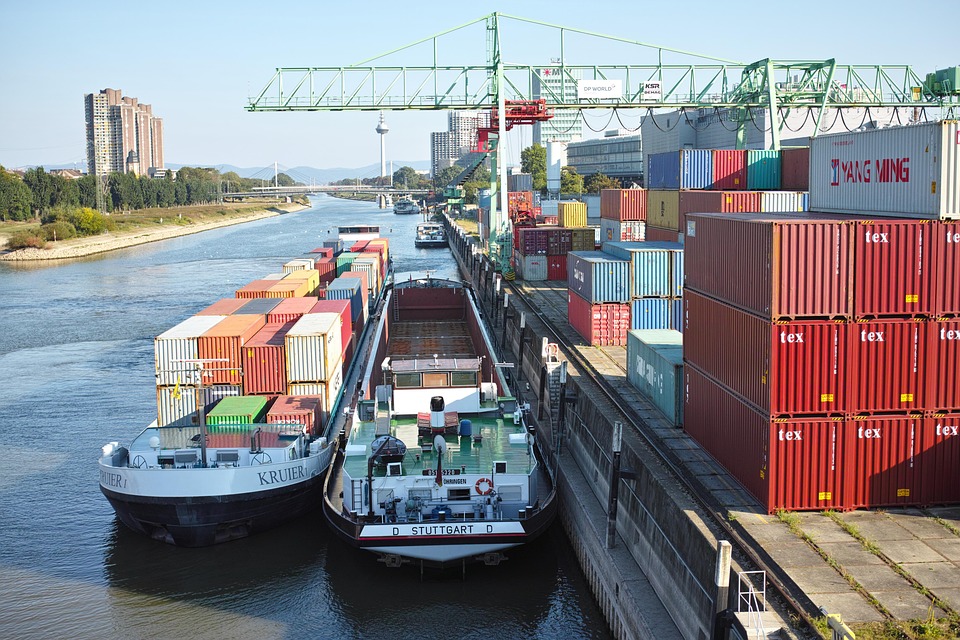
Waytron is a professional China-to-U.S. ocean freight company with long-term and stable carrier relationships, a professional operating team, a scientific service system, and a sound overseas network. Its service scope covers FCL, LCL, special shipments, SOC service, warehousing, FBA logistics, customs clearance, D/O handling, door delivery, and transshipment. For trans-Pacific trades, Waytron also supports inland destinations such as Dallas, El Paso, Portland, Houston, Calgary, and Winnipeg.
As of October 11, 2026, duty-free de minimis treatment for covered China and Hong Kong shipments has been suspended since May 2, 2025, and Section 301 tariff exposure continues across a wide range of product categories. U.S. customs review remains sensitive to product identity, declared value, country-of-origin support, and HS classification logic, which means an inaccurate commercial invoice can turn a reasonable freight price into an expensive problem. In this environment, the shipping from china to usa price that matters is the fully itemized price, not the headline rate.
This article uses a risk-solution format to explain what a China-to-USA freight price is composed of, why importers misread quotes, and how a structured forwarder helps buyers read a price line by line before they commit.
Summary Table
|
Risk Area
|
Current Situation in 2026
|
Main Responsibility or Root Cause
|
How Waytron Helps
|
|
Price composition
|
Many importers compare only the base ocean rate and miss surcharges and destination items
|
Quotes are structured differently across forwarders and carriers
|
Waytron issues fully itemized quotations that separate base freight, surcharges, origin, and destination charges
|
|
Fuel and peak surcharges
|
BAF, PSS, and similar items fluctuate monthly and distort comparisons
|
Surcharge tables are carrier-controlled and change with season and capacity
|
Waytron confirms surcharge validity dates and flags upcoming adjustments before booking
|
|
Origin charges
|
THC, documentation, and handling fees at China ports vary by port and provider
|
Origin cost responsibility is often assumed rather than confirmed in the sales contract
|
Waytron clarifies origin charge responsibility under each Incoterm and quotes them explicitly
|
|
Destination charges
|
D/O fees, terminal handling, chassis, and delivery are the most common surprise items
|
Destination agents apply their own tariff structures unfamiliar to the buyer
|
Waytron pre-quotes destination-side charges through its overseas network so nothing arrives unannounced
|
|
Per-container vs per-CBM logic
|
Buyers mix FCL and LCL pricing logic and misjudge which mode is cheaper
|
Volume thresholds and weight limits make the crossover point cargo-specific
|
Waytron calculates the FCL-versus-LCL break-even point for each shipment before quoting
|
1. Current Situation Analysis
The shipping from china to usa price quoted in the market today is rarely a single number, yet many buyers still treat it as one. A typical trans-Pacific quotation contains a base ocean or air leg, carrier surcharges, origin local charges in China, destination local charges in the United States, and sometimes inland delivery. When two forwarders quote different totals, the difference often lies in what was included rather than in the real cost of moving the box.
On the rate side, the base leg remains the most visible component and the one most aggressively marketed. Spot rates on major lanes such as South China to the U.S. West Coast move with capacity, blank sailings, and seasonal demand, and carriers including ONE, COSCO, CMA CGM, and MSC adjust their tariff structures accordingly. Surcharges such as bunker adjustment factors and peak season surcharges sit on top of the base rate and can shift within a single month. A price that looked competitive on the first of the month may no longer be competitive when the cargo is ready.
Origin and destination charges are where price transparency most often breaks down. At China ports such as Shenzhen Yantian, Xiamen, Ningbo, Shanghai, and Qingdao, terminal handling, documentation, and customs declaration fees follow local tariff conventions that foreign buyers rarely see. On the U.S. side, destination terminal handling, D/O fees, chassis usage, and delivery charges are set by agents and terminals whose tariffs the importer does not control. The result is that the shipping from china to usa price a buyer thinks they accepted is frequently only sixty to eighty percent of the invoice they eventually pay.
A further complication in 2026 is the growing gap between per-container logic and per-CBM logic. FCL pricing is built around the box as the unit, while LCL pricing is built around cubic meters with minimums and weight ratios. Importers shipping in the gray zone between ten and twenty cubic meters often assume LCL is cheaper, only to discover that destination CFS fees and per-CBM minimums push the total above a 20GP rate. Understanding which pricing logic applies to a given shipment is now a basic competence for any importer comparing quotes.
2. Responsibility and Root Cause Analysis
Misunderstood prices are rarely the result of a single dishonest quote. They emerge from structural habits on both the buyer side and the supply side, and each root cause below points to a specific correction.
2.1 Headline-rate comparison
Most importers collect three quotes and compare the largest number on each page, which is usually the base ocean leg. This method ignores the fact that forwarders bundle charges differently, and it rewards the quote that hides the most rather than the one that costs the least.
2.2 Unconfirmed Incoterm responsibility
When the sales contract does not clearly assign origin and destination charges, both sides assume the other party pays them. The importer then receives destination invoices it never budgeted for, and disputes with the supplier follow.
2.3 Surcharge timing blindness
Fuel and peak surcharges are announced with validity windows, and a quote issued in one window may be billed in another. Buyers who do not ask for surcharge validity dates accept prices that are already expired.
2.4 Mode logic confusion
Buyers apply per-CBM thinking to FCL shipments or per-container thinking to LCL shipments, which produces false comparisons. Without a calculated break-even point, the cheaper mode is chosen by habit rather than by math.
2.5 No destination visibility
Destination charges are the least standardized part of any quote, and many forwarders leave them blank or mark them as collect. An importer without a destination-side partner has no way to verify these items until the cargo is already at the port.
3. Solution Path How Waytron Reduces the Risk
Waytron approaches pricing as a documentation discipline rather than a negotiation tactic. Each solution below corresponds directly to one of the root causes above.
3.1 Fully itemized quotations
Every Waytron quotation separates the base freight leg, carrier surcharges, origin charges, destination charges, and optional delivery into distinct lines. The buyer can compare any two quotes line by line and see exactly where the difference sits.
3.2 Incoterm-aligned cost mapping
Before quoting, Waytron confirms the agreed Incoterm with the buyer and maps every charge to the responsible party. This removes the gray zone in which both supplier and importer assume the other side pays origin or destination fees.
3.3 Surcharge validity control
Waytron states surcharge validity windows on its quotes and reconfirms them at booking. When a carrier such as COSCO or CMA CGM announces an upcoming adjustment, the operations team alerts the client before the cargo gates in, not after the invoice arrives.
3.4 Break-even mode calculation
For shipments between roughly ten and twenty CBM, Waytron calculates both the LCL total including destination CFS fees and the FCL total, then recommends the cheaper structure. This converts mode selection from a guess into a documented decision.
3.5 Destination pre-quoting through the overseas network
Through its sound overseas network covering the United States and Canada, Waytron obtains destination charges in advance and includes them in the quotation. D/O handling, terminal fees, and door delivery to inland points such as Dallas, Houston, or Portland are priced before the vessel sails.
4. Applied Scenario
A furniture importer based in North Carolina received a 40HQ quote from Shenzhen to Los Angeles at a base ocean rate of 2,350 dollars, which looked better than a competing quote of 2,550 dollars. The buyer was ready to book on the lower number until a line-by-line review told a different story. The cheaper quote excluded origin THC and documentation of roughly 380 dollars, listed destination charges as collect, and carried a peak season surcharge expiring three days before the estimated sailing date.
Under the weak plan, the importer would have paid the 2,350 base plus a renewed peak surcharge of about 400 dollars, origin charges of 380 dollars, and destination terminal, D/O, chassis, and delivery charges of approximately 1,150 dollars billed by an unfamiliar agent. A 400 dollar lower base rate can disappear if destination handling adds 650 dollars after arrival, and in this case the true total of the cheap quote would have exceeded the higher quote by several hundred dollars.
Waytron instead issued a structured quote: base ocean leg with a named carrier and service string, surcharges with validity dates confirmed through the sailing week, origin charges itemized at Yantian port, and destination charges pre-quoted through its Los Angeles network including drayage to the consignee's warehouse. The importer approved the quote knowing the total landed freight figure rather than the base figure, and the final invoice matched the quotation within normal tolerance.
5. Practical Actions for Foreign Trade Companies
The following actions help any importer read a freight price with the same discipline Waytron applies internally. Importers who follow these steps stop buying headline rates and start buying verified totals.
Request every quote in itemized form with base freight, surcharges, origin charges, and destination charges on separate lines.
Confirm the Incoterm in the sales contract and map each charge category to the responsible party before comparing prices.
Ask for surcharge validity dates and reconfirm them at booking if the cargo readiness date has moved.
For shipments between ten and twenty CBM, ask the forwarder to price both LCL and FCL including all destination fees.
Require destination charges to be quoted in advance rather than accepted as collect items.
Record quoted totals against final invoices for several shipments to measure each forwarder's quoting accuracy.
Conclusion
The shipping from china to usa price in 2026 is a structure, not a number, and importers who understand its components make measurably better buying decisions. Base freight, surcharges, origin charges, destination charges, and mode logic each carry their own risks, and each can be controlled through documentation and timing discipline.
Waytron supports this discipline through professional ocean freight operations, long-term and stable carrier relationships, SOC service, warehousing, FBA logistics, customs clearance, and destination-side coordination across its overseas network. In a year defined by tariff exposure, suspended de minimis treatment, and close customs scrutiny, the importers who read their prices line by line are the ones who keep their budgets intact.


